Who Is the Right Candidate for ICL Eye Surgery?
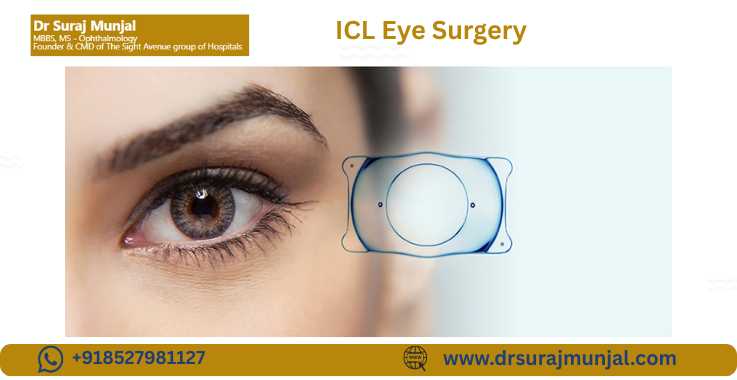
Table of Contents
Advancements in refractive eye surgery have transformed the lives of millions of people who once depended on glasses or contact lenses. Among the most advanced vision correction procedures available today is Implantable Collamer Lens (ICL) surgery—a highly precise, reversible, and cornea-preserving option for correcting refractive errors.
However, ICL eye surgery is not meant for everyone. Choosing the right candidate is critical to achieving safe, predictable, and long-lasting visual outcomes. Understanding whether you are suitable for ICL surgery requires a careful evaluation of your eye health, vision needs, lifestyle, and long-term expectations.
This detailed guide explains who the ideal candidate for ICL eye surgery is, who may not be suitable, how doctors assess eligibility, and why expert evaluation plays a decisive role in success.
This educational resource is curated for patients seeking trusted guidance from Dr. Suraj Munjal, a renowned eye specialist known for advanced refractive and lens-based vision correction procedures.
What Is ICL Eye Surgery?
Implantable Collamer Lens (ICL) surgery is a lens-based refractive procedure in which a biocompatible lens is implanted inside the eye to correct vision. Unlike LASIK or SMILE, ICL does not reshape the cornea. Instead, the lens is placed between the iris and the natural crystalline lens, working in harmony with your eye’s natural optics.
Key Features of ICL Surgery
- Corrects myopia (near-sightedness), hyperopia (far-sightedness), and astigmatism
- Ideal for high power prescriptions
- Suitable for thin corneas
- Reversible and removable
- Provides sharp, high-definition vision
- UV-protective collamer material
Because ICL surgery involves implanting a lens inside the eye, strict candidacy criteria must be met to ensure safety and long-term eye health.
Why Candidacy Matters in ICL Surgery
ICL eye surgery is a precision-dependent procedure. Implanting a lens inside the eye requires:
- Adequate internal eye space
- Healthy ocular structures
- Stable refractive power
- Absence of conditions that may increase risk
Incorrect candidate selection can lead to complications such as raised eye pressure, cataract formation, or suboptimal visual outcomes. That is why candidacy assessment by an experienced eye surgeon is essential.
Ideal Age for ICL Eye Surgery
Recommended Age Range: 21 to 45 Years
- The eyes should be fully developed
- Refractive power must be stable for at least one year
- Younger patients may still experience power changes
- Older patients may develop age-related lens changes
Patients above 45 years may still be evaluated, but alternatives such as refractive lens exchange may be considered depending on eye condition.
Refractive Error Criteria: Who Benefits the Most?
1. High Myopia (Near-Sightedness)
ICL surgery is particularly beneficial for patients with moderate to severe myopia, especially when LASIK is not an option.
- Myopia range: –3.00 D to –20.00 D
- Clear vision even for very high prescriptions
- No corneal weakening
2. Hyperopia (Far-Sightedness)
- Hyperopia range: +3.00 D to +10.00 D
- More stable outcomes than corneal laser surgery in high hyperopia
3. Astigmatism
- Can correct up to 6 diopters of astigmatism
- Toric ICL lenses are custom-designed
Patients with complex or combined refractive errors often benefit the most from ICL surgery.
Corneal Thickness: A Major Deciding Factor
One of the most common reasons patients choose ICL surgery is thin corneas.
Why Thin Cornea Patients Are Ideal for ICL
- LASIK removes corneal tissue
- Thin corneas increase ectasia risk
- ICL preserves corneal strength
- No structural alteration of the cornea
If you were previously told you are “not suitable for LASIK”, ICL surgery may be the right alternative.
Eye Anatomy Requirements for ICL Surgery
1. Adequate Anterior Chamber Depth (ACD)
- Minimum depth required: ≥ 2.8 mm
- Ensures proper lens positioning
- Prevents eye pressure elevation
2. Healthy Iris and Natural Lens
- No signs of early cataract
- Normal pupil function
- Clear natural crystalline lens
3. Normal Eye Pressure (IOP)
- Controlled intraocular pressure
- No glaucoma or high-risk optic nerve findings
Stability of Vision Prescription
You are a good candidate if:
- Your spectacle power has not changed more than ±0.5 D in the last year
- No progressive refractive shifts
- Stable visual demands
Unstable prescriptions can compromise long-term results.
Lifestyle Factors That Make ICL an Excellent Choice
ICL surgery is particularly suitable for individuals who:
- Participate in sports or fitness activities
- Have dry eyes and cannot tolerate contact lenses
- Work long hours on digital screens
- Want night vision clarity
- Seek premium visual quality
The lens provides excellent contrast sensitivity and low glare, making it ideal for professionals, athletes, and frequent travelers.
Eye Conditions That May Disqualify ICL Surgery
ICL may not be recommended if you have:
- Advanced glaucoma
- Active eye infection or inflammation
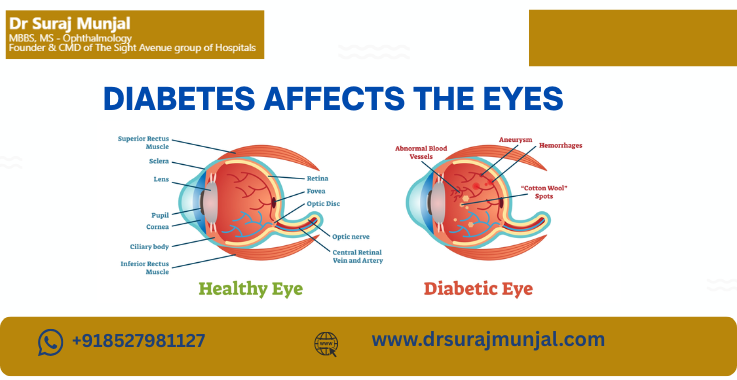
- Severe diabetic eye disease
- Untreated retinal disorders
- Shallow anterior chamber
- Autoimmune eye conditions
Each case is individually evaluated before making a decision.
Special Consideration: Dry Eye Patients
Unlike laser procedures, ICL surgery:
- Does not worsen dry eyes
- Does not cut corneal nerves
- Is often preferred for chronic dry eye sufferers
Patients with dry eye syndrome are frequently excellent candidates for ICL.
Pre-Surgical Evaluation for ICL Candidacy
A detailed eye evaluation is the foundation of safe ICL surgery. At expert eye centers, testing includes:
- Corneal topography
- Anterior chamber measurement
- Endothelial cell count
- Retinal examination
- Eye pressure measurement
- Pupil size assessment
These tests ensure the lens fits perfectly and performs optimally.
Why Expert Surgeon Selection Matters
ICL surgery requires:
- Precise sizing
- Correct vault calculation
- Advanced surgical planning
- Long-term follow-up
An experienced eye surgeon like Dr. Suraj Munjal ensures:
- Accurate candidacy assessment
- Customized lens selection
- Safe surgical execution
- Optimal visual outcomes
Expertise directly influences safety and success.
Long-Term Safety and Reversibility
One of the strongest advantages of ICL surgery is its reversibility.
- The lens can be removed or replaced if needed
- Does not compromise future cataract surgery
- Preserves natural eye anatomy
This makes ICL a future-proof vision correction solution.
Final Thoughts: Are You the Right Candidate for ICL Eye Surgery?
ICL eye surgery is a life-changing solution for patients seeking freedom from glasses without compromising corneal health. The right candidate is someone with:
- Stable refractive error
- Healthy eye anatomy
- High or complex power
- Thin corneas or dry eyes
- Realistic expectations
- Willingness for expert evaluation
A personalized consultation is the only way to determine suitability.
If you are considering advanced vision correction, a thorough assessment with Dr. Suraj Munjal can help you understand whether ICL eye surgery is the right choice for your eyes and your future.
Frequently Asked Questions
An ideal candidate for ICL eye surgery is someone between 21 and 45 years of age with stable vision, healthy eyes, adequate internal eye space, and moderate to high refractive errors who may not be suitable for laser vision correction.
Yes, ICL eye surgery is especially suitable for patients with thin corneas because it does not involve reshaping or removing corneal tissue, making it a safer alternative to LASIK in such cases.
Yes, ICL surgery is highly effective in correcting high degrees of myopia, hyperopia, and astigmatism, including prescriptions that are beyond the safe limits of laser eye surgery.
Yes, stable vision is essential, and most doctors recommend that your spectacle or contact lens power should not have changed significantly for at least one year before ICL surgery.
Yes, patients with dry eyes are often good candidates for ICL surgery because the procedure does not affect corneal nerves and does not worsen dry eye symptoms.