When Diabetes Affects the Eyes: Early Warning Signs & Treatments Explained by Dr. Suraj Munjal
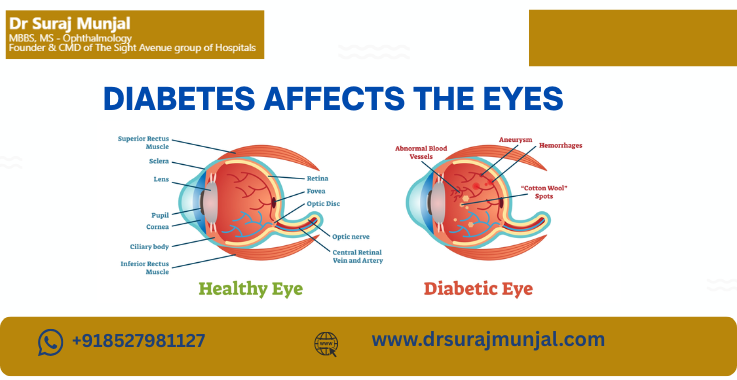
Table of Contents
Diabetes is a long-term condition that affects much more than blood sugar levels — it can silently damage the eyes if not monitored properly. Many patients visit eye clinics only after their vision starts to blur, not realizing that diabetes-related eye diseases often show no early symptoms.
According to Dr. Suraj Munjal, a leading eye specialist known for his expertise in modern ophthalmic treatments, timely screening and early intervention can save a person’s vision.
In this blog, we break down how diabetes affects the eyes, the early warning signs, treatment options, and when you should seek immediate care.
Understanding How Diabetes Affects the Eyes
High blood sugar levels can damage the tiny blood vessels in the retina — the light-sensitive layer at the back of the eye. Over time, this damage can lead to several vision-threatening conditions, including:
1. Diabetic Retinopathy (Most Common Complication)
When blood vessels in the retina become weak, leak fluid, or grow abnormally. If untreated, it can lead to blindness.
2. Diabetic Macular Edema (DME)
Swelling in the central part of the retina (macula) responsible for sharp, detailed vision. This affects tasks like reading, driving, or recognizing faces.
3. Early Cataract Formation
Diabetic patients are more prone to cloudy lenses at a younger age.
4. Glaucoma
Diabetes doubles the risk of glaucoma due to increased pressure in the eye, which damages the optic nerve.
Dr. Suraj Munjal emphasizes:
“Most diabetic eye diseases progress silently. A routine eye examination often detects changes before the patient experiences symptoms.”
Early Warning Signs You Should Never Ignore
Diabetic eye complications may initially go unnoticed, but certain symptoms require immediate medical attention.
1. Blurred or fluctuating vision
A common early sign that blood sugar changes are affecting the lens or retina.
2. Dark spots or floaters
Indicates bleeding inside the eye — a sign of advanced diabetic retinopathy.
3. Difficulty seeing at night
Damage to retinal cells impacts low-light vision.
4. Colors appearing faded or washed out
Macular involvement may reduce color sharpness.
5. Sudden vision loss
A medical emergency requiring urgent evaluation.
6. Eye pain or pressure
Could be linked to glaucoma or swelling.
If you experience any of these symptoms, Dr. Munjal advises seeking immediate ophthalmic care.
Why Regular Eye Checkups Are Essential for Diabetic Patients?
Even without symptoms, diabetes can cause ongoing damage.
According to Dr. Suraj Munjal:
- Every diabetic patient should have a comprehensive dilated eye exam at least once a year.
- Patients with existing eye damage may require more frequent monitoring.
- Early detection reduces the chances of vision loss by up to 90%.
Early diagnosis allows timely medical intervention before permanent damage occurs.
Diagnostic Tests Performed by Dr. Suraj Munjal
To accurately assess the eye health of diabetic patients, Dr. Munjal uses advanced diagnostic technologies:
1. Fundus Examination
To detect early vascular changes.
2. OCT (Optical Coherence Tomography)
Provides cross-sectional images of the retina to diagnose swelling (macular edema).
3. Fundus Fluorescein Angiography
To check for leakage, bleeding, or abnormal blood vessel growth.
4. Visual Acuity & Eye Pressure Test
Important for detecting glaucoma and functional changes.
These tests help tailor a precise, patient-specific treatment plan.
Treatment Options Explained by Dr. Suraj Munjal
1. Blood Sugar and Blood Pressure Control
Eye treatment begins with metabolic control. Stabilizing sugar levels slows disease progression.
2. Anti-VEGF Injections
Used to reduce swelling and prevent abnormal blood vessel growth in diabetic retinopathy and macular edema.
- Minimally invasive
- Highly effective
- Often performed as a day-care procedure
3. Laser Photocoagulation
Uses precise laser energy to seal leaking blood vessels.
- Prevents worsening of retinopathy
- Reduces the risk of severe vision loss
4. Corticosteroid Injections or Implants
Helps control inflammation and swelling in diabetic macular edema.
5. Vitrectomy Surgery
Recommended in advanced cases with:
- Severe bleeding inside the eye
- Retinal detachment
- Scar tissue formation
Vitrectomy helps restore clarity and prevent blindness.
6. Cataract Surgery
Early cataract development is common in diabetic patients.
Dr. Suraj Munjal uses advanced phacoemulsification and premium IOLs to restore clear vision.
Lifestyle Recommendations by Dr. Suraj Munjal
Maintain stable blood sugar levels
Avoid frequent spikes and drops.
Follow a balanced and low-glycemic diet
Help control both diabetes and eye health.
Quit smoking
Reduces disease progression.
Exercise regularly
Improves blood circulation to the eyes.
Take medications on time
Includes diabetes and hypertension medicines.
Use protective eyewear
Especially if you have existing eye disease.
When to Consult Dr. Suraj Munjal Immediately?
Seek urgent care if you notice:
- Sudden vision loss
- Rapid onset of floaters
- Flashes of light
- Eye pain or redness
- Distortion in central vision
These could indicate serious complications that need immediate treatment.
Why Choose Dr. Suraj Munjal for Diabetic Eye Care?
- Extensive experience in treating diabetic eye diseases
- Expertise in advanced diagnostic tools and precision surgeries
- Patient-centric approach
- Strong track record of vision restoration
- Personalized treatment plans based on disease stage
Dr. Munjal’s commitment to early detection and cutting-edge treatment has helped thousands of diabetic patients preserve their sight.
Diabetes is a lifelong condition, but vision loss doesn’t have to be. With timely diagnosis, advanced treatments, and expert care from specialists like Dr. Suraj Munjal, diabetic eye diseases can be effectively managed.
Your eyes are irreplaceable — don’t wait for symptoms.
A yearly eye check-up can save your vision.
Frequently Asked Questions
Early stages can often be controlled and improved with treatment. Advanced damage may not be reversible but can be managed.
At least once a year. More frequently if retinopathy or macular edema is detected.
Only well-controlled diabetic patients with stable sugar levels and no active eye disease are eligible. Dr. Munjal evaluates this case by case.
Not necessarily. It may be a temporary change due to high sugar levels, but evaluation is important.
Yes — if untreated. With timely intervention, vision loss can be prevented in most cases.