ICL vs Toric ICL: Know the Key Differences, Benefits, and Which One Is Right for You
Table of Contents
When considering corrective vision surgery, many people encounter two popular options: ICL and Toric ICL. While they might sound similar, each serves a different purpose depending on your eyesight condition. Choosing the right one can significantly impact your quality of life, especially if you're someone who has struggled with glasses or contact lenses for years.
Whether you’re exploring vision correction options for the first time or doing your final research before surgery, this article will help you make a confident, informed decision.
What Is ICL (Implantable Collamer Lens)?
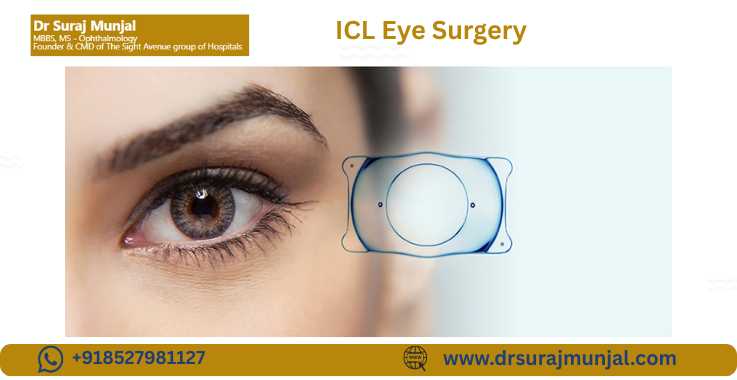
ICL stands for Implantable Collamer Lens. It is a type of lens that is implanted inside your eye to help correct vision problems, mainly nearsightedness, also known as myopia. If you’ve worn glasses for years and your prescription continues to strengthen, ICL may be a permanent solution to help you see clearly without the need for corrective lenses.
Unlike LASIK or PRK, which reshape your cornea using a laser, ICL doesn’t touch the cornea. Instead, a soft, flexible lens is placed behind the iris (the colored part of your eye) and in front of the natural lens. Think of it as adding a contact lens inside your eye that stays there permanently, improving your vision 24/7 without the need to remove or clean it.
Key Features of ICL:
- Made from Collamer: A biocompatible material that contains collagen. It helps the lens blend naturally with your eye.
- Reversible: If needed, the lens can be removed or replaced.
- UV Protection: ICL provides built-in protection from harmful ultraviolet (UV) rays.
- No Corneal Tissue Removal: Unlike LASIK, which removes part of your cornea, ICL leaves your cornea intact.
- No Dry Eye Issues: Since it doesn't disturb the corneal nerves, ICL is an ideal option for individuals prone to dry eyes.
- High Range of Correction: Suitable for people with prescriptions as strong as -20.00 diopters.
Ideal Candidates for ICL:
- Aged 21 to 45 years
- Stable vision prescription for at least one year
- Moderate to high nearsightedness
- Not suitable for LASIK due to thin corneas or chronic dry eyes
What Is Toric ICL?
Toric ICL is a specialized type of implantable lens designed to correct two common vision problems at once—nearsightedness (myopia) and astigmatism. While standard ICLs correct only myopia, Toric ICLs have an added feature to correct the uneven curvature of your cornea that causes blurry or distorted vision due to astigmatism.
Think of Toric ICL as a two-in-one solution. It works just like regular ICL, but with the added ability to fine-tune your vision by addressing both the spherical and cylindrical errors in your eye. It means you get clearer, sharper vision without the need for glasses or contacts, even if your prescription is more complex.
How It Works:
The Toric ICL is made from the same soft, collagen-based material as standard ICL. However, it includes a toric (cylindrical) component, which must be precisely aligned with your eye’s natural astigmatism axis. This alignment ensures the lens neutralizes the uneven curvature of your cornea.
Due to this added complexity, Toric ICL surgeries require a greater degree of surgical precision during implantation. But don’t worry—the procedure is still quick, safe, and highly effective when performed by a skilled ophthalmologist.
Key Features of Toric ICL:
- Dual Correction: Addresses both nearsightedness and astigmatism in a single procedure.
- Advanced Lens Design: Features both spherical and cylindrical powers built-in.
- Biocompatible Material: Made of Collamer for a natural fit and UV protection.
- Non-LASIK Alternative: Ideal for patients who are not suitable for corneal surgery.
- High Visual Accuracy: Offers crisp and stable vision with minimal side effects.
Ideal Candidates for Toric ICL:
- Aged between 21 and 45.
- Have moderate to high astigmatism (typically +0.75D to +4.00D).
- Also have moderate to high myopia.
- Not suitable for LASIK due to thin corneas, dry eyes, or irregular corneas.
- Looking for a long-term solution without permanently altering the eye.
What are the Key Differences Between ICL and Toric ICL?
Although ICL and Toric ICL are both forms of vision correction implants, they serve slightly different purposes based on the type of refractive error you're dealing with. Knowing their key differences will help you decide which one may be more suitable for your vision needs.
Type of Vision Problems Corrected
- ICL: Designed to correct only myopia (nearsightedness).
- Toric ICL: Corrects both myopia and astigmatism. Astigmatism causes blurry or distorted vision due to irregular curvature of the cornea.
If ICL is like getting a single prescription lens, Toric ICL is like getting a customized bifocal—tailored to handle more than one issue.
Lens Design and Structure
- ICL: Spherical lens designed with a single curvature to correct myopia.
- Toric ICL: Has a cylindrical component in addition to the spherical power to correct astigmatism. The toric design must be aligned precisely with your eye's astigmatism axis.
Toric lenses are axis-specific, meaning the surgeon must place them in the correct orientation to provide optimal visual clarity.
Surgical Technique and Precision
- ICL: The standard procedure is quicker and slightly more straightforward.
- Toric ICL: Requires greater surgical accuracy to align the lens axis properly. A misalignment, even by a few degrees, can affect the correction of astigmatism.
Toric ICL surgeries often involve preoperative mapping and marking of the eye to ensure perfect alignment during lens insertion.
Postoperative Visual Outcomes
- ICL: Excellent for patients with only myopia, delivering high-definition vision.
- Toric ICL: Offers a more comprehensive correction for individuals with both nearsightedness and astigmatism, resulting in sharper and more balanced vision.
Patients with astigmatism report improved contrast sensitivity and reduced night glare when wearing Toric ICL compared to wearing corrective glasses or contacts.
Patient Eligibility
- ICL: Suitable for individuals with myopia, especially those who are not candidates for LASIK.
- Toric ICL: Specifically for people with a combined refractive error (myopia + astigmatism). Not suitable for those with only one type of error.
The severity of astigmatism also matters. Toric ICL typically works for astigmatism of at least +0.75D or higher.
Cost Difference
- ICL: Generally less expensive as it corrects only one type of refractive error.
- Toric ICL: Slightly more costly due to its customized design and precise surgical technique.
However, Toric ICL can save patients money in the long term by reducing or eliminating the need for additional procedures or glasses for astigmatism.
Availability and Brand Options
- ICL: Widely available and performed by most refractive surgeons.
- Toric ICL: Available at specialized centers and often recommended for complex prescriptions.
|
Feature |
ICL |
Toric ICL |
|
Corrects |
Myopia only |
Myopia + Astigmatism |
|
Lens Design |
Spherical |
Spherical + Cylindrical (Toric) |
|
Surgical Complexity |
Moderate |
High (needs alignment precision) |
|
Ideal For |
Nearsighted patients |
Nearsighted + astigmatic patients |
|
Cost |
Lower |
Higher |
|
Post-op Vision |
High definition |
Sharper, more balanced vision |
|
Axis Alignment Required |
No |
Yes |
What are the Pros and Cons of ICL and Toric ICL?
When weighing the decision between ICL and Toric ICL, it’s essential to consider their distinct advantages and limitations—not just how they differ, but also how they impact real-world outcomes, safety, comfort, and long-term value. Below is a balanced and detailed breakdown.
Pros of ICL (Implantable Collamer Lens)
- Preserves Corneal Structure: ICL doesn't involve reshaping your cornea like LASIK. It leaves the natural corneal tissue intact, which is ideal for patients with thinner corneas.
- Reversible and Removable: Unlike laser-based surgeries, the lens can be easily removed or replaced if needed, offering you long-term flexibility.
- Excellent Vision Quality: Offers crisp, high-definition vision with improved contrast, especially in low-light conditions, thanks to the lens material’s light-filtering properties.
- Quick Visual Recovery: Most patients regain 90–95% of their vision within 24 to 48 hours after surgery.
- Ideal for High Myopia: Particularly effective for patients with extreme nearsightedness who are not suitable candidates for LASIK.
Cons of ICL
- Does Not Correct Astigmatism: This is a major drawback. It only addresses spherical errors (myopia), so patients with astigmatism may still require glasses or opt for a Toric ICL.
- Risk of Cataract Formation Over Time: Although rare, placing a lens in the eye’s posterior chamber can increase the risk of early cataract development, especially in older patients.
- Higher Cost Than Glasses or LASIK: Though safer in some cases, ICL tends to be more expensive upfront than LASIK or traditional corrective eyewear.
- Periodic Monitoring Required: Follow-ups are necessary to ensure the lens remains well-positioned and to monitor intraocular pressure.
Pros of Toric ICL
- Dual Correction in One Surgery: Corrects both nearsightedness and astigmatism, eliminating the need for glasses or contacts post-op for most patients.
- Greater Visual Precision for Complex Prescriptions: Patients with irregular corneas or high cylindrical power often report more stable and natural vision.
- Minimal Night Glare and Halos: Thanks to customized toric design and precision alignment, visual disturbances like halos are significantly reduced.
- No Dry Eye Issues: Since the procedure doesn’t affect the corneal nerves, Toric ICL is an excellent option for patients prone to dry eyes.
Cons of Toric ICL
- Requires Precise Alignment: The lens must be placed at an exact angle to align with the astigmatism axis. Even slight rotation can affect clarity, sometimes requiring repositioning.
- Slightly Longer Surgery Time: Due to the additional marking, rotation, and positioning steps required, the procedure takes somewhat longer than the standard ICL procedure.
- Costlier than Regular ICL: The customization and surgical expertise involved make Toric ICL more expensive.
- Limited Availability: Not every center or surgeon offers Toric ICL; it requires specialized training and high-quality diagnostics.
Who Should Choose ICL or Toric ICL?
Selecting between ICL and Toric ICL depends on the specific characteristics of your eyes and your vision correction goals. Not everyone qualifies for both procedures. A detailed eye examination is crucial to determine the best fit.
You Should Choose ICL If:
- Your primary issue is myopia.
- You have little or no astigmatism.
- Your corneas are too thin for LASIK.
- You want a reversible, long-term solution.
- You experience dry eye symptoms that LASIK might worsen.
You Should Choose Toric ICL If:
- You suffer from both myopia and moderate to high astigmatism.
- You need a more comprehensive correction for complex prescriptions.
- You want to eliminate dependence on glasses or contact lenses.
- You are looking for a high-definition vision upgrade with fewer night vision issues.
- You have been advised that LASIK may not be suitable due to your corneal shape or dry eyes.
Note: Your eye surgeon will evaluate multiple factors, including corneal thickness, pupil size, anterior chamber depth, and retinal health, before recommending either procedure.
How is the ICL and Toric ICL Procedure Performed?
Getting an ICL or Toric ICL implanted may sound complex, but the actual process is smooth, efficient, and performed under local anesthesia. Whether you're opting for a standard ICL or the toric version, the procedure follows a similar path, with a few additional steps for alignment in the case of the toric ICL.
Preoperative Evaluation
Before anything else, your eye surgeon will conduct a complete diagnostic workup to check if you're a good candidate.
Tests Typically Include:
- Measurement of refractive error (your glasses prescription)
- Corneal thickness and shape
- Anterior chamber depth
- Intraocular pressure
- Pupil size under low and bright light
- Retina and macula health check
In the case of Toric ICL, special attention is paid to measuring the degree and axis of your astigmatism to ensure proper lens alignment.
The Day of Surgery
Most procedures are performed as outpatient procedures (you go home the same day), and both eyes are often treated on separate days for safety.
- Topical Anesthesia: Eye drops are used to numb the surface of your eyes. You’ll be awake, but you won’t feel any pain.
- Pupil Dilation: Your pupils will be dilated to make room for the lens implantation.
- Micro-Incision: A tiny incision (about 2.5–3 mm) is made on the side of your cornea.
- Lens Insertion: The ICL or Toric ICL is folded and inserted through the incision.
- Lens Positioning:
- For ICL, the lens simply unfolds into place behind the iris.
- For Toric ICL, the surgeon will rotate the lens to match the axis of astigmatism.
- Lens Adjustment: The surgeon ensures the lens is appropriately seated and centered.
- Wound Sealing: The incision is self-healing and typically does not require stitches.
- Post-op Drops: Antibiotic and anti-inflammatory drops are applied to the affected area.
Time Taken: The procedure usually takes 20 to 30 minutes per eye.
Immediately After Surgery
- You’ll rest in a recovery room for about 30–60 minutes.
- A protective eye shield may be placed to prevent accidental rubbing.
- You’ll be sent home the same day with a prescription for eye drops and aftercare instructions.
Post-Procedure Follow-up Schedule
|
Timeline |
Purpose of Visit |
|
Day 1 (Next Day) |
Check lens positioning, eye pressure, and clarity |
|
1 Week |
Monitor healing and inflammation |
|
1 Month |
Assess vision stability and overall success |
|
3–6 Months |
Final evaluation, possible refinement if needed |
Important Notes for Toric ICL Patients
- In the rare case that the Toric ICL rotates after surgery, your vision may become blurry again. A minor repositioning procedure can correct this.
- Always report any sudden changes in vision, pain, or flashes of light after surgery to your doctor immediately.
Cost Comparison Between ICL and Toric ICL in India
If you're considering implantable lenses, such as ICL or Toric ICL, one of the key questions you'll have is about the cost. Fortunately, India is one of the most affordable destinations for high-quality eye care, offering advanced vision correction procedures like ICL and Toric ICL at a fraction of the cost in countries like the USA, UK, or UAE.
How Much Does ICL Surgery Cost in India?
The average ICL surgery cost in India ranges from ₹1,00,000 to ₹1,70,000 per eye (Approx. $1,200 – $2,000 per eye).
How Much Does Toric ICL Surgery Cost in India?
Since Toric ICL involves advanced lens customization and precise surgical alignment to correct astigmatism, the cost is slightly higher. Toric ICL surgery costs in India range from ₹1,50,000 to ₹2,20,000 per eye (approximately $1,800 – $2,700 per eye).
ICL vs Toric ICL Cost Comparison Table
|
Country |
ICL (per eye) |
Toric ICL (per eye) |
|
India |
₹1,00,000 – ₹1,70,000 |
₹1,50,000 – ₹2,20,000 |
|
USA |
₹3,50,000 – ₹4,50,000 |
₹4,00,000 – ₹5,50,000 |
|
UK |
₹2,80,000 – ₹3,80,000 |
₹3,50,000 – ₹5,00,000 |
|
UAE |
₹3,00,000 – ₹4,50,000 |
₹4,00,000 – ₹5,50,000 |
India offers the same FDA-approved ICL technology and expert surgical hands for 60–70% less than Western countries.
What Does the Cost Include?
When you pay for ICL or Toric ICL surgery in India, here’s what’s typically included:
- Pre-operative eye evaluation
- Cost of the imported Visian ICL/Toric ICL lens
- Surgeon’s consultation and surgical fee
- Operation theater charges
- Eye drops and medication (starter pack)
- Follow-up visits (usually 1–3)
Some hospitals may also offer package deals for both eyes, so it’s worth asking in advance.
What are the Factors Affecting ICL and Toric ICL Cost in India?
- Type of lens (ICL vs Toric ICL; branded vs generic)
- City and clinic reputation (e.g., Delhi, Mumbai, Chennai may be pricier)
- Surgeon’s experience and international certifications
- Diagnostic tests and postoperative care are included in the package
Why International Patients Choose India for ICL and Toric ICL
- World-class hospitals with US FDA-approved lenses
- Globally trained refractive surgeons
- English-speaking medical teams
- Zero waiting time
- Affordable travel and accommodation
Recovery Timeline and Aftercare Instructions
The recovery from ICL or Toric ICL is typically quick and smooth, with most patients reporting clearer vision within 24 to 48 hours. However, complete healing and stabilization can take a few weeks. Following your aftercare plan is essential to protect your vision and ensure the best possible outcome.
Immediate Recovery Timeline
|
Time Period |
What to Expect |
|
First 24–48 hours |
Mild blurriness, light sensitivity, and tearing. Vision starts to clear rapidly. |
|
Days 2 to 7 |
Improved vision, but avoid strain and protect the eyes from dust and water. |
|
Weeks 2 to 4 |
Vision stabilizes further. Resume most normal activities with caution. |
|
1 to 3 months |
Complete healing and final visual clarity achieved. |
Medication and Eye Drops
You’ll be prescribed a course of:
- Antibiotic drops (to prevent infection)
- Steroid drops (to reduce inflammation)
- Lubricating drops (to ease any mild discomfort)
Follow the dosage strictly, even if your eyes feel fine. Skipping drops may delay healing or cause complications.
What to Avoid During the First Week
To ensure smooth recovery:
- Don’t rub your eyes.
- Avoid heavy lifting or bending.
- Refrain from swimming, sauna, or hot tubs.
- Avoid eye makeup and contact sports.
Wear protective eyewear or shields at night for the first few days, especially if you’re prone to touching your face while sleeping.
Will I Need Glasses After Surgery?
- ICL patients: If you have no astigmatism or only mild astigmatism, you may not need glasses at all.
- Toric ICL patients: Most enjoy complete freedom from glasses or contacts, but a few may still require very low-power lenses for tasks such as night driving or reading.
What are the Risks and Potential Complications of ICL and Toric ICL?
While ICL and Toric ICL surgeries are considered very safe and highly effective, they are still surgical procedures. Like any operation, they come with certain risks and potential complications.
Common, Minor Side Effects (Usually Temporary)
These are typically mild and resolve on their own within a few days or weeks:
- Blurry vision for the first 24–48 hours
- Dry or gritty sensation in the eye
- Mild light sensitivity
- Glare or halos, especially around lights at night (improves over time)
- Redness or watery eyes
These side effects are usually part of the normal healing process and don’t require medical intervention unless they worsen.
Risks Associated with ICL and Toric ICL
Though rare, here are some complications that may arise:
ICL-Specific Risks:
- Elevated Intraocular Pressure (IOP): Fluid buildup can increase pressure inside the eye. Usually treated with medications.
- Cataract Formation: Long-term contact between the ICL and the natural lens might cause early cataracts. More common in older patients or if the ICL is improperly sized.
- Lens Dislocation: The ICL may shift slightly if not appropriately placed, which can affect visual clarity.
Toric ICL-Specific Risks:
- Lens Rotation: The most common concern with Toric ICL. If the lens rotates off-axis, your astigmatism won’t be corrected properly. It may require a quick repositioning procedure.
- Residual Astigmatism: If the alignment is slightly off or astigmatism changes over time, you might still need minor glasses for specific tasks.
ICL and Toric ICL vs LASIK – Which One Is Better for You?
When it comes to permanent vision correction, LASIK is the most well-known option. But it’s not ideal for everyone. That’s where ICL and Toric ICL come in, especially for people with thin corneas, severe myopia, or dry eye issues.
|
Feature |
LASIK |
ICL |
Toric ICL |
|
Corrects |
Myopia, Astigmatism (mild) |
Myopia (moderate to high) |
Myopia + Astigmatism |
|
Cornea Requirement |
Must be thick enough |
Not required |
Not required |
|
Tissue Removal |
Yes (laser reshapes cornea) |
No |
No |
|
Reversible |
No |
Yes |
Yes |
|
Dry Eye Risk |
Moderate to High |
Very Low |
Very Low |
|
Visual Recovery |
Fast (1–3 days) |
Fast (1–2 days) |
Fast (1–2 days) |
|
Long-Term Adjustability |
Not possible |
Possible |
Possible |
|
Ideal for Astigmatism |
Only mild cases |
No |
Yes (moderate to high) |
ICL and Toric ICL Are Better If:
- You have high refractive error (greater than -8.00 D).
- Your corneas are thin or irregular, making LASIK an unsafe option.
- You suffer from chronic dry eyes.
- You want a reversible or removable solution.
- You’ve been told you are not eligible for LASIK.
LASIK May Be Better If:
- Your prescription is mild to moderate.
- You have thick and healthy corneas.
- You’re looking for a quick, affordable option with minimal maintenance.
- You prefer a non-implant-based solution.
What Global Surgeons Say
Experts worldwide agree that LASIK is an excellent option for the right candidates. Still, ICL and Toric ICL are revolutionary alternatives for individuals who require more precision or have been ruled out for LASIK.
Conclusion
When it comes to advanced vision correction, both ICL and Toric ICL represent the pinnacle of modern refractive surgery. These implantable lenses offer sharp, long-lasting vision. They are particularly beneficial for individuals who may not be eligible for LASIK or PRK due to thin corneas, high prescriptions, or dry eye conditions.
If your primary problem is nearsightedness (myopia) and you don’t have astigmatism, then standard ICL is your best bet. If you have both myopia and astigmatism and want to be free from glasses entirely, then Toric ICL offers the best solution with dual correction.
Book a consultation with a qualified ophthalmologist to determine whether ICL or Toric ICL is right for you. With the correct diagnosis, skilled hands, and informed choices, perfect vision is well within reach.
Frequently Asked Questions
Yes, both lenses are designed to stay in your eye permanently, but they can be removed or replaced if needed. That’s one of the most significant advantages over LASIK, which permanently changes your cornea.
No. Once implanted, you won’t feel the ICL or Toric ICL. The lens is placed behind your iris and does not touch the sensitive parts of your eye.
Most patients experience clear vision within 24 to 48 hours. Complete healing may take a few weeks, but you can resume most daily activities after 2–3 days.
Absolutely. In fact, ICL and Toric ICL are ideal for patients with thin corneas, where LASIK may be unsafe.
Success rates are incredibly high, with over 95% of patients achieving 20/20 vision or better. Patient satisfaction is among the highest in all types of vision correction surgeries.
Not at all. The procedure is done under local anesthesia using numbing eye drops. You’ll feel no pain, just some pressure during the surgery.
Your eye surgeon will measure the amount of astigmatism in your eyes. If it’s above a certain threshold (usually +0.75D or more), Toric ICL will be recommended.
Sometimes, yes. ICL can be used as an enhancement procedure if your LASIK results start to fade or if your prescription wasn’t fully corrected.
Yes. You can usually travel after 2–3 days, but it’s best to schedule your first follow-up visit before flying. If you're an international patient in India, plan to stay for at least 5–7 days after surgery.