Secondary Cataract Surgery Cost in India
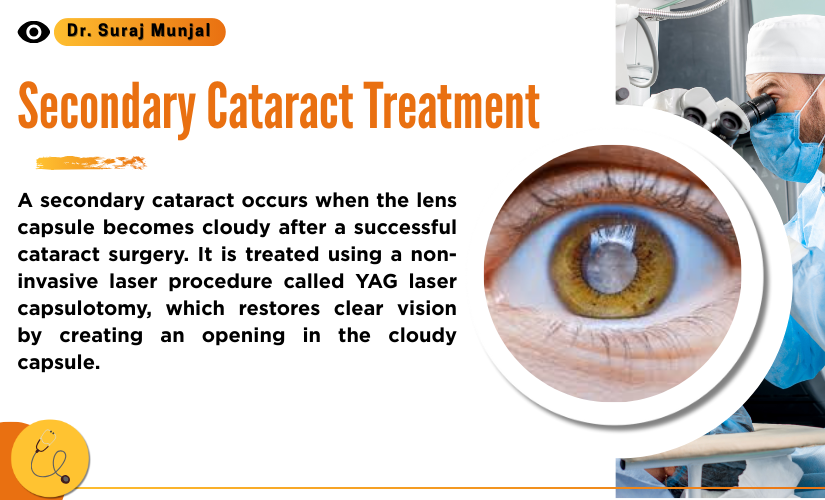
A secondary cataract (aka posterior capsule opacification) is a common side effect that may appear months or years after cataract surgery. While the original cataract is removed during surgery, the thin membrane (capsule) that holds the new intraocular lens can become cloudy over time, causing vision to blur again. Fortunately, this condition is easily treated using a simple, non-invasive laser procedure called YAG laser capsulotomy.
India offers high-quality and affordable options for treating secondary cataracts, making it a preferred destination for international patients seeking effective treatment. The cost of YAG laser capsulotomy in India typically ranges from $150 to $300 per eye, depending on the city, hospital, and technology used. It is significantly lower compared to countries in the Gulf, Africa, or Europe, where the same treatment can cost up to five times more.
Equipped with advanced laser systems and highly skilled ophthalmologists, Indian eye hospitals ensure safe and efficient care with minimal waiting time. For travelers seeking reliable and low-cost solutions for post-cataract vision problems, India is an ideal destination.
Table of Contents
What Is a Secondary Cataract and Why Does It Occur?
A secondary cataract is not a new cataract forming in the eye but rather a clouding of the posterior capsule. This thin, transparent membrane holds the artificial lens implanted during cataract surgery. This condition, medically known as posterior capsule opacification, can occur weeks, months, or even years after a successful cataract operation. It is one of the most common long-term complications following cataract surgery and affects up to 20–30% of patients.
During cataract surgery, the surgeon removes the cloudy natural lens and implants an intraocular lens in its place. The IOL sits within the capsular bag, a thin membrane that is left intact to hold the lens in position. Over time, some residual lens epithelial cells may grow and multiply on the back surface of this capsule. As these cells accumulate, they can form a hazy or fibrous layer that interferes with the passage of light through the lens, causing symptoms that closely resemble the original cataract.
The exact reason why PCO develops varies from individual to individual. Factors like the type of intraocular lens used, surgical technique, a person's age, and pre-existing eye conditions may contribute. Younger patients and those with specific eye diseases are more likely to develop PCO at an earlier age. However, this condition is not harmful to the eye and doesn't damage the implanted lens.
What makes secondary cataracts different from the initial cataract is that it doesn't require invasive surgery to fix. Instead, a painless and quick outpatient procedure called YAG laser capsulotomy is used to create an opening in the cloudy capsule, restoring a clear visual pathway. The laser energy is precisely focused to vaporize the opacified area without making any cuts or incisions. It typically takes only a few minutes and offers near-instant improvement in vision. Since the procedure is non-invasive, recovery is fast, and patients can return to normal activities within 24 hours.
How Is Secondary Cataract Treated?
The treatment for secondary cataracts is straightforward, fast, and highly effective. Once a person is diagnosed with posterior capsule opacification, the standard solution is a procedure called YAG laser capsulotomy. It is a non-surgical, outpatient laser procedure that restores clear vision by creating a tiny opening in the clouded capsule behind the artificial lens.
- Before the procedure begins, the patient is seated comfortably in front of a laser machine. No need for hospitalization or injections—only numbing eye drops are applied to ensure comfort.
- The ophthalmologist then uses a YAG (yttrium-aluminum-garnet) laser to create a central opening in the cloudy posterior capsule. It allows light to pass through to the retina without obstruction, clearing up the blurred or hazy vision caused by the opacification.
- The laser pulses are extremely precise and do not touch any other part of the eye. The entire process takes ~5 to 10 minutes per eye and is entirely painless.
- Most patients notice improvement in their vision within a few hours, though it may take a day or two for some to experience the full benefit. There are no incisions or stitches, and the risk of infection is extremely low.
- Following the procedure, the doctor may prescribe anti-inflammatory eye drops to reduce any minor swelling or discomfort.
- Patients are generally allowed to resume normal activities the same day or the next, though it's recommended to avoid driving immediately after the procedure.
- Follow-up is typically done within a week to ensure the eye is healing well and the vision is stable.
One of the primary advantages of YAG laser capsulotomy is that it typically requires only a single procedure. Once the cloudy membrane is removed, the problem does not recur. The results are permanent for most patients, and the restored vision remains stable over time.
Indian hospitals and eye clinics are equipped with state-of-the-art laser platforms that meet international standards for quality and precision. Procedures are performed by experienced ophthalmologists specializing in refractive and cataract-related conditions.
What is the Cost of Secondary Cataract Treatment in India?
The cost of treating a secondary cataract in India is remarkably affordable, especially when compared to prices in the Gulf, CIS, or African nations. The procedure, YAG laser capsulotomy, is both simple and effective, and its lower cost does not compromise the quality of care or technology used. It has made India a preferred destination for international patients seeking reliable and economical solutions for post-cataract vision problems.
On average, the cost of YAG laser capsulotomy for secondary cataract treatment in India ranges between $150 and $300 per eye. Prices may vary slightly depending on the hospital, the surgeon's experience, the city, and whether additional services, such as diagnostics or follow-up care, are included in the package. Cities such as Delhi, Mumbai, Chennai, and Bengaluru offer some of the best eye care centers in the country, with transparent and competitive pricing.
Compared to other regions, this pricing is significantly lower. In countries like the UAE or Saudi Arabia, the same procedure can cost anywhere from $800 to $1,200. In South Africa or Nigeria, access to advanced laser equipment is limited, and when available in private hospitals, the price often exceeds $600. Similarly, patients in CIS countries, such as Kazakhstan or Uzbekistan, may face long waiting periods in public systems or steep fees in private clinics.
What makes India's pricing more attractive is that it often includes comprehensive services—pre-operative consultation, detailed eye scans, laser procedures, post-procedure medications, and follow-up visits. Some hospitals even provide assistance with airport transfers and accommodations for international patients, minimizing unexpected out-of-pocket expenses.
There is no difference in the technology used for domestic and international patients. Leading hospitals in India utilize FDA-approved YAG laser machines from top global manufacturers, including Zeiss, Ellex, and Lumenis, ensuring that patients receive the same high-quality treatment they would expect in Europe or the Middle East.
Moreover, for patients traveling from abroad, Indian hospitals typically complete the entire process (diagnosis, treatment, and follow-up) in just 2 to 3 days, allowing for minimal disruption to travel schedules.
Cost Comparison with Other Countries
In India, the average cost of treating a secondary cataract with YAG laser capsulotomy is between $150 and $300 per eye. It includes consultation, the laser procedure, post-operative medication, and often a follow-up visit. No hidden charges, no delays, and no compromise on technology or surgical expertise. Even after factoring in travel and accommodation costs, most international patients from the GCC, Africa, or CIS find the overall expense to be far lower than what they would pay in their home country.
Gulf Countries (UAE, Saudi Arabia, Qatar, Iran)
In the Gulf region, secondary cataract treatment using YAG laser capsulotomy is widely available but comes with a high price tag. Patients in the United Arab Emirates or Saudi Arabia can expect to pay between $800 and $1,200 per eye in private hospitals. Although insurance may cover part of the cost, many plans classify the procedure as non-urgent unless vision loss is severe. Additional charges for diagnostic scans and follow-ups often apply, increasing the total out-of-pocket cost. Compared to this, Indian hospitals offer the same advanced laser treatment for nearly one-fourth of the price, with much shorter wait times.
African Countries (Nigeria, Kenya, Ghana)
In African nations, access to modern ophthalmic technology varies greatly. In countries like Nigeria or Kenya, YAG laser machines are primarily found in urban private hospitals, where treatment costs range from $500 to $700 per eye. Public healthcare may offer lower pricing, but it often comes with long queues and limited availability. As a result, many patients from Africa choose to travel abroad to avoid delays and ensure more consistent care. In India, not only is the procedure more affordable (starting around $150), but patients also benefit from advanced technology and quicker turnaround.
CIS Countries (Kazakhstan, Uzbekistan, Azerbaijan)
In Central Asian countries, treatment for secondary cataracts is becoming increasingly common in private clinics, but the costs remain relatively high. Patients in Kazakhstan or Uzbekistan may pay anywhere between $400 and $800 per eye for YAG laser capsulotomy. While some clinics offer high standards of care, access to English-speaking specialists and modern laser platforms remains limited outside major cities. In contrast, Indian hospitals provide international-level facilities, top ophthalmologists, and transparent pricing, all at a fraction of the cost seen in most CIS countries.
What Affects the Cost of Treatment?
The cost of treating a secondary cataract with YAG laser capsulotomy may appear straightforward at first glance, but several important factors influence the final price a patient pays.
- City and Hospital Tier: Prices can vary depending on the city and the type of healthcare facility chosen. Metropolitan areas like Delhi, Mumbai, and Chennai often house premium eye hospitals equipped with the latest laser systems. These centers charge slightly more compared to smaller cities or local clinics. However, the higher cost often reflects better technology, experienced surgeons, and faster turnaround times. Patients coming from abroad typically prefer these cities due to their better connectivity and support services.
- Experience of the Surgeon: Ophthalmologists with vast experience in laser eye procedures or international training may charge more for their services. In many top hospitals, such as those led by reputed surgeons like Dr. Suraj Munjal, patients benefit from years of surgical expertise, greater safety, and precision. While this may increase the procedure cost slightly, it often results in better outcomes and greater peace of mind, especially for patients traveling long distances.
- Technology Used: Not all YAG lasers are the same. Advanced machines from global manufacturers such as Zeiss or Lumenis offer superior accuracy and faster treatment. Clinics using FDA-approved, high-quality laser systems may have higher operating costs, which are reflected in the final pricing. However, these machines often result in shorter procedures and fewer complications, making them a valuable choice for international patients who want reliable care in a single visit.
- Pre- and Post-Treatment Services: Some hospitals offer all-inclusive packages that include pre-operative tests, the procedure itself, and follow-up care, while others may charge separately. These bundled packages are often more economical for foreign patients, especially when arranged through a hospital that specializes in medical tourism. The inclusion of post-procedure medications and consultation can also impact the total cost.
- Additional Patient Needs: For international patients, the hospital may arrange additional services, such as airport transfers, translation support, or hotel accommodations, which can be included in the overall bill. These optional conveniences are often worth the cost for a seamless treatment experience but are not included in every standard treatment package.
Why Choose India for Secondary Cataract Treatment?
When it comes to quality and affordability, India stands out as a leader for secondary cataract treatment. Patients from the GCC, CIS, and African countries are increasingly choosing to travel here, not just for the cost savings but for the expertise and convenience that rival some of the world's best global healthcare systems.
- World-Class Technology at an Affordable Price: Indian hospitals are equipped with FDA-approved YAG laser platforms from trusted global manufacturers like Zeiss, Ellex, and Lumenis. These technologies are comparable to those used in the US, Europe, or the Middle East. Despite this, the cost of treatment is far lower, allowing patients to receive world-class care without financial strain.
- Expertise That Meets Global Standards: Highly experienced ophthalmologists, many of whom have trained or worked internationally, routinely perform YAG laser capsulotomy. Surgeons such as Dr. Suraj Munjal, renowned for his expertise in anterior segment surgeries, consistently deliver excellent outcomes and personalized care. The depth of clinical experience ensures that complications are rare and recovery is swift and efficient.
- No Waiting Times, Immediate Scheduling: Unlike public healthcare systems in several countries where waitlists are long, Indian hospitals offer same-week appointments and consultations. Patients who need quick vision correction can get diagnosed, treated, and discharged within a matter of days—an especially valuable advantage for short-stay medical travelers.
- All-Inclusive, Transparent Packages: Indian hospitals often provide clearly priced, all-inclusive packages for international patients. These cover consultation, diagnostics, treatment, medication, and follow-up care, with no hidden fees. This transparency in pricing helps patients budget accurately and feel more confident about their treatment choices.
International Patient Services and Support
For patients traveling from abroad, the treatment journey goes far beyond the procedure itself. Indian hospitals have recognized this and developed robust support systems specifically designed to enhance the experience for international visitors. From the moment a patient inquires about secondary cataract treatment to the day they return home with clearer vision, the entire process is guided with care and professionalism.
- Most reputed eye hospitals in cities like Delhi, Mumbai, and Chennai have dedicated international patient departments. These teams assist with everything, starting with teleconsultations before travel, airport pickup upon arrival, and arranging nearby hotels or guesthouses.
- Some hospitals have partnerships with hotels that offer discounted rates for medical travelers.
- At the hospital, international coordinators assist with registration, translation (for languages such as Arabic, Russian, French, and Bangladeshi), and appointment scheduling.
- There is a clear understanding that many patients travel alone or with minimal support, so the process is simplified to avoid stress.
- Payment systems are flexible, with most centers accepting international credit cards, bank transfers, and on-site currency exchange services.
- Doctors and staff are also trained in cultural sensitivity. They understand that a patient arriving from Kenya may have different concerns than one from Uzbekistan.
- Medical teams take the time to explain the condition, the YAG laser procedure, and recovery in clear language, often with the assistance of multilingual interpreters.
- For follow-ups, patients can stay in touch via email or WhatsApp.
- Post-procedure care is usually minimal, but hospitals remain available for weeks afterward in case questions arise.
- Discharge papers, prescriptions, and reports are provided in English and in a format suitable for insurance or future reference in the patient's home country.
What is the Success Rate of Secondary Cataract Treatment in India?
Secondary cataract treatment, specifically YAG laser capsulotomy, is known for its extremely high success rate. For most patients, the procedure restores clear vision within hours and requires no surgical incisions or hospital stay. Because of its safety, simplicity, and effectiveness, it is considered the gold standard for treating posterior capsule opacification worldwide.
- Extremely High Success Rates with Minimal Risk: In India, the success rate of YAG laser capsulotomy for treating secondary cataracts exceeds 98%, matching or even surpassing global benchmarks. When performed by experienced ophthalmologists using advanced laser platforms, the procedure is quick, precise, and offers long-lasting results. Complications are rare, and serious side effects, such as retinal detachment or elevated intraocular pressure, occur in less than 1% of patients when proper protocols are followed.
- Rapid Improvement in Vision After Treatment: Most patients notice significant visual improvement within 24 to 48 hours after the procedure. Blurred or hazy vision typically clears up as soon as the cloudy capsule is opened with the laser. Some individuals may experience floaters or mild eye irritation for a day or two, but these symptoms typically resolve without the need for further intervention. Doctors prescribe anti-inflammatory eye drops to reduce minor swelling and support healing.
- Quick Recovery and Return to Daily Activities: Unlike traditional surgery, there is no need for sutures, no risk of infection from an incision, and no physical downtime. Patients can return to light activities, such as reading or walking, on the same day and resume work or travel within 24 hours. However, it is advisable to avoid rubbing your eyes or engaging in strenuous activity for the first two days after the procedure.
- Rarely Requires Repeat Procedures: A significant benefit of this treatment is that it rarely requires repeat procedures. Once the capsule is cleared using the laser, the membrane does not usually become cloudy again. For this reason, patients who undergo the procedure (especially those from overseas) can travel back home without worrying about further complications or follow-up treatments.
Ophthalmologists, such as Dr. Suraj Munjal, have performed thousands of successful YAG laser procedures on both domestic and international patients, ensuring consistent outcomes. With skilled hands and modern equipment, vision restoration after secondary cataracts is no longer a drawn-out process, but a quick and reliable solution that brings lasting clarity and comfort.
Recovery Timeline After Treatment
Recovery after YAG laser capsulotomy for secondary cataract is typically quick and uneventful. Most patients are surprised at how smooth the process is, both in terms of time and comfort. Unlike traditional surgical procedures that require hospital stays or extended follow-up, this laser-based treatment allows patients to resume daily activities almost immediately.
- Immediate Post-Procedure Experience: YAG laser capsulotomy is performed in a clinical setting and typically takes no more than 10 minutes. Once the procedure is complete, the patient is observed for a short time and then discharged the same day. There is no need for stitches, bandages, or an overnight hospital stay. Numbing eye drops make the treatment painless, and patients can walk out of the eye hospital within an hour.
- Vision Improvement Within the First 24–48 Hours: Most patients begin to notice clearer vision within the first 24 hours. The blurriness or hazy effect caused by the secondary cataract diminishes quickly once the laser creates a clear pathway for light to reach the retina. Some individuals may take up to two days for complete visual clarity, especially if mild swelling is present.
- Mild and Temporary Side Effects: It is common to experience minor symptoms, such as floaters, sensitivity to bright light, or mild discomfort, after laser treatment. These effects are temporary and usually disappear within a few days. Anti-inflammatory eye drops are prescribed to ease any irritation and promote faster healing. Eye surgeons advise patients to avoid rubbing their eyes or exposing them to dust during this period.
- Return to Daily Activities and Travel Readiness: By the second or third day, most patients resume regular tasks, such as reading, watching TV, using digital devices, or engaging in light physical activity. Driving is often permitted once the ophthalmologist confirms that vision has stabilized. For international patients, this quick recovery allows them to return home confidently within just a few days of treatment.
- Long-Term Outcome and Follow-Up Care: YAG laser capsulotomy is considered a permanent solution for posterior capsule opacification. Once the cloudy part of the capsule is removed, the problem rarely returns. Patients may not need any further procedure. While routine eye checkups are recommended, there is usually no need for additional interventions. Hospitals also offer remote support via email or WhatsApp for international patients, ensuring they remain connected even after returning home.
Patient Testimonials
Maryam S., Muscat, Oman
"I had my cataract surgery last year, but my vision became blurry again. I was worried I'd need another surgery. A friend in Dubai recommended India, and I found Dr. Suraj Munjal's team through an online portal. They diagnosed me with secondary cataract and did the laser procedure the same day I landed. It was painless, and within a few hours, I was able to see clearly again. The hospital even arranged my hotel and airport pickup. I'm thankful for the honest care I received."
Haider A., Baghdad, Iraq
"I traveled to New Delhi for what I thought would be another major eye surgery. Instead, after a detailed eye scan, the doctor told me I just needed a laser treatment. I was skeptical at first, but Dr. Munjal explained everything patiently. The laser session took less than 10 minutes. There was no discomfort, and by the next morning, my vision was back. The professionalism, cost, and hospitality were beyond expectations."
Sadia R., Dhaka, Bangladesh
"My mother had undergone cataract surgery in Bangladesh two years ago. She started complaining of clouded vision again. We consulted local doctors, but the equipment for the YAG laser wasn't readily available. We came to India, and at the Sight Avenue, everything was done quickly. They treated her with utmost care. The cost was affordable, the technology was far more advanced, and within two days, we were on a flight back home. She's reading without glasses again."
Chanda M., Lusaka, Zambia
"I heard about Indian eye care from my cousin, who had a similar condition. Traveling alone made me anxious, but the hospital's international desk arranged everything—visa letters, a hotel, and local transport. The treatment was simple and took only a few minutes. The floaters disappeared by the second day, and I was able to enjoy sightseeing before heading back to Zambia. I couldn't believe something so advanced could be so affordable and efficient.
Frequently Asked Questions
A secondary cataract occurs when the lens capsule becomes cloudy after a successful cataract surgery. It is treated using a non-invasive laser procedure called YAG laser capsulotomy, which restores clear vision by creating an opening in the cloudy capsule.
The average cost of YAG laser capsulotomy in India ranges from $150 to $300 per eye. This cost usually includes consultation, the procedure, medications, and follow-up care. Pricing may vary slightly depending on the hospital and the city.
In many countries, insurance may cover YAG laser capsulotomy if it is deemed medically necessary. In India, domestic insurance plans may cover the procedure, but international patients are typically expected to pay upfront and claim reimbursement later from their local providers. It's advisable to check with your insurer in advance.
No. Most patients complete the entire process, including consultation, procedure, and follow-up, within 2 to 3 days.
No, the procedure is entirely painless. Numbing eye drops are used, and the treatment itself lasts only a few minutes. Patients are awake throughout and can walk out immediately after the session.
Yes, in most cases, the laser treatment offers a permanent solution. Once the cloudy part of the lens capsule is cleared, it typically does not recur. Most patients enjoy long-term vision clarity without needing further procedures.
YAG laser capsulotomy is a safe procedure with a very low risk profile. In rare cases, patients may experience temporary floaters or increased eye pressure, both of which can be managed with medication.
It depends on your doctor's recommendation. If both eyes are affected, some specialists prefer to treat one eye first, monitor the recovery, and then proceed with the second eye. In urgent cases, both may be treated together.
Patients should bring their previous eye surgery records, current prescriptions (if any), and identification documents. Hospitals may also ask for basic lab reports.
