Robotic Cataract Surgery Cost in India
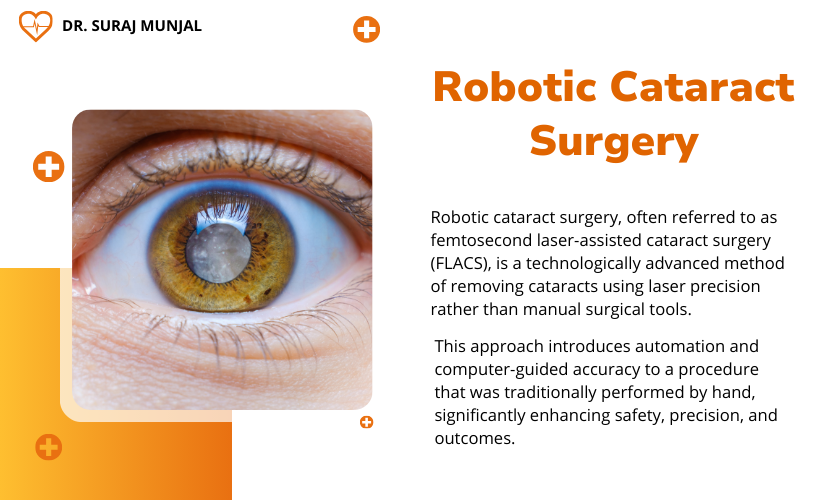
Robotic cataract surgery is one of the most advanced techniques available for treating cataracts today. This technology-driven procedure uses computer-guided lasers to enhance precision during surgery, reduce human error, and improve visual outcomes. Unlike traditional methods that rely solely on manual incisions and ultrasound energy, robotic-assisted surgery offers a more refined and personalized approach to cataract removal.
India has emerged as a top destination for robotic cataract surgery, offering world-class technology, highly skilled ophthalmologists, and patient-friendly pricing. The procedure is widely available in India’s leading eye hospitals, many of which are equipped with FDA-approved femtosecond laser platforms such as Alcon LenSx, Catalys, and LensAR.
The cost of robotic cataract surgery in India ranges from ₹85,000 to ₹1,80,000 per eye, which is approximately $1,000 to $2,200, depending on the hospital, surgeon’s experience, lens choice, and city. Despite being a high-end procedure globally, India makes it accessible to international patients at a fraction of the cost in countries like the USA, UK, or UAE.
Table of Contents
What Is Robotic Cataract Surgery?
Robotic cataract surgery, often referred to as femtosecond laser-assisted cataract surgery (FLACS), is a technologically advanced method of removing cataracts using laser precision rather than manual surgical tools. This approach introduces automation and computer-guided accuracy to a procedure that was traditionally performed by hand, significantly enhancing safety, precision, and outcomes.
Unlike conventional cataract surgery, where the surgeon uses a blade to make incisions and manually breaks up the cloudy lens, robotic cataract surgery uses a femtosecond laser to perform these steps. The laser creates precise incisions in the cornea, opens the lens capsule, and fragments the cataract into tiny pieces. This laser assistance minimizes the use of ultrasound energy and reduces trauma to the eye’s internal structures.
The procedure is not entirely robotic in the sense of a machine performing everything independently. Instead, it blends real-time imaging, computer-assisted planning, and surgeon control with laser technology to deliver highly customized results. The surgeon oversees the entire process, guiding the laser based on a 3D map of the eye, which is generated using high-resolution optical coherence tomography (OCT).
This method offers enhanced control over key surgical steps such as:
- Corneal incision location and depth
- Precise opening of the anterior lens capsule (capsulorhexis)
- Efficient and uniform lens fragmentation
- Reduced energy delivery to the eye during lens removal
Patients who opt for robotic cataract surgery benefit from a more predictable surgical outcome, lower chances of complications, and a higher likelihood of achieving desired vision without glasses, especially when combined with premium intraocular lenses.
This innovation represents the next step in cataract surgery evolution, appealing especially to tech-savvy patients or those seeking the most advanced, blade-free approach for their eye care.
How Does a Femtosecond Laser Improve Cataract Surgery?
The femtosecond laser has revolutionized cataract surgery by bringing unmatched precision, control, and safety to each step of the procedure. Unlike manual cataract surgery, where the surgeon uses handheld instruments, the femtosecond laser performs critical steps with micrometer-level accuracy. This results in more predictable outcomes, especially when paired with premium intraocular lenses (IOLs).
- Enhanced Precision in Corneal Incisions: Traditionally, the surgeon makes corneal incisions manually with a blade. The femtosecond laser automates this process, creating incisions with precise depth, size, and location. These laser-guided incisions are more consistent and self-sealing, which lowers the risk of infection and speeds up healing.
- Perfectly Centered and Circular Capsulotomy: One of the most critical steps in cataract surgery is creating an opening in the capsule that holds the natural lens—called the capsulotomy. A perfect, well-centered circular capsulotomy ensures the intraocular lens sits in the ideal position, reducing the chances of lens tilt, rotation, or visual aberrations. The laser performs this step with remarkable uniformity that is difficult to match manually.
- Pre-Fragmentation of the Cataract Lens: The laser pre-softens and fragments the cloudy lens before the surgeon removes it. This step reduces the need for high levels of ultrasound energy, which is typically required in traditional phacoemulsification. Lower energy means less trauma to the surrounding eye tissues, especially the delicate corneal endothelium. As a result, patients experience quicker visual recovery and less post-operative inflammation.
- Personalized Surgical Planning: The system captures detailed 3D images of the eye using optical coherence tomography (OCT). Based on these images, the surgeon customizes the procedure to the patient’s exact eye anatomy. This level of planning is especially beneficial for patients with irregular corneas, shallow anterior chambers, or those requiring toric or multifocal IOLs.
- Improved Visual Outcomes with Premium Lenses: Because the laser offers high precision in lens placement and alignment, it significantly enhances the effectiveness of advanced IOLs. Patients choosing multifocal or toric lenses see better outcomes in terms of spectacle independence and visual clarity at multiple distances.
Who Should Choose Robotic Cataract Surgery?
Robotic cataract surgery, or femtosecond laser-assisted cataract surgery (FLACS), is not necessary for every patient with a cataract. However, certain individuals benefit significantly from the added precision, safety, and customization that this technology provides. Eye surgeons carefully assess each case before recommending the robotic approach, especially when the goal is to achieve superior visual results with fewer complications.
- Patients Seeking Premium Visual Outcomes: If you are considering premium intraocular lenses (such as multifocal, trifocal, or toric lenses), then robotic cataract surgery is highly recommended. These lenses require exact positioning within the eye to deliver their full potential. The laser’s ability to create precise, centered capsulotomies improves the stability and accuracy of IOL placement.
- Individuals with High Visual Demands: People who rely heavily on sharp, high-definition vision (such as professionals, avid readers, or those engaged in detailed visual tasks) often choose robotic surgery to maximize clarity and reduce dependency on glasses after the operation.
- Patients with Irregular Eye Anatomy: Robotic surgery benefits individuals with unique eye conditions, including irregular astigmatism, deep-set eyes, small pupils, or weak zonules. These patients often pose challenges for manual procedures. The laser compensates for anatomical variation and improves control during surgery.
- People with Pre-Existing Corneal Conditions: For patients with a compromised corneal endothelium, such as those with Fuchs’ dystrophy or post-refractive surgery corneas, robotic surgery reduces the use of phaco energy, protecting the corneal tissue and improving post-operative clarity.
- Those Looking for a Blade-Free Procedure: Patients who feel anxious about blades or manual incisions may prefer robotic cataract surgery. The femtosecond laser replaces the scalpel, offering a bladeless and more comfortable surgical experience.
- Diabetic or Elderly Patients: While cataract surgery is generally safe, older patients or those with diabetes benefit from the added safety net of robotic precision. The laser’s consistency helps reduce intraoperative risks, especially when healing capacity is reduced.
- Medical Tourists Seeking Fast Recovery: International patients who want minimal downtime and a quick return to routine activities often choose robotic cataract surgery. The improved healing and lower complication rate make it suitable for those traveling short-term for surgery in India.
Robotic Cataract Surgery Cost in India
Robotic cataract surgery, also known as femtosecond laser-assisted cataract surgery (FLACS), is among the most advanced eye procedures available today. In India, this high-precision, blade-free surgery is offered at a fraction of the cost charged in Western countries—without compromising on surgical quality, safety, or technology.
The cost of robotic cataract surgery in India typically ranges from ₹85,000 to ₹1,80,000 per eye, which is approximately $1,000 to $2,200. The pricing includes femtosecond laser usage, cataract removal, intraocular lens implantation, and basic post-operative care.
The variation in cost depends on several factors such as:
- The type of intraocular lens (IOL) selected (monofocal, toric, multifocal, or trifocal)
- The reputation and experience of the eye surgeon
- The brand of femtosecond laser technology used (e.g., Alcon LenSx, Catalys, LensAR)
- Whether the hospital is a high-end private eye center or a general multi-specialty facility
Despite the advanced nature of the technology, most Indian hospitals offer all-inclusive packages for international patients that cover consultation, imaging, surgery, lenses, and follow-ups.
Indian cities like Delhi, Mumbai, Bangalore, Chennai, and Hyderabad have world-class eye hospitals that offer robotic cataract surgery with outcomes on par with global standards, but at far more affordable prices.
Cost Breakdown
To help international patients plan their treatment better, here’s a clear breakdown of the average cost components involved in robotic cataract surgery in India. The pricing is for one eye and may vary slightly based on the hospital, city, and lens choice.
|
Component |
Estimated Cost (USD) |
|
Ophthalmology Consultation |
$30 – $70 |
|
Pre-Surgical Eye Scans & Biometry |
$80 – $150 |
|
Femtosecond Laser Charges |
$600 – $900 |
|
Cataract Surgery (Phacoemulsification) |
$200 – $400 |
|
Intraocular Lens (IOL) – Monofocal |
Included / $0 – $100 |
|
IOL – Premium (Multifocal / Toric) |
$200 – $600 (extra) |
|
Operation Theatre + Surgeon Fee |
$100 – $250 |
|
Medication Kit + Eye Shield |
$50 – $80 |
|
Post-Op Follow-up (1–2 visits) |
$20 – $40 |
|
Total Estimated Cost (Basic) |
$1,000 – $1,300 |
|
Total with Premium Lens |
$1,400 – $2,200 |
Note: If you choose a premium trifocal or toric lens, the total cost may increase depending on the brand (Alcon, Zeiss, J&J) and IOL power. Always clarify inclusions before confirming your surgery package.
International Cost Comparison
India stands out as one of the most cost-effective destinations for robotic cataract surgery, offering the same advanced technology found in the West at a significantly lower price. Patients from the US, UK, UAE, Africa, and Southeast Asia often travel to India for this procedure to access world-class care without the financial burden.
Here’s how the average cost of femtosecond laser-assisted cataract surgery (FLACS) in India compares with other countries:
|
Country |
Average Cost (USD per eye) |
|
United States |
$4,500 – $7,000 |
|
United Kingdom |
$3,500 – $6,000 |
|
United Arab Emirates |
$3,000 – $5,000 |
|
Singapore |
$4,000 – $6,500 |
|
Thailand |
$2,800 – $4,500 |
|
South Africa |
$3,000 – $4,800 |
|
India |
$1,000 – $2,200 |
Despite offering the same femtosecond platforms like Alcon LenSx, Catalys, and LensAR, Indian hospitals deliver this high-precision procedure at 50% to 80% less than Western countries.
Moreover, India’s eye hospitals do not compromise on surgical quality, infrastructure, or post-op care. Patients also benefit from short waiting periods, personalized attention, and all-inclusive medical travel packages, which make the total cost even more favorable.
What are the Factors Influencing Robotic Cataract Surgery Cost in India?
Several factors determine the final cost of robotic cataract surgery in India. While most hospitals offer transparent, fixed-price packages, the actual cost can still vary depending on medical, technological, and logistical variables. Understanding these factors helps patients plan better and avoid unexpected expenses.
- Type of Intraocular Lens (IOL) Chosen: The lens you select plays a significant role in the overall cost. A monofocal IOL is usually included in the base price. Toric, multifocal, and trifocal IOLs cost extra, often adding $200–$600 to the total, depending on brand and power.
- Laser Platform and Technology Used: Hospitals in India use various femtosecond laser platforms like Alcon LenSx, Catalys Precision Laser, and LensAR. Advanced machines with more imaging features or newer versions may carry slightly higher laser usage fees.
- Location of the Hospital: Treatment costs vary between Tier 1 metro cities and Tier 2 towns. Hospitals in Delhi, Mumbai, Bangalore, and Chennai may charge more due to higher operational costs and greater demand.
- Surgeon’s Experience and Reputation: Highly experienced and internationally trained surgeons often charge a higher consultation and procedure fee. While costlier, their precision and complication-free track record often justify the added expense—especially for robotic surgeries that require meticulous planning and execution.
- Type of Hospital (Eye Specialty vs. Multispecialty): Dedicated eye hospitals with specialized cataract surgery units tend to offer competitive pricing and bundled packages. Multispecialty hospitals may have higher service charges, but they also provide access to broader diagnostic support and post-operative monitoring.
- Inclusions and Exclusions in the Surgery Package: Some hospitals offer all-inclusive packages that cover consultation, tests, IOL, medications, and follow-up. Others may charge separately for imaging, laser usage, or premium lenses. Always clarify what's included to avoid surprises.
- Post-Surgical Support and Services: If you need extended follow-up, extra medications, or travel-related support (like airport pickup, hotel stay), it may increase your overall expense. However, many hospitals include these services in international patient packages for convenience.
Why Choose India for Robotic Cataract Surgery?
India has emerged as a leading destination for robotic cataract surgery, offering patients around the world a rare combination of world-class technology, experienced surgeons, and cost-effective treatment. Whether you're seeking high-precision surgery or premium lens implantation, India delivers exceptional care with global outcomes at significantly lower prices.
- Internationally Accredited Eye Hospitals: Many Indian hospitals are NABH or JCI-accredited, meaning they follow strict international standards for surgical safety, infection control, and patient care. These facilities are equipped with cutting-edge femtosecond laser systems like Alcon LenSx, Catalys, and LensAR, used in top centers across the US and Europe.
- Globally Trained and Skilled Surgeons: India is home to a large number of ophthalmic surgeons trained at leading institutions in the UK, the US, and Europe. Many have decades of experience in performing advanced cataract surgeries and are skilled in robotic techniques. Their ability to handle complex cases with precision makes them highly sought after by international patients.
- Advanced Technology at Affordable Prices: Indian hospitals invest in state-of-the-art laser platforms and modern phacoemulsification systems, but still offer robotic cataract surgery at 50–80% lower cost than countries like the US, UK, and Singapore. The pricing includes the latest IOLs, advanced imaging, and post-op care—without compromising on quality.
- Personalized, Patient-Centered Care: From the moment you land in India, a dedicated international patient coordinator assists you with everything—from scheduling appointments to arranging transport, accommodation, translators, and follow-ups. You receive a customized care plan that respects your cultural needs and medical goals.
- Minimal Waiting Time: Unlike many Western countries with long surgical waitlists, India offers immediate scheduling. Most hospitals can evaluate and operate on you within 24–48 hours of arrival, making it ideal for short-term medical trips.
- Transparent and All-Inclusive Pricing: Indian hospitals provide clear package pricing, so you know upfront what the surgery includes. This transparency eliminates the risk of hidden costs and helps you budget accurately for your entire medical journey.
- Excellent Surgical Outcomes: Indian eye hospitals maintain high success rates, often exceeding 98% visual improvement in robotic cataract surgery. Patients not only regain vision but also reduce or eliminate their dependence on glasses—especially when using premium IOLs.
What are the Services Available for International Patients Seeking Robotic Cataract Surgery in India?
India’s leading eye hospitals not only offer advanced technology and expert surgical care—they also provide a seamless medical tourism experience designed specifically for international patients. From visa support to airport pick-up and post-op recovery assistance, these hospitals handle every detail so patients can focus entirely on their treatment and healing.
- Free Online Consultation Before Travel: Many hospitals offer complimentary video consultations with senior ophthalmologists. During this session, you can share your reports, ask questions, understand your treatment options, and get a preliminary estimate—all from your home country.
- Visa Assistance and Medical Letters: The hospital issues a medical visa invitation letter to help you apply for a visa quickly. Some centers also coordinate with Indian embassies to fast-track approvals for patients coming from visa-restricted countries.
- Airport Pick-Up and Local Transportation: A hospital representative receives you at the airport and arranges a private vehicle to your accommodation or the hospital. They also organize drop-off after surgery and any required travel for follow-up visits.
- Language Interpreter Support: Most hospitals provide multilingual interpreters who speak Arabic, French, Russian, Swahili, Spanish, or other common international languages. This service ensures clear communication throughout your medical stay.
- Assistance with Hotels and Guest Houses: The international patient coordinator helps you book budget, mid-range, or luxury accommodations close to the hospital. Some hospitals also offer in-house guest rooms for patients and their companions.
- Dedicated Patient Care Coordinator: From pre-arrival to post-surgery discharge, you’ll have a single point of contact who manages your appointments, billing, documentation, and discharge process. This personal support system makes navigating a foreign healthcare system smooth and stress-free.
- Transparent Billing and Currency Support: Hospitals offer fixed-price packages in both INR and USD so that you can plan your expenses accurately. They also assist with currency exchange and payment through international credit cards or bank transfers.
- Post-Surgery Follow-Up and Travel Support: After the procedure, the hospital provides you with detailed post-op care instructions, medications, and a fit-to-fly certificate. You’ll also receive access to online follow-ups, ensuring continued care after you return home.
What are the Steps Involved in the Robotic Cataract Surgery Procedure?
Robotic cataract surgery follows a structured, technology-guided process that combines laser precision with the surgeon’s expertise. Unlike conventional surgery, which relies heavily on manual tools, this technique uses a femtosecond laser to automate and enhance several key steps.
Step 1: Eye Mapping and Treatment Planning
The surgeon begins by placing the patient under a specialized diagnostic system connected to the femtosecond laser. This system captures high-resolution 3D images of the eye using optical coherence tomography (OCT). It measures the size, shape, and depth of the eye structures.
Using these images, the surgeon programs the laser to perform personalized incisions, capsulotomy, and lens fragmentation. The planning phase takes only a few minutes but ensures precise alignment and optimal outcomes.
Step 2: Laser-Assisted Corneal Incisions
Once the plan is set, the femtosecond laser creates micro-incisions in the cornea. These incisions are blade-free, precisely measured, and located exactly where needed. Unlike manual incisions, which can vary in depth and angle, laser cuts are uniform, which improves wound healing and reduces surgical trauma.
Step 3: Laser Capsulotomy
Next, the laser makes a perfectly circular opening in the front capsule of the natural lens, a step called capsulotomy. This is critical for successful lens removal and IOL implantation. A well-centered capsulotomy improves the long-term stability of the intraocular lens and helps prevent complications like lens tilt or posterior capsule opacification.
Step 4: Lens Fragmentation
The laser then breaks the cataract into small, soft segments. This pre-fragmentation step significantly reduces the amount of ultrasound energy needed during lens removal, preserving delicate eye structures like the corneal endothelium.
Step 5: Phacoemulsification and Lens Removal
After the laser finishes its role, the surgeon uses a phacoemulsification probe to gently suction out the fragmented lens pieces. Thanks to the laser’s prior softening, this step is quicker and requires less energy, which shortens the recovery time.
Step 6: Intraocular Lens (IOL) Implantation
The surgeon then inserts the pre-selected IOL through the same corneal incision. The lens unfolds inside the eye and sits securely within the lens capsule. If the patient has chosen a toric or multifocal lens, the surgeon aligns it precisely using guidance from the earlier OCT scan.
Step 7: Final Checks and Discharge
The surgeon inspects the eye for proper lens placement, checks eye pressure, and ensures there’s no bleeding or leakage. Most patients leave the hospital within a few hours after surgery, with a protective eye shield and detailed post-operative instructions.
What are the Types of Intraocular Lenses (IOLs) Used with Robotic Surgery?
Intraocular lenses play a crucial role in determining the quality of vision after cataract surgery. When surgeons perform robotic cataract surgery, they often recommend premium IOLs to take full advantage of the precision this technology offers. The femtosecond laser ensures ideal positioning and alignment of the lens, which is critical for optimal results, especially with advanced lenses.
The main types of IOLs available for patients undergoing robotic cataract surgery in India are:
- Monofocal IOLs (Standard Lenses): Monofocal lenses provide clear vision at a single fixed distance, usually for far vision. Patients who choose these lenses still need glasses for reading or intermediate tasks.
- Ideal for: Patients on a budget or those comfortable using glasses for near work.
- Cost: Most affordable option; included in basic surgical packages.
- Toric IOLs (Astigmatism-Correcting Lenses): Toric lenses correct pre-existing astigmatism, which occurs when the cornea has an uneven curvature. These lenses have different powers in different meridians and must be aligned precisely within the eye to be effective. Robotic surgery helps align the toric lens with exceptional accuracy.
- Ideal for: Patients with moderate to high astigmatism.
- Cost: Higher than monofocal IOLs; price varies based on brand and power.
- Multifocal IOLs (For Near and Distance Vision): Multifocal lenses provide clear vision at both near and far distances by using concentric zones for different focal points. While some patients may take time to adapt, many achieve a high level of independence from glasses.
- Ideal for: Patients who want to reduce or eliminate the need for reading glasses.
- Cost: Considerably higher than standard lenses; requires precise positioning for best results.
- Trifocal IOLs (Near, Intermediate, and Distance Vision): Trifocal lenses are the most advanced option and correct vision at all three ranges: near, intermediate (e.g., computer work), and distance. These lenses offer the most freedom from spectacles and are highly effective when aligned with robotic precision.
- Ideal for: Patients seeking complete spectacle independence.
- Cost: Among the most expensive lenses available; only recommended with high surgical precision.
- Extended Depth of Focus (EDOF) Lenses: EDOF lenses provide a continuous range of vision, reducing glare and halos that sometimes occur with multifocal lenses. They offer a smoother visual transition from far to near, with a strong focus on intermediate tasks.
- Ideal for: People who use computers frequently and want balanced vision without abrupt focal shifts.
- Cost: Mid to high range, depending on the brand.
When surgeons use robotic technology, they can place these advanced lenses with optimal accuracy, significantly improving the performance of the IOL and minimizing complications such as lens decentration or rotation.
The choice of IOL depends on your lifestyle, visual goals, and eye health. During pre-surgical planning, your ophthalmologist will guide you in selecting the most suitable lens based on your individual needs and expectations.
Pre-Surgical Evaluations and Eye Scans
Before performing robotic cataract surgery, doctors carry out a detailed set of eye evaluations and diagnostic scans to ensure safety and precision. These assessments help them customize the surgical plan, select the most suitable intraocular lens, and minimize post-operative complications.
Visual Acuity and Refraction: Doctors begin by testing how well you see with and without glasses. They assess your distance and near vision, check for refractive errors like myopia, hyperopia, or astigmatism, and document any visual limitations caused by the cataract.
- Slit-Lamp Biomicroscopy: Using a slit lamp (a special microscope), your surgeon examines the cornea, lens, iris, and anterior chamber of your eye. It helps them confirm the type and density of the cataract, rule out infections or inflammation, and assess the overall health of your ocular structures.
- Optical Coherence Tomography (OCT): OCT plays a crucial role in robotic cataract surgery. It captures 3D cross-sectional images of your eye, especially the macula and optic nerve. If the macula (central retina) shows any signs of damage (such as macular degeneration, diabetic macular edema, or epiretinal membranes), your doctor may need to adjust the surgical plan or IOL choice.
- Corneal Topography: This scan maps the surface curvature of your cornea. It identifies astigmatism, corneal scars, or irregularities that may affect IOL alignment. Surgeons use this data when planning toric or premium lens placement and to determine the ideal incision location.
- Biometry (IOL Power Calculation): Biometry measures the length of the eye, corneal curvature, and anterior chamber depth to calculate the ideal power for your intraocular lens. Devices like IOLMaster or Lenstar ensure accurate predictions, which are especially important for patients choosing multifocal, trifocal, or toric IOLs.
- Pupillometry: Doctors evaluate pupil size under different lighting conditions. Patients with very small or poorly reactive pupils may require special techniques during surgery. Accurate pupil measurement helps guide laser settings in femtosecond surgery.
- Endothelial Cell Count: The corneal endothelium maintains corneal clarity. Doctors check the cell density using specular microscopy, especially in older patients or those with Fuchs’ dystrophy. A healthy cell count ensures your eye can withstand surgery and recover well.
Success Rate of Robotic Cataract Surgery in India
Robotic cataract surgery in India consistently delivers high success rates and excellent long-term visual outcomes, thanks to the combination of advanced technology, skilled surgeons, and personalized care. Patients benefit from faster recovery, greater precision, and better spectacle independence compared to traditional cataract surgery.
- Visual Improvement and Clarity: Over 98% of patients who undergo robotic cataract surgery in India experience significant improvement in visual acuity. Most report clearer, sharper vision within just a few days after surgery. With monofocal lenses, patients regain strong distance vision. With premium IOLs like multifocal or trifocal lenses, many patients eliminate the need for glasses altogether.
- Precision Lens Placement: The femtosecond laser creates perfectly centered and symmetrical capsulotomies, which allow the IOL to remain stable over time. Accurate lens positioning ensures long-lasting visual results and reduces the risk of complications like lens tilt or decentration.
- Minimal Complications: Robotic systems reduce the chance of human error, especially during delicate steps like incisions and lens fragmentation. It leads to:
- Fewer instances of corneal edema
- Lower need for post-op interventions
- Reduced risk of posterior capsular rupture
- Reduced Need for Glasses: Many patients, especially those who opt for toric, multifocal, or trifocal IOLs, achieve a high degree of freedom from glasses after surgery. With robotic precision ensuring proper IOL alignment, the dependence on corrective eyewear drops significantly.
- Long-Term Stability: Surgeons in India use high-quality lenses and perform the procedure with precision that ensures long-term stability. Most patients enjoy consistent vision quality for 10–15 years or more, depending on ocular health.
- Faster Healing and Recovery: Due to less tissue trauma and minimal phaco energy usage, patients experience:
- Faster corneal healing
- Lower inflammation
- Early return to daily activities (often within 3–5 days)
International patients particularly benefit from this quick recovery timeline, as it allows them to travel home sooner and return to their everyday lives without delay.
Patient Stories
“A Painless, Blade-Free Experience” – Sarah T., United Kingdom
"I was terrified of undergoing cataract surgery, especially because of my astigmatism. I opted for robotic cataract surgery at a hospital in Delhi and was amazed at how smooth everything went. No blades, no pain. I could see clearly within two days! The hospital arranged my airport pick-up, and my coordinator was there every step of the way. I'm now glasses-free and thrilled with the results."
“My Vision Is Sharper Than Ever” – Najeeb A., UAE
"I work in IT and spend hours in front of screens. I didn’t want any compromise in visual quality, so I chose femtosecond laser cataract surgery with a trifocal lens in India. The procedure was fast, and I was impressed by the technology and professionalism. The entire cost, including travel and stay, was less than one-third of what I would pay in Dubai. Best investment I've made for my eyes."
“Perfect Care from Start to Finish” – Lucy K., Kenya
"I traveled with my mother to India for her cataract surgery. She was very nervous due to her diabetes and age. The doctor suggested robotic cataract surgery for better control and safer healing. Not only did she recover quickly, but her vision also improved dramatically. The hospital staff even helped us with hotel booking and local transport. It felt like a home away from home."
“Grateful for the Life-Changing Result” – Javier M., Mexico
"I couldn’t believe that something so affordable could be so high-quality. The equipment was top-notch, and the doctor used laser technology that I had only seen on YouTube. After the surgery, I woke up to a world that was no longer blurry. India gave me back my confidence—and my vision."
Frequently Asked Questions
Robotic cataract surgery, also known as femtosecond laser-assisted cataract surgery (FLACS), uses a computer-guided laser to perform parts of the procedure with high precision, replacing manual steps like incisions and lens fragmentation.
The cost of robotic cataract surgery in India ranges from ₹85,000 to ₹1,80,000 per eye (approximately $1,000 to $2,200), depending on the lens type, hospital, and city.
Yes. Robotic cataract surgery offers greater precision, safer incisions, better IOL alignment, and faster recovery compared to manual techniques.
No. The procedure is typically painless. Surgeons use local or topical anesthesia, and the laser is bladeless, making the experience more comfortable.
The surgery usually takes 15 to 30 minutes per eye, including the laser and lens implantation process.
Yes. Hospitals in India provide full medical tourism support, including airport pickup, hotel booking, translation, and a dedicated patient coordinator.
If you choose a premium IOL (multifocal or trifocal), you may not need glasses for most daily activities. Monofocal lenses may still require glasses for reading.
Yes. In fact, robotic surgery is often preferred for people with diabetes due to its reduced energy usage, faster healing, and lower risk of complications.
Surgeons typically operate on one eye first. The second eye can be scheduled a few days to a week later, depending on recovery.
Most international patients can safely travel within 5 to 7 days after surgery, following a final check-up by the surgeon.
