ReLEx SMILE Eye Surgery Cost in India
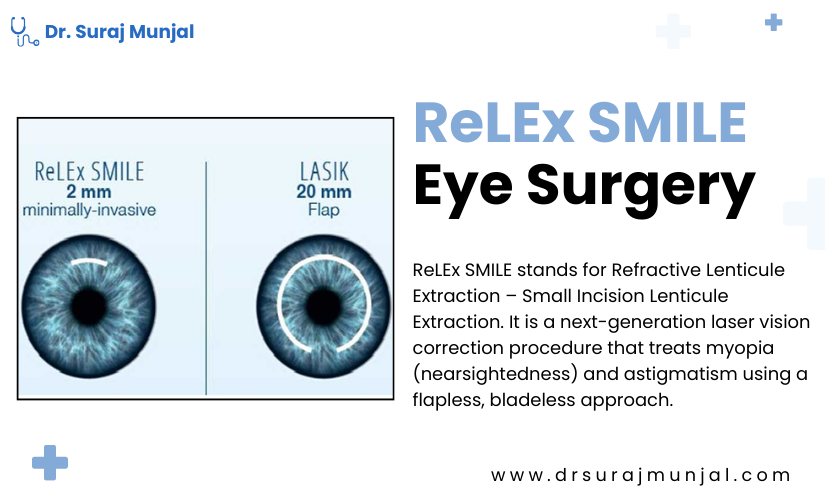
ReLEx SMILE eye surgery is a modern, minimally invasive laser procedure designed to correct common refractive errors like myopia (nearsightedness) and astigmatism. SMILE stands for Small Incision Lenticule Extraction, and the procedure is known for its flapless technique, high precision, and quicker recovery compared to traditional LASIK. It uses a femtosecond laser to reshape the cornea by removing a small tissue lenticule through a tiny incision, enabling patients to achieve clear vision without the need for glasses or contact lenses.
For patients seeking affordable, world-class vision correction options, India has emerged as a leading destination for ReLEx SMILE eye surgery. The cost of ReLEx SMILE eye surgery in India typically ranges between ₹45,000 to ₹1,35,000 per eye, which equals roughly $550 to $1,650. It makes India one of the most cost-effective countries in the world for undergoing SMILE surgery, with pricing that is 60% to 80% lower than in the US, UK, or Australia, even when using the same advanced technology, such as the Zeiss VisuMax laser.
Indian eye hospitals offer more than just affordable pricing; they also provide access to internationally trained ophthalmologists, state-of-the-art technology, and streamlined care for international patients. Whether you're tired of glasses or seeking a safer alternative to LASIK, SMILE surgery in India delivers excellent visual outcomes with minimal downtime, at a cost that fits your budget.
Table of Contents
What is ReLEx SMILE Eye Surgery?
ReLEx SMILE stands for Refractive Lenticule Extraction – Small Incision Lenticule Extraction. It is a next-generation laser vision correction procedure that treats myopia (nearsightedness) and astigmatism using a flapless, bladeless approach. Unlike traditional LASIK, which requires the creation of a corneal flap, SMILE corrects your vision through a tiny incision using femtosecond laser technology, making it gentler on the eye and offering a faster, safer recovery.
The procedure begins with a high-precision femtosecond laser (usually the Zeiss VisuMax system) that creates a thin, lens-shaped layer of tissue inside the cornea. This layer, called a lenticule, is then extracted through a small incision of just 2–4 mm. Once the lenticule is removed, the corneal shape is altered in a way that corrects your refractive error, allowing light to focus properly on the retina, resulting in clear, sharp vision.
What makes ReLEx SMILE unique is that it combines the precision of laser eye surgery with a minimally invasive technique. There’s no flap, no blade, and less disruption to the corneal nerves and structure. As a result, patients experience:
- Less dryness compared to LASIK
- Faster recovery time
- Minimal discomfort during and after surgery
- Reduced risk of complications
SMILE is particularly effective for people with:
- Moderate to high myopia (up to -10.00 D)
- Astigmatism (up to -3.00 D in many cases)
- Stable vision over the past 12 months
- Healthy corneas and no other eye diseases
The entire procedure takes about 10 to 15 minutes per eye, with laser time lasting under 30 seconds. Most patients resume their daily activities within 24 to 48 hours, and visual clarity continues to improve over the following days and weeks.
Who is an Ideal Candidate for ReLEx SMILE?
Not everyone with blurry vision is automatically eligible for ReLEx SMILE. This advanced laser procedure is designed for individuals who meet specific clinical and lifestyle criteria, ensuring that the surgery delivers safe, long-lasting results. A thorough evaluation by an ophthalmologist is required, but here are the typical characteristics of a good candidate:
Age and Vision Stability
Candidates must be at least 18 years old, although most ideal patients are in their 20s to 40s. More importantly, your eyeglass or contact lens prescription should be stable for at least one year, with no significant changes in power. This stability ensures that your vision remains corrected after surgery and doesn’t shift due to ongoing refractive development.
Refractive Error Range
ReLEx SMILE is highly effective for people with:
- Myopia (nearsightedness) between -1.00 and -10.00 diopters
- Astigmatism up to approximately -3.00 diopters (depending on corneal thickness and shape)
It is not currently approved for use in individuals with hyperopia (farsightedness), so those with this condition may need to consider alternative procedures, such as LASIK or PRK.
Corneal Health
Since SMILE involves removing tissue from the inner cornea, a sufficient corneal thickness is essential. Individuals with thin corneas, keratoconus, or signs of corneal instability may be excluded for safety reasons. Detailed corneal scans are done to ensure the cornea can support the procedure.
Lifestyle Suitability
This surgery is particularly well-suited for individuals with active or physically demanding lifestyles, such as athletes, military personnel, or those who work in dusty or high-risk environments. The flapless design eliminates the risk of flap displacement, a concern associated with traditional LASIK.
Medical Conditions and Contraindications
You may not be eligible for SMILE if you have:
- Ongoing eye infections or inflammation
- Autoimmune disorders that delay healing
- Severe dry eye syndrome
- Pregnant or nursing (due to temporary vision changes)
In essence, ReLEx SMILE is ideal for patients seeking a minimally invasive, long-term solution for nearsightedness and astigmatism, provided they have stable vision, healthy eyes, and realistic expectations. The most effective way to confirm eligibility is through a comprehensive evaluation that includes topographic scans, tear film analysis, and a refraction test.
How is ReLEx SMILE Different from LASIK and SILK?
While LASIK, SILK, and ReLEx SMILE are all forms of laser vision correction, each procedure differs in how the cornea is reshaped and how tissue is accessed. These differences affect healing time, risk profiles, and patient comfort. Various parameters on which ReLEx SMILE differs from LASIK and SILK are:
Surgical Approach
- LASIK involves creating a corneal flap, lifting it to reshape the underlying tissue using an excimer laser, and then repositioning the flap.
- SILK utilizes a femtosecond laser to create and remove a lenticule through a flapless technique, a newer refinement that focuses on achieving smoother incision surfaces and more accurate centration.
- ReLEx SMILE also eliminates the need for a flap. It uses a small incision (2–4 mm) to remove a tissue lenticule created inside the cornea. Unlike LASIK, there is no flap to heal or potentially dislodge, and unlike SILK, SMILE has been in use for over a decade with widespread clinical data backing its safety.
Invasiveness and Healing
LASIK is more invasive due to the creation of a flap and typically causes more post-surgical dryness and sensitivity. It also carries a small risk of flap-related complications during the recovery period.
SILK and SMILE are both minimally invasive. However, SMILE’s incision is slightly larger than SILK’s but still dramatically smaller than a LASIK flap. The healing process is quicker than LASIK, and most patients return to regular routines within 1–2 days.
Technology Used
- LASIK uses both a femtosecond laser (for flap creation) and an excimer laser (for tissue reshaping).
- SILK utilizes a single femtosecond laser for lenticule creation and removal, typically on systems such as the Zeiss Visumax 800.
- ReLEx SMILE utilizes a femtosecond laser, typically the Zeiss VisuMax platform, to perform both tasks in a single seamless process.
This single-step laser application in SMILE reduces operation time and minimizes exposure to the eye.
Suitability for Different Lifestyles
SMILE is often preferred by people in physically active professions—such as the military, sports, or emergency services—because it eliminates the risks associated with flap dislocation. SILK shares this advantage but is newer and not as widely adopted globally yet. LASIK is still effective, but may be less favorable for those with high exposure to trauma or dust.
Availability and Global Use
ReLEx SMILE has a long-standing record of use worldwide, with over 7 million procedures performed globally. LASIK has been around for even longer and remains the most widely performed procedure. SILK is a more recent and refined version of SMILE, available in fewer centers but gaining popularity due to its smoother tissue interface.
In short, ReLEx SMILE offers a middle ground: more proven than SILK in terms of long-term data, and less invasive than LASIK. It’s a preferred choice for many patients looking for safe, flapless, and comfortable vision correction, with minimal downtime and long-term results.
How is ReLEx SMILE Eye Surgery Performed?
During ReLEx SMILE Eye Surgery, the surgeon uses a high-precision femtosecond laser to reshape your cornea without making a flap. The procedure involves the following steps:
- The eye doctor begins by applying numbing eye drops to ensure you feel no pain. You stay awake during the procedure, and no injections or stitches are involved.
- The surgeon uses the Zeiss VisuMax femtosecond laser to create a thin, lens-shaped piece of tissue, known as a lenticule, inside the cornea. At the same time, the laser creates a small incision (just 2–4 mm wide) on the surface of the cornea.
- They gently extract the lenticule through this tiny incision using fine surgical instruments. This step takes only a few minutes and requires no blade or flap.
- By removing the lenticule, the surgeon alters the shape of your cornea, thereby correcting your refractive error and improving your vision.
- They allow the incision to self-heal, without the need for stitches or bandages. The cornea quickly seals itself, and the natural healing process begins immediately.
What is the Cost of ReLEx SMILE Eye Surgery in India?
The cost of ReLEx SMILE Eye Surgery in India typically ranges between ₹45,000 to ₹1,35,000 per eye, which is approximately $550 to $1,650. For patients undergoing treatment in both eyes, total costs often fall between ₹85,000 and ₹2,60,000, depending on the hospital, city, and surgeon's expertise. These prices include advanced femtosecond laser technology, such as the Zeiss VisuMax system, which is used worldwide.
In comparison to countries like the United States, the UK, or Singapore, where the same procedure can cost $3,000 to $5,000 per eye, India offers one of the most affordable destinations for SMILE surgery without compromising on quality.
Most reputable eye centers in India offer comprehensive surgical packages, meaning that the price you pay includes every essential aspect of the procedure. These packages are designed to ensure transparency, avoid hidden charges, and provide a hassle-free experience for both local and international patients.
What’s Included in the Cost of ReLEx SMILE Surgery in India?
- Preoperative Eye Evaluation: Includes refraction, corneal mapping (topography), pachymetry, and dry eye assessment.
- Consultation Fees: Charges for the initial surgeon consultation and treatment planning.
- Femtosecond Laser Charges: Use of the Zeiss VisuMax laser for lenticule creation and extraction.
- Surgeon’s Professional Fee: Includes the surgeon’s time, skill, and procedural expertise.
- Medications: Antibiotic, anti-inflammatory, and lubricating eye drops for use after surgery.
- Protective Eyewear: Safety glasses or shields are provided post-surgery.
- Follow-up Visits: Typically includes 1–2 postoperative reviews to monitor healing and visual outcome.
Some hospitals may also include hospital charges, admission if required, and access to international patient coordinators within this fee, especially if you’re traveling from abroad.
Breakdown of ReLEx SMILE Surgery Cost in India
The total cost of ReLEx SMILE Eye Surgery in India is a combination of several individual components. Knowing how the total amount is structured helps patients (especially those traveling internationally) make informed decisions and plan their finances with confidence.
|
Cost Component |
Estimated Range (INR) |
Approx. USD Equivalent |
|
Pre-surgery diagnostics |
₹4,000 – ₹7,000 |
$50 – $85 |
|
Consultation and treatment planning |
₹2,000 – ₹5,000 |
$25 – $60 |
|
Laser and surgical facility charges |
₹25,000 – ₹80,000 |
$300 – $950 |
|
Surgeon’s fee |
₹8,000 – ₹25,000 |
$95 – $300 |
|
Post-op medications & eyewear |
₹1,500 – ₹4,000 |
$20 – $50 |
|
Follow-up consultations |
₹2,000 – ₹5,000 |
$25 – $60 |
|
Total Estimated Cost |
₹45,000 – ₹1,35,000 |
$550 – $1,650 |
- Pre-surgery Diagnostics: This includes comprehensive eye testing, such as corneal topography, pachymetry (to measure corneal thickness), dry eye screening, and vision stability checks. These tests are essential for confirming eligibility and planning the surgical parameters precisely.
- Consultation and Treatment Planning: This fee covers the initial consultation with your refractive surgeon, including all preoperative discussions, counseling, and treatment planning based on your eye profile.
- Laser and Surgical Facility Charges: This is the most significant portion of the cost, covering the use of the Zeiss VisuMax femtosecond laser, the surgical suite, a sterile environment, and high-end consumables required during the procedure.
- Surgeon’s Fee: The fee varies based on the surgeon’s expertise, qualifications, and the complexity of your case. Experienced surgeons who specialize in laser vision correction may charge more, but typically ensure superior outcomes.
- Medications and Protective Eyewear: You will be prescribed antibiotic drops, anti-inflammatory eye drops, and lubricating eye drops to use during the first week of recovery. A protective eyewear kit is usually included in the package.
- Follow-up Visits: At least one or two postoperative visits are necessary to monitor healing and ensure visual clarity. These may be bundled into the package or billed separately, depending on the hospital.
Cost Comparison: ReLEx SMILE Eye Surgery in India vs. Other Countries
When it comes to ReLEx SMILE Eye Surgery, the cost difference between India and developed countries is substantial, often as much as 60% to 80% lower. Yet, the technology, surgeon skill, and clinical outcomes in India match global standards. It makes India a desirable destination for patients who want affordable, high-quality laser vision correction without compromising on safety or results.
|
Country |
Average Cost (USD) |
|
India |
$550 – $1,650 |
|
USA |
$3,000 – $4,800 |
|
UK |
$2,800 – $4,500 |
|
Australia |
$3,000 – $5,000 |
|
UAE |
$3,200 – $5,500 |
|
Singapore |
$3,500 – $6,000 |
Same Technology, Lower Price
Whether in New York, Dubai, or Delhi, the Zeiss VisuMax femtosecond laser used in SMILE surgery remains the same. The difference is what you pay for it. In India, patients have access to the same globally trusted platforms at a cost that allows for significant savings.
What are the Factors Affecting ReLEx SMILE Eye Surgery Cost in India?
While ReLEx SMILE Eye Surgery in India is generally affordable, the actual cost can vary significantly depending on several specific variables. These factors influence the final pricing for each patient and help explain why one hospital may charge more than another, even when using the same technology and equipment.
- Surgeon’s Credentials and Experience: The skill and reputation of your eye surgeon play a significant role in determining the pricing. Ophthalmologists with extensive experience in refractive surgery, international fellowships, or those who specialize exclusively in SMILE procedures may charge higher professional fees. However, this often translates to better precision, fewer complications, and superior long-term outcomes.
- Hospital Infrastructure and Location: Eye centers located in Tier-1 cities, such as Delhi, Mumbai, Bangalore, or Hyderabad, tend to charge more than those in smaller towns. It is often due to higher operating costs, but it may also reflect access to more advanced technology, faster appointment availability, and multi-language support staff for international patients.
- Type and Version of Technology Used: Though ReLEx SMILE always involves a femtosecond laser, not every center uses the same model. The Zeiss VisuMax laser system is considered the global standard for SMILE. Hospitals using the most recent or upgraded versions of this laser may have higher facility costs, which are reflected in the total package price.
- Whether One or Both Eyes Are Treated: Patients who opt for bilateral treatment (both eyes) often receive a discounted package compared to treating each eye separately. However, if you prefer to do one eye at a time for safety or scheduling reasons, your cumulative cost might be slightly higher.
- Post-Surgery Support and Teleconsultation: Some hospitals include long-term follow-ups and virtual consultations in their cost, especially for international patients who return to their home country soon after surgery. Others may charge extra for ongoing care or enhancements, which can influence the total price.
Why is ReLEx SMILE Eye Surgery More Affordable in India?
India has become a global destination for vision correction procedures, such as ReLEx SMILE, not only due to its clinical excellence but also because of its cost-effectiveness. While the same technology and surgical precision are used across top global centers, India manages to deliver this advanced eye surgery at significantly lower prices. It is not due to a compromise in quality, but rather due to structural advantages unique to India’s healthcare ecosystem.
- Lower Operational Costs: Hospitals in India operate with reduced infrastructure and administrative overhead compared to Western countries. Salaries, utility expenses, and real estate costs are relatively low, allowing providers to pass these savings on to patients without sacrificing quality.
- High Surgical Volume: Many of India’s top eye hospitals perform hundreds of laser eye surgeries every month. This high case volume enables economies of scale, making it more feasible to offer procedures like SMILE at reduced rates while still using premium laser systems and maintaining safety standards.
- Direct-Pay Model: In contrast to countries where costs are inflated by insurance companies, third-party billing, and hidden administrative fees, India follows a largely direct-pay model. Patients pay hospitals directly, with transparent and upfront pricing, reducing the overall financial burden and increasing transparency.
- Skilled Workforce at Local Rates: India produces a large number of highly trained ophthalmologists, many of whom hold international certifications or have trained abroad. Their services are available at local pricing levels, which are naturally lower due to differences in cost of living, not competence or quality.
- Government Support for Medical Tourism: The Indian government actively supports medical travel through streamlined visa programs, infrastructure development, and accreditation of hospitals to meet international standards. It creates an environment where high-quality care is accessible and competitively priced for international patients.
What are the Services Available for International Patients Seeking ReLEx SMILE Surgery in India?
India has developed a robust ecosystem to support international patients seeking advanced eye care procedures, such as ReLEx SMILE. From your initial inquiry to your safe return home, top-tier hospitals in India provide a seamless, patient-centered experience that minimizes stress and maximizes comfort.
- Most hospitals assign a dedicated international patient coordinator to each visitor. This person will serve as your primary point of contact, assisting with appointment scheduling, document management, treatment updates, and providing day-to-day support throughout your stay. They ensure that all logistics are handled efficiently, allowing you to focus solely on your treatment and recovery.
- One of the most valuable services offered is visa assistance. Once you confirm your intent to travel for surgery, the hospital can issue a medical visa invitation letter. This document helps you secure a medical visa more easily and may also support visa extensions if needed during recovery.
- Upon arrival in India, airport pickup and drop-off services are available to transport you directly to your hotel or hospital. It eliminates language barriers and the hassle of navigating unfamiliar roads or transport systems. Some hospitals also offer in-city transportation for hospital visits or follow-up appointments.
- Finding a place to stay is made simple through partnerships with nearby hotels, serviced apartments, or guest houses at the hospital. Options are available for every budget, and many include medical-friendly amenities such as soft diets, transportation to clinics, and room sanitation.
- Language is rarely a barrier in India’s medical tourism hubs. Hospitals in major cities typically have interpreters and multilingual staff fluent in Arabic, French, Russian, Spanish, Swahili, and other widely spoken languages.
- Before you even board your flight, many hospitals offer virtual consultations where an ophthalmologist reviews your eye condition, confirms your eligibility for SMILE surgery, and answers your questions in real-time. This service continues after your return home, allowing you to check in via video call or WhatsApp during the healing phase.
- In addition to medical care, you can expect assistance with currency exchange, local SIM card purchases, pharmacy access, and even short wellness excursions if you choose to extend your stay after surgery.
Recovery Timeline and Success Rate of ReLEx SMILE Eye Surgery
One of the significant advantages of ReLEx SMILE is that patients can return to their everyday lives quickly after surgery. The procedure is designed to be gentle on the eye, with no flap creation or tissue disruption on the surface. It results in faster healing, minimal discomfort, and stable vision over the long term.
Recovery Timeline After ReLEx SMILE
- First 6 to 12 hours: Most patients experience mild tearing, light sensitivity, or a gritty sensation. Resting the eyes during this period is essential. Protective sunglasses are recommended when outdoors.
- By 24 hours, vision starts to become noticeably clearer. While it may not be perfect immediately, most people achieve 60–80% visual improvement within a day. You can resume basic tasks, such as walking, using your phone, and moving around indoors.
- Day 2 to Day 5: Clarity continues to improve. You may begin driving, working on computers, and returning to work, provided you follow post-op instructions and avoid rubbing your eyes.
- By one week, vision usually stabilizes to near-normal levels. Most patients report 90–100% visual recovery, and any dryness or irritation, if present, becomes negligible.
- After one month, the final vision quality is typically achieved. It occurs when the cornea has fully healed, and your vision returns to its corrected state. You’ll likely attend a follow-up review around this time to confirm the outcome.
Success Rate of ReLEx SMILE Surgery in India
India’s top eye hospitals report excellent success rates with ReLEx SMILE, thanks to high surgical standards, advanced diagnostics, and experienced laser specialists.
- Over 95% of patients achieve 20/25 vision or better without the need for glasses or contact lenses.
- Around 88–92% achieve 20/20 vision or better, depending on the initial eye condition.
- The rate of serious complications or enhancements is under 1%, and long-term results are stable in the vast majority of cases.
Because SMILE avoids creating a corneal flap, it preserves more of the eye’s structural integrity. It leads to fewer dry eye symptoms, faster nerve regeneration, and improved biomechanical stability, which is especially beneficial for individuals with active lifestyles.
Testimonials: ReLEx SMILE in India
Alina A., Saudi Arabia
“I had considered LASIK for years, but always worried about the risks with the flap. When I read about ReLEx SMILE, I was excited, but the price in my country was very high. After researching online, I found a hospital in Delhi offering the same Zeiss laser system at half the cost. The process was seamless. They arranged my visa letter, airport pickup, and even helped with accommodation. Dr. Munjal explained everything clearly. The surgery was completed in under 15 minutes, and I was able to see clearly by the next morning. It truly changed my life—and I spent less than a quarter of what I would have paid in Riyadh.”
Joseph M., Kenya
“My job as a field engineer makes glasses a constant inconvenience. I traveled to India at the recommendation of a friend for SMILE surgery. I was nervous at first, but the international patient coordinator made everything smooth, from airport pickup to my hotel check-in. The surgery itself was fast and painless. Within a day, I was able to walk around without needing glasses. I flew home three days later with clear vision and a new level of freedom. India exceeded my expectations.”
Lina S., UK
“I had my consultation in London, but the price quote was way beyond my budget. I looked for affordable alternatives and came across a highly rated eye clinic in Delhi. I had a video call with the surgeon before booking, and they reviewed my scans online. When I arrived in India, everything was already arranged. The care I received was professional, clean, and personal. I never felt like ‘just another patient.’ The technology was the same as in the UK, but the experience was warmer and more human. I'm thrilled with the results.”
Frequently Asked Questions
The cost ranges between ₹45,000 to ₹1,35,000 per eye, or approximately $550 to $1,650. Prices vary depending on the hospital’s location, surgeon’s expertise, and package inclusions.
No. The procedure is performed using eye-numbing drops, and patients typically feel no pain. There may be a slight pressure sensation during the laser application, but discomfort is minimal and short-lived.
The actual laser part takes about 30 seconds per eye, while the entire procedure is completed in 10 to 15 minutes per eye. You’ll rest briefly afterward before being discharged the same day.
Most patients notice a significant improvement within 24 hours. Vision continues to sharpen over the next few days, with complete visual clarity usually achieved within one to two weeks.
Yes. ReLEx SMILE is typically performed on both eyes in a single session, unless your doctor recommends a staggered approach for specific medical reasons.
Yes. Most patients can fly back home 2 to 4 days after surgery, once the initial healing has stabilized. It’s best to complete at least one post-op checkup before departure.
Your ophthalmologist will perform corneal topography, thickness measurements (pachymetry), vision stability checks, and dry eye screening. These help confirm your eligibility for the procedure.
Yes. As long as your prescription was stable before surgery, the results of ReLEx SMILE are intended to be long-lasting. Follow-up visits and eye care help maintain your results.
Hospitals in India offer virtual follow-up support through video calls, email, or WhatsApp. You’ll also receive a discharge report and instructions for ongoing care at home.
Absolutely. India’s top eye hospitals regularly treat international patients who travel alone. With airport pickup, hotel coordination, and dedicated care teams, your journey is handled professionally and safely.
