Refractive Surgery Cost in India
Refractive surgery has revolutionized the way people manage vision problems, including nearsightedness, farsightedness, and astigmatism. Instead of relying on glasses or contact lenses, patients can now achieve clear, lasting vision through advanced laser-based procedures. The good news for international patients is that refractive surgery in India offers world-class technology and expertise at a much lower cost compared to Western countries.
The average cost of refractive surgery in India ranges from $500 to $1,800 per eye, depending on the hospital location, type of procedure, and the surgeon's experience. Whether it's LASIK, PRK, SMILE, or advanced topography-guided techniques like Contoura Vision, the price in India is a fraction of what you'd expect to pay in the United States, UK, or Australia, where costs can range between $2,000 and $3,500 per eye.
The affordability doesn't mean a compromise on quality. Leading eye care centers in India are equipped with FDA-approved laser platforms, modern diagnostic tools, and internationally trained ophthalmologists. Hospitals also offer personalized evaluations to recommend the most suitable type of refractive correction based on a patient's eye health, lifestyle, and long-term goals.
Patients from Africa, the Middle East, Europe, and Southeast Asia continue to choose India for refractive surgery, not only because of its affordability but also due to the high success rates, fast recovery times, and short wait times. Whether you're a student, professional, or senior seeking freedom from corrective lenses, India offers a safe, effective, and economically sound option.
Table of Contents
What is Refractive Surgery?
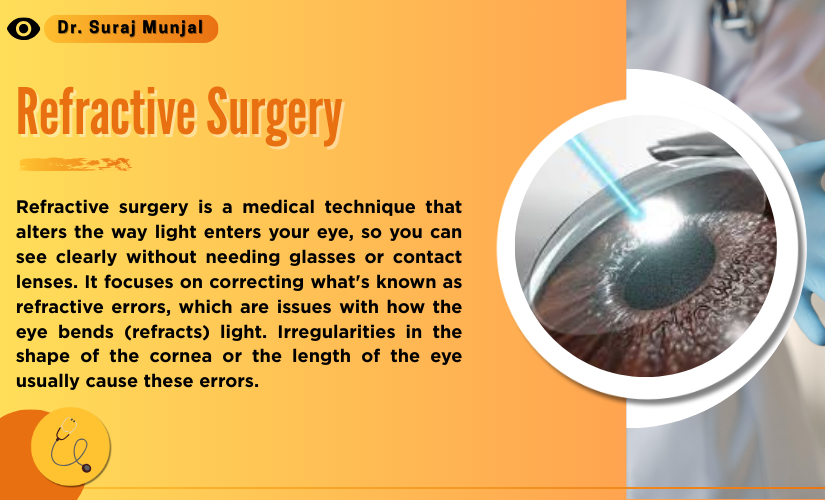
Refractive surgery is a medical technique that alters the way light enters your eye, so you can see clearly without needing glasses or contact lenses. It focuses on correcting what's known as refractive errors, which are issues with how the eye bends (refracts) light. Irregularities in the shape of the cornea or the length of the eye usually cause these errors.
Put simply, if your vision is blurry due to nearsightedness, farsightedness, or astigmatism, refractive surgery aims to permanently correct it by reshaping the cornea. Think of it as fine-tuning the eye's natural lens system.
For decades, people have relied solely on external lenses, such as glasses or contacts, to correct vision problems. Refractive surgery changed that. With precise tools, especially laser-based technology, eye surgeons can now reshape your cornea within minutes, offering long-term clarity without the daily hassle of corrective lenses.
Unlike a typical operation, most refractive procedures:
- Take less than 30 minutes.
- Use numbing eye drops instead of injections.
- Requires no overnight hospital stay.
The main vision errors it fixes are:
- Myopia: Trouble seeing things far away
- Hyperopia: Difficulty focusing on close objects
- Astigmatism: Uneven or distorted vision due to an irregularly curved cornea
- Presbyopia: Age-related near vision loss (though fewer surgical options are available for this)
Standard refractive procedures include:
- LASIK (Laser-Assisted In Situ Keratomileusis): A flap is created in the cornea, and laser reshaping is done beneath the flap. It's the most well-known and widely performed laser eye surgery.
- PRK (Photorefractive Keratectomy): The surface layer of the cornea is removed, and the laser is applied directly. Suitable for patients with thin corneas.
- SMILE (Small Incision Lenticule Extraction): A flapless procedure that uses a femtosecond laser to remove a small piece of tissue through a micro-incision.
- Contoura Vision and Topography-Guided LASIK: Personalized LASIK based on corneal mapping for improved precision.
Each technique suits different eye types. Some are better for athletes or people with dry eyes, while others are designed for maximum precision.
Who is a Candidate for Refractive Surgery?
Not everyone with blurry vision is automatically eligible for refractive surgery. While the technology has advanced significantly, it still requires careful screening to ensure safety and long-term success. The ideal candidate is someone seeking lasting vision correction without relying on glasses or contact lenses, provided they have the right eye structure and overall health to support the procedure.
General Criteria You Should Meet
If you're considering refractive surgery, here are the standard requirements most surgeons will look for:
- Age between 18 and 45 years – Your vision should be stable for at least a year, which typically happens after the teenage years.
- Stable eye prescription – Frequent changes in your eyeglass or contact lens power suggest that your eyes are still adjusting. Surgery is only advised once your numbers have settled.
- Healthy corneas – Refractive procedures reshape the cornea, so it needs to be thick enough and structurally sound. Thin or irregularly shaped corneas may disqualify you from LASIK, but you could be eligible for alternatives like PRK.
- No active eye diseases – Conditions like keratoconus, chronic dry eye, or untreated infections may delay or rule out surgery.
- Free from uncontrolled systemic illnesses – Autoimmune diseases, uncontrolled diabetes, or certain medications can interfere with healing.
Who may not be suitable for refractive surgery?
Even if you're eager to ditch your glasses, not everyone is a suitable candidate for refractive surgery. You may not be a good candidate if:
- You're pregnant or breastfeeding (hormonal changes can temporarily affect your prescription).
- You have unrealistic expectations — the goal is better unaided vision, not always perfect vision.
- You're already dealing with age-related eye conditions like cataracts or macular degeneration. In such cases, alternative surgical options may be more suitable.
The decision to proceed isn't one-size-fits-all. Even if LASIK isn't right for you, there may be other options, such as SMILE, PRK, or phakic intraocular lenses.
What are the Types of Refractive Surgery Available in India?
Refractive surgery isn't just one procedure—it's a category that includes several different techniques. Each one is designed to improve how your eyes focus light, and the right choice depends on your eye shape, vision problem, lifestyle, and overall eye health. Let's break down the most popular options in simple terms.
- LASIK: LASIK stands for Laser-Assisted In Situ Keratomileusis. It's one of the most common and widely trusted forms of laser eye surgery.
- How it works: The surgeon creates a thin flap on the cornea, reshapes the layer underneath using a laser, then places the flap back in position. It's fast, painless, and most people can see better within 24 hours.
- Best for: People with stable myopia (nearsightedness), hyperopia (farsightedness), or astigmatism.
- PRK: PRK (Photorefractive Keratectomy) was the first type of laser eye surgery and remains a popular option today, particularly for individuals with thin corneas.
- How it works: Instead of making a flap, the surgeon removes the thin outer layer of the cornea before using a laser to reshape the surface underneath.
- Best for: Patients who aren't good candidates for LASIK due to thin corneas or dry eyes. Recovery is a bit longer, but the results are just as good.
- SMILE: SMILE stands for Small Incision Lenticule Extraction. It's a newer, minimally invasive option.
- How it works: A small piece of tissue inside the cornea is removed through a tiny incision using a femtosecond laser—no flap involved.
- Best for: People with moderate to high myopia and astigmatism. It causes less dryness and may be better for athletes.
- Contoura Vision: An advanced version of LASIK that uses topography-guided mapping to customize the laser treatment for your eyes.
- How it works: The laser precisely adjusts even the most minor imperfections in your cornea, providing sharper and more detailed vision.
- Best for: Those looking for the highest precision possible and "HD-like" vision correction.
Which One is Right for You?
Only a detailed eye evaluation can determine the best option. Age, corneal thickness, lifestyle, and job type (e.g., pilots, military personnel) all play a role in determining the ideal procedure. Fortunately, most top hospitals in India offer all major refractive options under one roof, with specialists who can guide you to the most effective solution.
How Much Does Refractive Surgery Cost?
The average cost of refractive surgery in India ranges from $500 to $1,800 per eye. The price varies widely around the world, but one thing is clear: India has emerged as a global leader in offering affordable, high-quality vision correction. Whether you're considering LASIK, SMILE, or a customized option like Contoura Vision, the overall pricing in Indian hospitals is significantly lower than in North America, Europe, or the Middle East, without compromising on outcomes or safety.
What's Included in the Cost of Refractive Surgery in India?
When it comes to refractive surgery, pricing isn't always straightforward. In most countries, especially in the West, base prices may exclude diagnostics, post-op care, or even doctor fees. In India, however, most hospitals offer comprehensive, transparent packages that include:
- Complete pre-surgery eye evaluation (refraction, topography, pachymetry)
- Consultation with an ophthalmic surgeon
- Laser procedure fee
- Medication during and after surgery
- Follow-up visits (usually 1–2 post-op)
These package prices not only make budgeting easier but also ensure patients receive continuity of care throughout the process.
Average Cost Range by Procedure Type
The approximate all-inclusive cost per eye for different refractive surgeries at reputed eye hospitals in India is:
|
Procedure |
Estimated Cost (USD per eye) |
|
LASIK (Standard Blade LASIK) |
$350 – $500 |
|
Blade-Free LASIK (Femto-LASIK) |
$600 – $850 |
|
PRK (Photorefractive Keratectomy) |
$300 – $450 |
|
SMILE (Minimally Invasive) |
$800 – $1,200 |
|
Contoura Vision (Custom LASIK) |
$950 – $1,300 |
Why is the Surgery So Affordable in India?
It's natural to question the lower cost. Here's why eye surgery is more budget-friendly in India:
- Lower operational and labor costs: Without compromising on skill or quality, medical facilities in India operate at lower overheads compared to their counterparts abroad.
- Government and private competition: The presence of multiple high-end eye hospitals keeps pricing competitive.
- Exchange rate benefit: For patients paying in USD, EUR, or AED, currency conversion provides significant savings.
- High procedure volumes: Indian surgeons perform thousands of eye surgeries annually, allowing them to invest in advanced equipment without increasing individual prices.
Are Refractive Surgeries Covered Under Insurance?
In most parts of the world, refractive eye surgery is classified as an elective or cosmetic procedure, meaning it's typically not covered by public or private health insurance plans.
However:
- Some vision insurance plans may offer partial reimbursement (especially in the US or Canada).
- Indian hospitals may help with documentation if your home insurer needs proof of medical necessity.
- A few Indian hospitals also partner with third-party medical financing agencies that allow you to pay in EMI-based installments.
Cost Comparison: India vs Other Countries
One of the biggest reasons overseas patients choose India for refractive surgery is the significant cost advantage without compromising on quality. While the same advanced technologies (such as femtosecond lasers and wavefront-guided systems) are used worldwide, the cost of surgery in India is often one-third to one-fifth of what it costs in Western nations.
Below is a breakdown of how costs compare across key countries for LASIK and other popular refractive surgeries:
|
Country |
LASIK (USD) |
SMILE (USD) |
Contoura/Custom LASIK (USD) |
|
India |
$350 – $700 |
$800 – $1,200 |
$900 – $1,300 |
|
USA |
$2,000 – $3,000 |
$2,500 – $3,500 |
$3,000 – $4,000 |
|
UK |
$1,800 – $2,800 |
$2,500 – $3,200 |
$2,800 – $3,800 |
|
UAE |
$2,000 – $2,800 |
$2,500 – $3,200 |
$2,800 – $3,600 |
|
Singapore |
$1,700 – $2,500 |
$2,000 – $3,000 |
$2,400 – $3,300 |
|
South Africa |
$1,200 – $2,000 |
$2,200 – $3,000 |
$2,500 – $3,200 |
|
Thailand |
$1,000 – $1,800 |
$1,800 – $2,500 |
$2,000 – $2,800 |
What Affects the Cost of Refractive Surgery?
Refractive surgery prices may seem straightforward at first glance, but several subtle factors influence the final bill. Two patients at the same hospital may pay different amounts, depending on their eye condition, the laser platform used, and other factors.
- Type of Procedure Chosen: Each refractive surgery option uses different tools and techniques. PRK is generally more affordable because it requires fewer consumables and equipment. SMILE and Contoura Vision, however, involve sophisticated lasers and customized mapping, which increases precision and cost. If your surgeon recommends a flapless or topography-guided method, expect pricing to be higher due to the technology involved.
- Eye Complexity and Prescription Strength: A straightforward case of mild myopia will cost less to correct than a high-power prescription with significant astigmatism. Patients with thicker corneas, irregular corneal curvatures, or borderline dry eyes may require additional tests or adjustments to laser protocols, which can increase the overall cost of treatment. Custom treatment planning means more diagnostic time and resources, which are factored into the final cost.
- Technology and Laser Equipment Used: Not all lasers are created equal. Hospitals using cutting-edge, FDA-approved femtosecond and excimer lasers may charge more, but the investment often leads to faster healing, better night vision, and fewer complications. Premium options, such as WaveLight, VisuMax, or Allegretto Wave Eye-Q, are typically more expensive than standard systems; however, the results often justify the cost for patients seeking optimal precision and accuracy.
- Surgeon's Expertise and Credentials: Experienced refractive surgeons with thousands of successful cases under their belt may command a higher surgical fee. Choosing someone with international training or subspecialty certifications adds value, but can also affect the cost. That said, in India, even top surgeons like Dr. Suraj Munjal of The Sight Avenue offer services at a fraction of global pricing, making advanced care more accessible.
- City and Hospital Category: Costs can vary between metro cities and tier-2 towns. Reputed eye centers in Delhi, Mumbai, and Bengaluru usually charge more due to their international infrastructure and patient amenities. Premium eye hospitals, which often feature in-house diagnostics, cashless insurance desks, and global patient departments, may have slightly higher package rates than standalone clinics.
- Add-ons and Aftercare: Some hospitals offer packages that include follow-up visits, anti-reflective lenses (if needed temporarily), or extended post-op care. Others may charge separately. Ask whether your quoted cost includes consultation, medications, and future check-ins, especially if you're an international patient planning to fly back shortly after surgery.
Why Choose India for Refractive Surgery?
For international patients looking to correct their vision without draining their savings, India offers an unbeatable combination: cutting-edge technology, highly skilled surgeons, and remarkably affordable pricing. But affordability is just the start. What truly sets the country apart is its patient-centric, globally aligned eye care ecosystem, which rivals and often exceeds what is found in more expensive markets.
World-Class Technology at a Fraction of the Price
India's leading eye care hospitals offer access to the same advanced laser technology used in Europe, the United States, and other developed nations. These include cutting-edge femtosecond lasers, wavefront-guided systems, and precision topography platforms that ensure safety, accuracy, and faster healing. The key difference lies in the cost. Thanks to a combination of favorable exchange rates and lower operational overheads, patients can undergo high-tech refractive procedures in India at a fraction of what they would pay in the West. Despite the lower price, the infrastructure in many Indian eye hospitals matches global standards, with dedicated operating theaters, automated diagnostic systems, and digital imaging integrated into every step of the patient journey.
Highly Trained Eye Surgeons with Global Exposure
India's ophthalmic surgeons are among the best-trained in the world. Many have completed fellowships or advanced training in countries such as the United Kingdom, Germany, or the United States. Their extensive clinical experience, often involving thousands of surgeries, makes them exceptionally skilled in managing even the most complex refractive errors. A prominent example is Dr. Suraj Munjal, a well-respected eye surgeon and the Founder of The Sight Avenue. With an international patient base and a reputation for delivering consistently positive outcomes, Dr. Munjal exemplifies the level of professionalism and technical proficiency available in India today. What sets these surgeons apart is not only their expertise but also their attention to patient care, which includes providing detailed consultations and clear, honest communication before and after surgery.
Efficient, International-Patient-Friendly Experience
Unlike in many countries where patients can wait weeks for consultations and tests, India's refractive surgery process is quick and well-organized. Diagnostic tests, surgical counseling, and even the procedure itself are often completed within just two or three days. This speed does not compromise care. It reflects the efficiency and coordination of India's medical ecosystem. Hospitals that cater to international patients streamline every part of the process, often providing priority scheduling, visa assistance, airport transfers, and interpreter support. These services alleviate logistical stress for travelers, allowing them to focus solely on their recovery. As a result, medical tourists consistently report high levels of satisfaction, not only with their visual outcomes but with the entire treatment experience.
Transparent, All-Inclusive Pricing Without Surprises
One of the key benefits of undergoing refractive surgery in India is the transparency of pricing. Most reputable hospitals offer clear, all-inclusive packages that cover everything from pre-operative assessments to post-surgery medications and follow-up appointments. There are no hidden charges, which is often a concern in other countries where additional costs may be revealed later. Indian eye centers prioritize open communication and offer written treatment plans in advance. Patients know exactly what to expect, making it easier to budget their trip and make confident decisions about their care.
Safe, Regulated, and Internationally Accredited Facilities
Many Indian hospitals that specialize in eye care hold accreditation from national and international bodies, such as NABH or JCI. These certifications reflect a commitment to hygiene, safety, and high-quality care. Sterile operating environments, regular quality audits, and adherence to international protocols are routine across major institutions. With these standards in place, international patients can feel assured that they are in safe hands, even when far from home.
International Patient Services and Support
Traveling to another country for healthcare can be daunting, especially when it involves your eyesight. However, refractive surgery centers in India are well-prepared to support international patients at every step. From the moment you consider the procedure to long after it's completed, hospitals provide a wide range of services tailored specifically for travelers, ensuring a safe, smooth, and reassuring experience.
- Personalized Assistance from Start to Finish: Hospitals that cater to international patients understand the unique needs of travelers who are far from home. From the very first inquiry, most leading eye care centers in India assign a dedicated international patient coordinator. This person becomes your point of contact for everything, from helping you understand the procedure to scheduling appointments and guiding you through the entire treatment process. The support is not limited to medical queries; coordinators also help you with travel documents, visa letters, accommodation suggestions, and airport transfers. This level of personal attention ensures that patients feel supported at every step, reducing anxiety and making the journey smoother.
- Quick Scheduling and Zero Waiting Time: One of the key advantages for international patients is the speed and efficiency of the Indian hospitals. Unlike traditional healthcare systems in some countries, where patients might wait weeks or even months for surgery, hospitals in India are known for their efficiency. Refractive surgery candidates can often complete evaluations, consultations, and the procedure itself within two to three days. It is beneficial for those on tight travel schedules. The ability to plan the treatment, fly in, undergo surgery, and return home within a week makes India an extremely convenient destination for vision correction.
- Comfortable Stays and Convenient Amenities: Many hospitals have partnerships with nearby hotels and guesthouses to provide accommodations for patients and their companions. These accommodations are typically situated near the medical facility, minimizing travel time for follow-up visits. Some larger eye care centers even have in-house lodging or recovery suites tailored to international patients. Wi-Fi connectivity, local SIM assistance, and nearby restaurants offering international cuisine help patients feel more at home. Language assistance is also readily available, with translators fluent in Arabic, French, Russian, and other languages often on call to assist during consultations and post-operative instructions.
- Post-Treatment Support for Global Patients: Care does not end once the surgery is complete. Indian eye hospitals offer comprehensive post-operative follow-up services for international patients, including virtual consultations after they return to their home countries. Patients are advised to stay in contact with the surgeon via video calls or email in the weeks following the procedure. Clear discharge instructions and a full summary of treatment are provided, making it easier to share information with a local eye doctor if future support is needed. This thoughtful post-care planning gives patients peace of mind, knowing that help is available even after they've flown back.
- A Trusted Ecosystem for Medical Travelers: India's success as a medical tourism hub is attributed to its ability to offer more than just advanced treatments. Whether you're traveling alone or with a family member, you can expect a coordinated and respectful environment focused on your comfort and recovery. It's this blend of hospitality and healthcare that draws thousands of patients from the Middle East, Africa, Europe, and Southeast Asia to India every year for vision correction.
What is the Success Rate and Outcomes of Refractive Surgery in India?
Refractive surgery has one of the highest success rates in modern eye care. Procedures such as LASIK, SMILE, PRK, and Contoura Vision consistently achieve success rates exceeding 95% when performed by skilled surgeons using the latest technology. In most cases, patients experience 20/25 vision or better within days of surgery. For those with mild to moderate prescriptions, the success rate is even higher. The predictability and precision of today's laser platforms have transformed refractive surgery into a highly reliable option for long-term visual correction.
Visual Freedom Without Lenses or Glasses
For many patients, the most important outcome is freedom from glasses or contact lenses. After surgery, the majority no longer need any form of vision correction for everyday tasks such as reading, driving, or working on a screen. Some patients with very high prescriptions may still need minimal correction in special situations, but the improvement in quality of life is significant. Patients often describe the moment they wake up with clear vision for the first time as a life-changing experience. It's not just about clarity—it's about confidence, independence, and convenience.
Low Risk of Complications When Properly Screened
Like any surgery, refractive procedures carry some risks. However, complications are infrequent when patients are carefully screened and treated by experienced professionals. Most issues, such as dry eyes or glare at night, are mild and temporary. Clinics that utilize advanced diagnostic tools to measure corneal thickness, curvature, and eye surface conditions before surgery significantly reduce the likelihood of unexpected outcomes. In rare cases where enhancement is necessary, it is typically performed a few months after the initial procedure to fine-tune the results and is usually included in the surgical package.
Long-Term Satisfaction Backed by Clinical Evidence
Numerous long-term studies have shown that refractive surgery outcomes remain stable over time, especially in patients who undergo the procedure after their eye power has stabilized. Most patients retain their corrected vision for decades without needing another procedure. The lifespan of results depends on factors such as age, general eye health, and the degree of initial correction. Clinics in India regularly follow up with patients through digital platforms to track outcomes and ensure continued satisfaction. The growing number of international testimonials and published case studies from India's top eye hospitals further confirms the excellent standards being maintained.
Recovery Timeline After Refractive Surgery
Refractive surgery recovery is generally quick, but it varies slightly depending on the specific procedure performed. Most patients are pleasantly surprised by how soon they regain functional vision, often within a few hours to a day. However, complete healing and visual stabilization can take a few weeks. Understanding the recovery timeline helps set realistic expectations and ensures better post-operative care.
- LASIK: In the case of LASIK, many patients notice a dramatic improvement in vision just hours after the surgery. Most can resume everyday tasks, such as reading, using a phone, or working on a laptop, by the next day. Driving may be possible within 24 to 48 hours, although doctors usually recommend waiting one to two days to ensure complete clarity. Minor side effects, such as dryness or light sensitivity, are typical during the first week and typically improve quickly with medicated eye drops and rest.
- SMILE: SMILE surgery, renowned for its minimally invasive nature, often provides even faster comfort and stability post-operatively. Because no flap is created in the cornea, patients typically experience less dryness and fewer restrictions during recovery. The majority return to routine activities within a couple of days, with complete vision clarity developing gradually over a few weeks.
- PRK: PRK and surface-based procedures involve a slightly longer healing curve. That's because the outer layer of the cornea needs time to regenerate. Vision may be blurry for a few days after surgery, and patients may need to wear temporary contact lenses as a bandage. Full visual improvement can take one to three weeks, with some fluctuation in clarity during the first month.
Patients are typically advised to avoid swimming, wearing eye makeup, and exposure to dusty environments, as well as rubbing their eyes, for at least two weeks after any refractive procedure. Follow-up appointments are essential during the first week and again after a month to ensure proper healing. Those flying back home soon after the surgery are usually cleared for air travel within 48 hours, provided there are no complications.
While the early results can feel almost magical, the best visual outcomes are achieved when patients closely follow their doctor's instructions during the recovery phase. It's a short period of care for a long-lasting result—clear, natural vision without the need for glasses or contact lenses.
Patient Testimonials
Ayesha Al-Mansoori – United Arab Emirates
"I had worn glasses for over 20 years and was hesitant about undergoing LASIK. After researching options in Dubai and abroad, I found The Sight Avenue in Delhi and consulted with Dr. Suraj Munjal. His calm and professional approach made me feel confident. The entire process was smooth, and within 24 hours, I could see clearly. It was a relief to find such care without the overwhelming costs."
Omar Saad – Saudi Arabia
"My brother had undergone SMILE eye surgery in Riyadh, but it was costly. I traveled to India for the same procedure and found the quality of care to be equally impressive. The medical coordinator arranged everything, and my recovery was faster than I expected. I'm now back home, reading and working without glasses for the first time in 15 years."
Tatiana Petrova – Kazakhstan
"Refractive surgery in Almaty was beyond my budget, and wait times were long. I came across several patient reviews from Kazakhstan about laser eye treatment in India. I booked my surgery at a center in Delhi and was impressed by their state-of-the-art equipment and the professionalism of the staff. My doctor explained every detail, and I had no complications. The entire trip was affordable and well-managed."
Blessing Nwosu – Nigeria
"In Lagos, I didn't have access to the latest Contoura Vision technology, so I chose to travel. From the moment I contacted the clinic in Delhi, they guided me step by step. Dr. Suraj Munjal and his team made me feel comfortable and safe. The hospital was clean, modern, and welcoming. It's been eight months since my procedure, and I've had zero issues with my vision."
Ahmed Suleiman – Sudan
"I had been saving for LASIK but couldn't afford private surgery in Khartoum. Through a friend, I learned about affordable options in India. Everything was handled professionally—from visa help to hotel booking. The surgery was painless, and my vision improved dramatically. I've already recommended two friends to get their treatment done there as well.
Frequently Asked Questions
In most cases, refractive surgery is considered an elective procedure and is not covered by most health insurance plans. However, there are exceptions. Some premium international policies, or corporate health packages, may include partial reimbursement for refractive correction if specific medical criteria are met. Patients should check directly with their insurance provider before planning surgery.
The quoted price for refractive surgery in India usually includes all major components: pre-operative eye exams, surgical fees, use of advanced laser technology, medications, protective eye shields, and post-operative follow-up visits.
Most reputable clinics in India do not add extra charges after surgery, unless the patient opts for upgrades or requires additional enhancement procedures in the future. Enhancement (a second fine-tuning laser correction) may be included in the original package within a specific time frame, usually 6 to 12 months.
Yes, many hospitals in India accept international credit and debit cards. Some centers also allow online transfers or payments in foreign currency. However, installment plans are typically available only to residents of India. International patients are expected to make full payment before or immediately after surgery.
Absolutely. Clinics provide detailed discharge summaries, invoices, diagnostic reports, and operative notes upon request. These documents are often essential if you plan to apply for insurance reimbursement upon returning to your home country.
Refractive surgery is very safe when performed on the right candidates. However, not everyone is eligible. Patients with very thin corneas, unstable vision, severe dry eyes, or certain medical conditions may be advised against surgery.
The procedure itself is surprisingly quick. Most refractive surgeries, including LASIK, SMILE, and Contoura Vision, take approximately 10 to 15 minutes per eye. You'll be awake during the procedure, but you'll be given numbing drops to prevent discomfort.
No, refractive surgery is not painful. Local anesthetic eye drops are used to completely numb the eyes. Patients might feel mild pressure during the procedure, but not pain. After surgery, some patients may experience temporary dryness, mild stinging, or sensitivity to light, which usually subsides within a few hours to a couple of days.
For most people, the results of refractive surgery are permanent. Once the cornea is reshaped, the improvement in vision typically lasts for many years. However, age-related changes in the eye, such as presbyopia (difficulty seeing up close after age 40), may still occur.
Yes, it's common to treat both eyes during the same session. It not only saves time but also ensures symmetrical vision correction. Most patients feel comfortable resuming their routine activities within one to two days after bilateral surgery, although a short period of rest is recommended.
Temporary dryness, halos around lights, mild glare at night, and slight irritation are common side effects in the early recovery period. Permanent side effects are rare, primarily when the surgery is performed by a skilled eye surgeon using the latest equipment.
