LASIK Eye Surgery Cost in India
Suppose you wear glasses or contact lenses and are tired of dealing with blurry vision, foggy lenses, or the inconvenience of cleaning and replacing lenses regularly. In that case, you may have considered LASIK eye surgery. The good news? LASIK eye surgery in India offers a world-class solution at a fraction of the international cost. On average, the cost of LASIK eye surgery in India ranges from $800 to $1,600 per eye, depending on the type of laser technology used and the hospital chosen. The price is significantly lower compared to countries like the USA, UK, or Australia, where similar procedures can cost between $3,000 and $5,000 per eye.
India's growing reputation in the field of medical tourism, particularly in ophthalmology, has established it as a global hub for vision correction. Thousands of patients from Africa, the Middle East, Southeast Asia, Europe, and even North America travel to India each year for LASIK and other advanced eye treatments. The country's appeal lies not only in its affordability but also in the quality of care, modern infrastructure, and internationally trained surgeons who perform these surgeries using the most advanced laser technologies available globally.
Table of Contents
What is LASIK Eye Surgery?
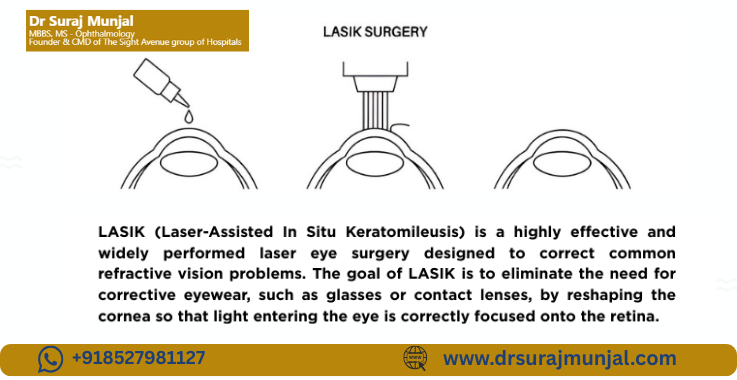
LASIK (Laser-Assisted In Situ Keratomileusis) is a highly effective and widely performed laser eye surgery designed to correct common refractive vision problems. The goal of LASIK is to eliminate the need for corrective eyewear, such as glasses or contact lenses, by reshaping the cornea so that light entering the eye is correctly focused onto the retina.
The LASIK procedure involves two main steps. First, a thin flap is created on the cornea using either a microkeratome blade or a femtosecond laser. This flap is gently lifted, and an excimer laser is then used to reshape the underlying corneal tissue based on the patient's specific refractive error. Once the cornea is reshaped correctly, the flap is repositioned and begins to heal naturally without the need for stitches.
LASIK is considered a minimally invasive outpatient procedure. The surgery itself typically takes around 15 to 20 minutes for both eyes, and patients often report significant vision improvement within just 24 to 48 hours. Most people achieve 20/25 vision or better, and the procedure has a very high success rate (over 95% worldwide), according to the American Refractive Surgery Council.
India is on par with global standards in terms of LASIK technology and outcomes. Leading eye care centers in India offer cutting-edge variations of the LASIK procedure, including:
- Femto LASIK (Blade-Free LASIK): Uses laser technology for flap creation, improving precision and safety.
- Contoura Vision LASIK: A topography-guided technique that maps corneal irregularities for a personalized vision correction.
- SMILE (Small Incision Lenticule Extraction): A minimally invasive method where no flap is created, reducing the risk of dry eyes and improving healing time.
What sets LASIK apart from other corrective surgeries is its quick recovery, minimal pain, and long-term effectiveness. It is suitable for a wide range of adults with stable vision and healthy eyes, and the advancements in technology have made it safer and more accurate than ever before.
In India, LASIK is performed under sterile conditions using US FDA-approved lasers. The procedure is generally completed within the same day as consultation and diagnostics, making it especially convenient for international patients seeking swift and cost-effective care.
Why is LASIK Done?
LASIK is performed to correct refractive errors—vision problems caused by the way light bends inside the eye. These errors prevent light from focusing directly on the retina, resulting in blurred vision. LASIK provides a permanent solution by reshaping the cornea, allowing light to be focused accurately and resulting in clearer, sharper vision.
The most common conditions treated by LASIK include:
- Astigmatism: Blurred vision due to an irregularly shaped cornea.
- Myopia (Nearsightedness): Difficulty seeing distant objects clearly.
- Hyperopia (Farsightedness): Difficulty seeing nearby objects clearly.
People choose LASIK for several reasons:
- Freedom from glasses or contact lenses: Many individuals become tired of the inconvenience, ongoing costs, and limitations associated with corrective eyewear. LASIK can offer complete independence from them.
- Active lifestyle: For individuals who engage in sports, swimming, or frequent travel, glasses and contacts can be a limitation. Laser vision correction offers greater flexibility and ease of movement.
- Cosmetic preferences: Some people prefer their appearance without glasses.
- Allergies or dry eyes: Contact lenses can worsen dryness and irritation. LASIK may be a better long-term option for individuals like these.
The procedure is especially popular among professionals such as athletes, pilots, military personnel, and those working in visually demanding fields where perfect or near-perfect vision is critical.
To undergo LASIK, patients must meet specific criteria. The ideal candidate:
- Is at least 18 years old.
- Has had stable vision for at least one year.
- Has no significant eye disease (like glaucoma or cataracts).
- Has a cornea that is thick enough for safe reshaping.
- Is not pregnant or breastfeeding.
Globally, millions have chosen LASIK for its effectiveness and safety. In advanced eye hospitals, including those led by specialists like Dr. Suraj Munjal, the surgery is tailored using detailed diagnostics and mapping technologies, ensuring results that are both precise and long-lasting.
Different Types of LASIK Eye Surgery Available in India
LASIK has evolved significantly over the years, offering patients multiple options tailored to their specific vision correction needs. The type of LASIK chosen often depends on factors such as corneal thickness, the level of refractive error, eye health, and patient preference. Modern eye care centers now offer a range of advanced LASIK techniques.
Standard LASIK (Conventional LASIK)
It is the original form of LASIK surgery, where a microkeratome blade is used to create the corneal flap. An excimer laser then reshapes the cornea to correct the refractive error. While it's the most affordable option, it may not be suitable for those with thinner corneas or more complex visual issues. It's still widely used and effective for basic corrections.
Femto LASIK (Blade-Free LASIK)
Also known as All-Laser LASIK, this method uses a femtosecond laser instead of a blade to create the flap, making the procedure more accurate and reducing complications. It offers a smoother flap, faster healing, and a lower risk of complications related to the flap. It is ideal for patients looking for greater precision and safety.
Contoura Vision LASIK
Considered one of the most advanced LASIK techniques today, Contoura Vision uses topography-guided laser correction to treat not just the refractive error but also corneal irregularities. Creating a personalized treatment plan tailored to the unique curvature of each eye can offer improved clarity, enhanced contrast sensitivity, and enhanced night vision. Contoura Vision LASIK is particularly beneficial for individuals with astigmatism or those who have been dissatisfied with the results of standard LASIK.
SMILE (Small Incision Lenticule Extraction)
A newer, minimally invasive procedure, SMILE involves creating a small lenticule (a tiny piece of corneal tissue) within the eye and removing it through a small incision. Unlike LASIK, it doesn't require a flap, which reduces the risk of dry eye and promotes quicker recovery. SMILE is ideal for patients with moderate to high myopia, as well as those involved in contact sports.
Choosing the correct type of LASIK depends on a thorough eye examination, lifestyle considerations, and your long-term vision goals. An experienced ophthalmologist will help determine which technique offers the best results for your unique eye condition.
Who Needs LASIK Eye Surgery?
LASIK eye surgery is not just for people who are tired of wearing glasses—it is for those who meet specific medical and optical criteria. Not everyone with a vision problem is automatically eligible for treatment. Understanding whether you are a good candidate helps ensure the best possible outcome from the procedure.
You may be suitable for LASIK if:
- You are 18 years or older. Eye development typically stabilizes by this age, which is crucial for accurate correction.
- Your prescription has been stable for at least 12 months. Changes in your refractive error could affect surgical outcomes.
- You have healthy eyes. Conditions like cataracts, glaucoma, severe dry eyes, or keratoconus may disqualify you.
- Your cornea is thick enough. LASIK requires the removal of corneal tissue, so individuals with thin corneas may not be eligible; however, alternatives like SMILE or PRK might still be suitable.
- You are not pregnant or breastfeeding. Hormonal fluctuations can affect vision stability and healing.
- You have realistic expectations. While LASIK significantly improves vision, perfection isn't guaranteed. Some LASIK patients may still require corrective lenses for tasks such as reading small print or night driving.
Who Should Avoid LASIK?
Certain conditions make LASIK unsuitable or risky:
- Unstable refractive errors or progressive myopia
- Severe dry eyes that could worsen post-surgery
- Autoimmune disorders or delayed healing issues
- Corneal diseases such as keratoconus
- History of eye infections or injuries
An in-depth consultation with an experienced ophthalmologist, including corneal mapping and retinal evaluation, will determine eligibility. Reputable centers conduct comprehensive diagnostics to minimize risks and ensure safety.
Is There an Age Limit for LASIK Eye Surgery?
There's no upper age limit for LASIK, but it is most commonly advised for individuals aged 20 to 45. After age 40, many people begin to develop presbyopia (age-related difficulty focusing on near objects), which LASIK does not entirely correct. However, alternative procedures, such as presbyLASIK or monovision LASIK, may be discussed.
What is the Cost of LASIK Eye Surgery in India?
In many countries, the price of laser eye surgery can be prohibitively high. However, the cost of surgery in India is significantly lower, without compromising on quality, technology, or safety. On average, the price for LASIK eye surgery in India ranges from $800 to $1,600 per eye, depending on the type of LASIK performed and the reputation of the clinic and surgeon.
|
Type of LASIK Surgery |
Estimated Cost (USD) |
|
Standard LASIK (Blade) |
$400 – $600 |
|
Femto LASIK (Blade-Free) |
$600 – $900 |
|
Contoura Vision LASIK |
$800 – $1,200 |
|
SMILE Eye Surgery |
$900 – $1,300 |
What's Included in the Cost?
In most cases, the quoted price covers:
- Pre-surgery eye examination and diagnostic scans
- Surgeon's consultation
- Use of advanced laser technology
- The surgical procedure for both eyes (if chosen)
- Post-operative medications and eye drops
- 1–2 follow-up consultations within the first month
At renowned clinics like The Sight Avenue, where Dr. Suraj Munjal performs advanced LASIK procedures, patients can expect transparent pricing, high safety standards, and excellent care. Packages are often customized based on the patient's eye condition and chosen technique.
Cost Comparison: India vs Other Countries
For international patients, one of the most compelling reasons to consider LASIK abroad is the cost difference. While many developed nations offer high-quality refractive surgery, the expense can be a significant deterrent to access. In contrast, top-tier eye care centers across South Asia provide the same level of precision, safety, and advanced technology at a fraction of the global price.
Below is a comparison of the average LASIK eye surgery cost per eye in different countries:
|
Country |
Average Cost Per Eye (USD) |
|
India |
$800 – $1,600 |
|
United States |
$2,000 – $3,000 |
|
United Kingdom |
$2,200 – $2,800 |
|
Australia |
$2,500 – $3,200 |
|
United Arab Emirates |
$1,800 – $2,400 |
|
Canada |
$1,900 – $2,700 |
|
Singapore |
$2,000 – $2,800 |
Even with travel expenses, accommodation, and visa arrangements included, many patients find that they save ~60% when choosing laser vision correction in a country like India. This affordability, however, does not mean a compromise in quality.
What Justifies the Cost Gap?
Several factors contribute to lower LASIK pricing in Asia:
- Lower operational and labor costs for hospitals and clinics
- Favorable currency exchange rates for international patients
- High procedure volume and economies of scale
- Reduced malpractice insurance expenses
- Efficient healthcare systems with minimal wait times
What Affects the Cost of LASIK Eye Surgery in India?
While LASIK is significantly more affordable in this part of the world than in many Western countries, the final price can still vary from one patient to another. Knowing the factors that influence the cost of LASIK eye surgery helps patients make informed decisions and avoid unexpected expenses.
- Type of LASIK Procedure Chosen: This is the most significant variable. Standard LASIK, which uses a mechanical blade to create the corneal flap, is typically the most cost-effective option. On the other hand, advanced procedures such as Femto LASIK (blade-free), Contoura Vision (topography-guided), or SMILE (flapless) are priced higher due to the advanced laser technology and precision required for their execution. These options also offer faster recovery, improved visual clarity, and fewer side effects.
- Technology and Equipment Used: Clinics equipped with FDA-approved femtosecond and excimer laser systems, corneal mapping tools, and real-time eye-tracking devices often charge more due to the investment in cutting-edge technology. However, these tools significantly improve safety and outcomes, making the higher cost worthwhile for many patients.
- Surgeon's Experience and Credentials: Highly experienced eye surgeons—especially those who have trained or practiced abroad or have a proven track record of successful outcomes—may charge more for their expertise. However, paying a bit more for an experienced ophthalmologist can offer peace of mind and reduce the risk of complications. At centers led by renowned specialists like Dr. Suraj Munjal, the focus is on precision, safety, and customized care.
- Diagnostic and Pre-Operative Tests: Before surgery, several advanced diagnostic tests, including corneal topography, pachymetry (a measurement of corneal thickness), and wavefront analysis, are performed to determine suitability and design a personalized treatment plan. These tests may be included in the package or billed separately, depending on the facility.
- Hospital Location and Accreditation: Clinics in major cities, such as Delhi, Mumbai, and Bangalore, may have slightly higher prices due to higher operational expenses and increased demand. Additionally, hospitals with NABH or JCI accreditation often charge premium rates due to their superior infrastructure and international protocols.
- Post-Operative Care and Support Services: Packages that include follow-up visits, medications, protective eyewear, and assistance for international patients (like airport transfers and translation services) may reflect these benefits in their pricing.
Why Choose India for LASIK Surgery?
Over the past decade, India has become one of the most trusted destinations for vision correction surgery. Thousands of international patients travel here every year seeking high-quality care, advanced technology, and affordable pricing, all without long waiting periods. When it comes to LASIK, the country offers many advantages that make it a leading choice for patients worldwide.
- Globally Recognized Surgeons: Many of the country's top ophthalmologists have received training or fellowships in the United States, the UK, or Germany. They bring global expertise and decades of hands-on experience to their practice. Reputed names like Dr. Suraj Munjal are often invited to international conferences and are known for performing high-volume, complex laser procedures with a high success rate. Having a skilled surgeon significantly reduces the risk of complications and ensures better outcomes.
- Advanced Laser Technology: Leading eye hospitals are equipped with state-of-the-art technology, including Femtosecond lasers, WaveLight EX500 excimer lasers, and corneal topography systems, which are utilized in procedures such as Contoura Vision. These tools enable accurate customization and ensure a high level of safety during surgery. Many of these technologies are similar to those used in the U.S. and Europe, often approved by the U.S. FDA or CE-certified, ensuring adherence to international quality standards. Whether it's traditional LASIK, blade-free Femto LASIK, or minimally invasive SMILE surgery, patients have access to all modern options.
- Cost Advantage Without Quality Compromise: The most well-known reason to choose this region is the significant cost savings. LASIK surgery here costs only about 20% to 40% of what patients would pay in Western countries, yet the level of care is comparable to that of international facilities. It allows patients to save substantially, even when travel and lodging costs are taken into account.
- No Waiting Periods: Unlike in many countries where waiting lists for elective eye surgeries can be long, appointments and procedures are scheduled quickly and efficiently. Most patients can have their consultation, surgery, and initial follow-up within 3 to 5 days.
- Personalized Attention and Support: Hospitals known for medical tourism offer dedicated care coordinators, multilingual support, and concierge-style services. This customized approach ensures a smooth experience from the first contact to post-surgery recovery.
What are the Services Available for International Patients?
For many international patients, traveling abroad for surgery can seem overwhelming. However, top eye care centers across India have established a seamless, patient-friendly system that alleviates the stress of medical travel. Whether you're arriving from Africa, the Middle East, Southeast Asia, or beyond, you'll find that hospitals catering to global patients provide not just clinical excellence but also comprehensive logistical and emotional support throughout the journey.
- Pre-Arrival Virtual Consultation: Most leading eye hospitals now offer online pre-consultation services, allowing patients to speak directly with surgeons and coordinators before traveling. It is beneficial for determining candidacy for LASIK and understanding which technology (e.g., Contoura, SMILE) may be best suited. Some centers may also review scanned medical reports and prescriptions via email or secure platforms.
- Dedicated International Patient Coordinators: Upon booking, a personal patient coordinator is assigned. These coordinators serve as a bridge between the patient and the hospital, ensuring clear communication and a seamless process at every step. They assist patients with:
- Medical visa invitation letters
- Appointment scheduling
- Airport pick-up and drop-off
- Hotel or guest house accommodation
- Currency exchange and local SIM card arrangements
- Language Interpretation Services: Many hospitals employ multilingual staff or offer interpretation services in languages such as Arabic, French, Swahili, Russian, Bengali, and others. It helps ensure that nothing is lost in translation when discussing medical histories, expectations, and post-op care instructions.
- Streamlined Scheduling: LASIK surgery doesn't typically require a hospital stay. Most patients complete their eye examination, laser mapping, and consultation on Day 1, undergo the procedure on Day 2, and attend a follow-up visit on Day 3. This efficient timeline allows many to return home within a few days of arrival, minimizing disruption to their work or family life.
- Post-Operative Support: International patient programs often include:
- Take-home medication kits
- Post-op sunglasses and protective gear
- Remote follow-up consultations via video call or email
- Emergency contact access post-departure
Success Rate and Outcomes of LASIK
LASIK is one of the most successful and widely performed elective surgeries globally. With over 40 million procedures completed globally, it has a long-established track record for delivering excellent visual outcomes, minimal complications, and high patient satisfaction.
How Successful is LASIK?
Extensive clinical data show that:
- Over 95% of patients achieve 20/25 vision or better.
- 90% or more no longer need glasses or contact lenses.
- Less than 1% of patients experience serious issues when LASIK eye surgery is performed by an experienced surgeon using modern technology.
These numbers are consistent across top eye care centers globally, including those in India. What's even more promising is that the latest advancements, such as Contoura Vision and SMILE, have further increased success rates in eligible patients.
Improved Quality of Life
Vision correction through LASIK not only improves sight, it enhances daily comfort and convenience. Most patients report:
- Greater freedom and confidence in their personal and professional lives
- Improved performance in sports and physical activities
- Ease in traveling and daily tasks without relying on glasses or contacts
For professionals such as surgeons, athletes, airline staff, and police officers, crystal-clear vision can be a game-changer.
Patient Satisfaction
Studies reveal that over 96% of patients are satisfied with their results after LASIK. In fact, it holds one of the highest satisfaction ratings of any elective medical procedure. Satisfaction is due to the combination of:
- Immediate visual improvement
- Fast, painless recovery
- Long-lasting results
- Minimal downtime
Long-Term Outcomes
The results of LASIK are permanent in most cases. However, natural age-related changes, such as presbyopia, may still affect near vision after the age of 40, necessitating the use of reading glasses. It is not a result of the LASIK procedure itself, but rather a regular part of aging.
Complications like glare, halos, or dry eyes are rare with current-generation technologies. When LASIK is done at an accredited facility by an experienced surgeon, the risk of serious side effects is extremely low.
With personalized treatment planning, cutting-edge equipment, and strict safety protocols, LASIK outcomes are consistently excellent, especially at high-volume centers specializing in refractive surgeries.
Recovery After LASIK Eye Surgery
One of the most appealing aspects of LASIK is the rapid recovery time for patients. Unlike many other surgical procedures that require weeks or months of downtime, LASIK offers rapid visual improvement and minimal post-operative discomfort. Most individuals are able to return to normal activities within a few days, with complete visual stabilization occurring over the next several weeks.
Immediate Post-Surgery Period (First 24 Hours)
- Immediately after the procedure, patients experience mild discomfort, a burning sensation, or a feeling of something in the eye. It is normal and usually subsides within a few hours.
- Vision may be blurry or hazy at first, but it begins to clear rapidly, and many people report noticeable improvement within the same day.
- Resting with eyes closed for the first few hours after surgery helps speed up the healing process.
- Eye drops (antibiotic, anti-inflammatory, and lubricating) are prescribed to prevent infection and dryness.
Day 1–3: Early Healing Phase
- Most patients can resume their daily activities, such as walking, reading, or working from home, by the second day after discharge.
- Driving is generally safe by Day 2 or 3, depending on how quickly vision clears.
- Doctors advise patients to avoid rubbing their eyes, exposure to dust, and screen overuse.
- Protective glasses or eye shields may be worn while sleeping to prevent accidental contact.
Week 1: Return to Routine
- A follow-up checkup is typically scheduled within the first 3 to 5 days.
- By this stage, vision is stable enough for most routine tasks, including office work and other daily activities.
- Swimming, heavy workouts, or eye makeup should still be avoided.
- Doctors also recommend avoiding direct exposure to bright sunlight and always wearing UV-protective sunglasses outdoors.
Weeks 2–4: Stabilization Phase
- Visual acuity continues to improve and stabilize.
- Minor symptoms such as dry eyes, halos, or light sensitivity may persist temporarily but usually resolve without intervention.
- A second follow-up visit is often scheduled around the one-month mark.
One Month and Beyond
- By this time, most patients have achieved their final vision correction.
- In the vast majority of cases, zero additional treatment is needed.
- Occasional use of artificial tears may be recommended for dry eyes.
- Patients are usually cleared for contact sports, swimming, and air travel.
Real Patient Testimonials
Patient testimonials offer genuine insight into what it's like to undergo LASIK eye surgery, providing not just the clinical results but also the personal transformation that follows. Many individuals travel from across the world for LASIK procedures, and their experiences speak volumes about the quality of care, professionalism of the doctors, and life-changing outcomes.
Miriam W., Nairobi, Kenya – Contoura Vision Surgery
"I was tired of the constant struggle with thick glasses and wanted a long-term solution. I reached out to The Sight Avenue after reading about Dr. Suraj Munjal's work. The team responded quickly and helped me with everything, from medical visa documents to booking a hotel nearby. I had my Contoura Vision LASIK two days after landing. The next morning, I woke up and could see clearly without glasses for the first time in 15 years. I only stayed a week and returned home with 6/6 vision. Incredible experience!"
Ahmed R., Sharjah, UAE – SMILE Procedure
"I was initially nervous about laser eye surgery, but the moment I spoke to the clinic's international care team, I felt reassured. I was recommended SMILE surgery for my high myopia. The procedure was painless and completed in under 20 minutes. I saw a dramatic improvement in vision the next day. My dry eyes, which I had from wearing lenses, are now gone. Everything was organized smoothly, and the cost was far less than what I was quoted in Dubai."
Joyce K., Accra, Ghana – Femto LASIK
"Being a frequent traveler, wearing contact lenses on long flights was always uncomfortable. I learned about Femto LASIK while researching alternatives. The entire experience, from my virtual consultation to the day of surgery, was professional and well-managed. Within two days, I was out exploring the city and could read road signs without glasses. My only regret is not doing it sooner!"
Daniel M., London, UK – Traditional LASIK
"Even with NHS options, the wait time in the UK was frustrating. I decided to fly out and get the surgery done abroad. The cost was just 25% of what private clinics in London charge, and the results are excellent. I had no complications, and I'm back at work with perfect vision.
Frequently Asked Questions
No, LASIK is virtually painless. The procedure is performed under local anesthesia in the form of numbing eye drops so that you won't feel pain during surgery. You might experience slight pressure or discomfort for a few seconds, but it's mild and temporary. After the surgery, some patients report a mild burning or gritty feeling, which usually subsides within a few hours.
The laser portion of the procedure takes only 2 to 5 minutes per eye, while the whole process (including preparation and post-surgery instructions) takes around 15 to 20 minutes total. Most patients are in and out of the treatment room within an hour.
Yes, LASIK is usually performed on both eyes during the same session. This approach ensures symmetrical healing and a faster return to daily activities. It also avoids the inconvenience of managing with one corrected and one uncorrected eye.
Most patients return to work within 1 to 3 days after surgery, depending on their individual healing rates and the nature of their work. Those in desk jobs can resume sooner, while those exposed to dust or bright lights may need to take a few more days off.
In most cases, patients no longer need glasses for distance vision after undergoing LASIK. However, after the age of 40, you may develop presbyopia (age-related difficulty focusing on near objects), which could require reading glasses. It is unrelated to the LASIK procedure.
Yes, LASIK offers long-lasting vision correction as the changes made to the cornea are permanent. However, natural aging processes can still affect your eyes over time, so future changes in vision may still occur.
LASIK is a safe procedure when performed by an experienced surgeon. Minor risks include dry eyes, glare or halos around lights, and temporary fluctuations in vision. Serious complications are rare, especially with modern technologies like SMILE or Contoura Vision.
In most countries, LASIK is considered an elective or cosmetic procedure, meaning it's not typically covered by standard health insurance. It applies to both local and international patients. However, some premium insurance plans or employer-sponsored policies may offer partial reimbursement. It's best to check with your provider in advance.
Yes. While the initial cost may seem high, LASIK eliminates the ongoing expenses associated with contact lenses, solutions, glasses, and optometrist visits. Over the course of 10 years, most patients find that LASIK is actually more economical than continued use of corrective eyewear.
