Laser Vision Correction Surgery Cost in India
The cost of laser vision correction surgery in India typically ranges from ₹25,000 to ₹1,25,000 per eye, depending on the type of procedure you choose, whether it's LASIK, SMILE, PRK, or Contoura Vision. For both eyes, the total cost may fall between ₹50,000 to ₹2,50,000. In USD, it comes to approximately $600 to $3,000 for both eyes, making India a cost-effective destination for vision correction surgery compared to Western countries.
What makes India especially attractive for laser eye surgery is its combination of advanced laser technology, internationally trained ophthalmologists, and affordable pricing. Patients can undergo procedures that use the latest FDA-approved lasers and techniques at a fraction of the cost charged in the U.S., UK, or Europe—without compromising safety or outcomes.
Table of Contents
What Is Laser Vision Correction Surgery?
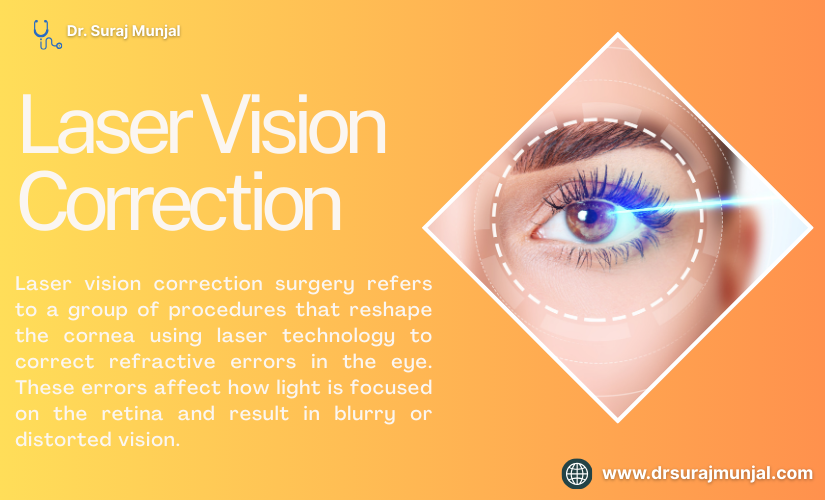
Laser vision correction surgery refers to a group of procedures that reshape the cornea using laser technology to correct refractive errors in the eye. These errors affect how light is focused on the retina and result in blurry or distorted vision. The most common types of refractive errors treated by these surgeries include:
- Myopia (Nearsightedness)
- Hyperopia (Farsightedness)
- Astigmatism
- Presbyopia (in some instances)
These surgeries aim to eliminate the need for eyeglasses or contact lenses by permanently correcting the shape of the cornea, thereby improving visual clarity. Depending on the patient’s eye condition and lifestyle preferences, the ophthalmologist may recommend one of several types of laser procedures, like LASIK, SMILE, PRK, or Contoura Vision.
Modern laser techniques use computer-guided systems to deliver exceptional precision, fast recovery, and minimal discomfort. These surgeries are typically outpatient procedures, meaning patients can return home the same day and resume daily activities soon after.
With the evolution of laser eye surgeries in India, even patients with thin corneas, dry eyes, or previous vision issues can find suitable alternatives, thanks to options like PRK or ICL. Choosing the correct type of vision correction procedure depends on a detailed eye evaluation by a trained ophthalmologist.
What are the Different Types of Laser Eye Surgery?
Laser vision correction is not a one-size-fits-all procedure. Based on the thickness of your cornea, degree of refractive error, eye health, and lifestyle, ophthalmologists may recommend different types of laser surgeries. Here's a breakdown of the most common procedures available in India:
LASIK (Laser-Assisted In Situ Keratomileusis)
LASIK is the most well-known and widely performed type of laser eye surgery. It involves creating a thin flap on the cornea using a microkeratome or femtosecond laser. The underlying corneal tissue is then reshaped using an excimer laser, and the flap is repositioned. This corrects how light focuses on the retina, significantly improving vision.
Advantages: Quick recovery, minimal discomfort, and rapid visual results within 24–48 hours.
Ideal for: Patients with mild to moderate myopia, hyperopia, or astigmatism and a thick enough cornea.
Contoura Vision LASIK
It is an advanced, topography-guided version of LASIK. It maps over 22,000 unique elevation points on your cornea to deliver ultra-personalized vision correction.
Advantages: Superior visual clarity, better night vision, and fewer side effects like halos or glare.
Ideal for: Patients looking for the highest-quality vision correction, especially those with irregular corneal shapes.
SMILE (Small Incision Lenticule Extraction)
SMILE is a minimally invasive, flapless procedure. A femtosecond laser creates a small lenticule inside the cornea, which is then removed through a tiny incision. There is no flap creation as in LASIK, making it a safer option for active lifestyles.
Advantages: No flap-related complications, less dry eye, fast healing, and excellent long-term stability.
Ideal for: People with myopia and mild astigmatism who lead active or contact sports-focused lifestyles.
PRK (Photorefractive Keratectomy)
In PRK, the thin outer layer of the cornea (epithelium) is gently removed, and the underlying surface is reshaped using an excimer laser. The epithelium naturally regenerates over a few days.
Advantages: Suitable for patients with thin corneas or those who are not eligible for LASIK.
Ideal for: Patients with high-risk corneal conditions or dry eyes.
Note: LASEK and Epi-LASIK are modifications of PRK that involve slightly different methods for handling the corneal epithelium.
ICL (Implantable Collamer Lens)
Although not a laser procedure, ICL is often grouped under vision correction surgeries. It involves placing a biocompatible lens inside the eye without removing corneal tissue. The natural lens remains in place.
Advantages: Reversible, ideal for high refractive errors, no dryness, and suitable for patients with thin corneas.
Ideal for: People who are not candidates for laser-based procedures but want permanent correction.
With so many advanced options, India has become a preferred destination for patients seeking customized laser vision correction at globally competitive prices.
How Is Laser Eye Surgery Performed?
Laser eye surgery is a quick and highly precise procedure that typically takes 15 to 20 minutes per eye. While the steps vary slightly between LASIK, SMILE, and PRK, the core goal remains the same: to reshape the cornea so that light entering the eye is correctly focused on the retina.
Pre-operative Preparation
- You will undergo a detailed eye examination that includes corneal thickness measurement, refraction testing, and mapping using topography and wavefront analysis.
- On the day of surgery, you are given numbing eye drops. No general anesthesia is required.
- The eye area is cleaned, and a device is used to keep your eye open.
During the Procedure
For LASIK:
- A thin corneal flap is created using a microkeratome or femtosecond laser.
- The flap is lifted, and the underlying cornea is reshaped with an excimer laser.
- The flap is then gently repositioned to heal naturally without stitches.
For SMILE:
- A femtosecond laser creates a small disc-shaped piece of tissue (lenticule) inside the cornea.
- This lenticule is removed through a tiny incision without creating a flap.
For PRK:
- The outermost layer of the cornea (epithelium) is gently removed.
- The cornea is reshaped using an excimer laser.
- A bandage contact lens is placed over the eye to promote healing.
Post-operative Steps
- You’ll be monitored for 30–60 minutes after the surgery before being discharged.
- Doctors will prescribe antibiotics and lubricating eye drops.
- Follow-up visits will be scheduled to monitor healing and vision improvement.
Most patients experience significant vision improvement within a few days, with complete stabilization in 1–3 months, depending on the procedure. SMILE and LASIK generally offer faster recovery than PRK.
Laser Vision Correction Surgery Cost in India
The cost of laser vision correction surgery in India is among the most affordable in the world, while still offering access to advanced technology and highly experienced eye surgeons. The price depends on the type of surgery chosen, the city or hospital, and any additional diagnostic or follow-up care involved.
The average cost per eye ranges from ₹25,000 to ₹125,000, and the cost for both eyes usually falls between ₹50,000 and ₹250,000. In USD, this translates to approximately $600 to $3,000 for both eyes, depending on the exchange rate.
|
Procedure Type |
Cost per Eye (INR) |
Cost for Both Eyes (INR) |
Cost for Both Eyes (USD) |
|
Standard LASIK |
₹25,000 – ₹40,000 |
₹50,000 – ₹80,000 |
$600 – $950 |
|
Contoura Vision LASIK |
₹45,000 – ₹60,000 |
₹90,000 – ₹1,20,000 |
$1,100 – $1,400 |
|
SMILE Surgery |
₹60,000 – ₹75,000 |
₹1,20,000 – ₹1,50,000 |
$1,400 – $1,800 |
|
PRK / LASEK / Epi-LASIK |
₹30,000 – ₹50,000 |
₹60,000 – ₹1,00,000 |
$700 – $1,200 |
|
ICL (if included) |
₹85,000 – ₹1,25,000 |
₹1,70,000 – ₹2,50,000 |
$2,000 – $3,000 |
These figures may vary slightly depending on the hospital's reputation, surgeon experience, and location (Delhi, Mumbai, Bangalore, Chennai, etc.). While metro cities tend to have slightly higher pricing, they also offer more cutting-edge laser systems like Femtosecond Bladeless LASIK and ZEISS SMILE.
What’s Included in the Cost Package?
When you opt for laser eye surgery at a reputed hospital or eye center in India, the pricing usually covers a comprehensive treatment plan, which goes beyond just the laser procedure itself. Most packages are designed to ensure a smooth and safe experience for both domestic and international patients.
Here’s what’s commonly included in the cost of laser vision correction surgery in India:
- Complete Pre-operative Eye Assessment: Advanced diagnostic tests such as corneal topography, pachymetry, refraction mapping, and dry eye evaluation are included before confirming surgery eligibility.
- Surgeon Consultation and Counseling: Consultation with the ophthalmologist or refractive surgeon to determine the best procedure for your eyes and lifestyle needs.
- Laser Procedure Charges: The cost includes use of FDA-approved laser systems such as Wavelight Allegretto, VisuMax ZEISS, or Schwind Amaris, depending on the hospital and procedure.
- Operation Theatre and Hospital Use Charges: All OT-related expenses, disposables, and use of high-precision surgical equipment are covered in the package.
- Post-operative Medications and Eye Drops: Antibiotic and lubricating drops needed after surgery are generally included for the first few days to a week.
- Follow-up Visits (1–3 times): Short-term follow-ups to monitor healing, vision clarity, and address any early side effects are usually bundled in the cost.
- Lifetime Vision Enhancement (Optional in Some Clinics): Some top hospitals offer enhancement guarantees for life or within a specified time window, should you require future correction.
For international patients, the cost may also include additional services such as airport transfers, hotel stay arrangements, translator support, and visa assistance, especially when opting for premium medical tourism packages.
Cost Comparison with Other Countries
Laser vision correction in India offers exceptional value for money, especially when compared to countries like the United States, the UK, or the UAE. While the quality of equipment and medical care remains globally competitive, the cost of surgery in India is 60–80% lower, making it a top destination for patients seeking affordability without compromising safety.
|
Country |
LASIK (Both Eyes) |
SMILE (Both Eyes) |
PRK (Both Eyes) |
ICL (Both Eyes) |
|
India |
$600 – $1,400 |
$1,400 – $1,800 |
$700 – $1,200 |
$2,000 – $3,000 |
|
USA |
$2,500 – $3,500 |
$3,500 – $4,500 |
$2,000 – $3,000 |
$5,000 – $7,000 |
|
UK |
$2,800 – $4,000 |
$3,750 – $5,000 |
$2,000 – $2,800 |
$5,000 – $6,500 |
|
UAE |
$1,750 – $3,000 |
$2,750 – $4,000 |
$1,500 – $2,500 |
$4,000 – $5,500 |
|
Thailand |
$1,500 – $2,500 |
$2,500 – $3,500 |
$1,200 – $2,000 |
$3,000 – $4,500 |
As seen in the table above, laser eye surgery in India costs a fraction of what it does in Western countries. Even when you include travel and accommodation expenses, the total cost remains substantially lower.
Moreover, India's ophthalmology sector is globally recognized for:
- Board-certified surgeons trained internationally
- Use of cutting-edge technology
- High surgery volumes, resulting in greater precision and consistency
- Customized care plans for international patients
For this reason, thousands of patients from the Middle East, Africa, the UK, and Southeast Asia travel to India every year for affordable, safe, and effective vision correction surgery.
What are the Factors That Affect the Cost of Laser Eye Surgery in India?
While India offers some of the most competitive prices globally for laser eye surgery, the final cost depends on several key factors. Being aware of these can help patients choose the most suitable procedure and budget accordingly.
- Type of Procedure Chosen: Each surgery type has its own cost structure. Standard LASIK is the most economical. Contoura Vision and SMILE use advanced mapping and laser tech, making them more expensive. ICL costs the highest due to implantable lenses and customization.
- Technology Used: Surgeries that utilize femtosecond lasers, topography-guided systems, or bladeless techniques tend to cost more because of the precision and comfort they offer. Examples include ZEISS VisuMax for SMILE and Wavelight Allegretto for Contoura Vision.
- Surgeon’s Experience and Reputation: Highly experienced ophthalmologists or eye surgeons with international training, thousands of surgeries, and patient testimonials often charge a premium for their services. However, this can be a worthwhile investment for better outcomes and safety.
- Hospital or Clinic Infrastructure: State-of-the-art hospitals in metros like Delhi, Mumbai, Bangalore, and Chennai may have slightly higher prices due to their high-end equipment, international hygiene standards, and patient comfort services. Smaller clinics or tier-2 cities may offer lower prices but may lack advanced technology.
- Patient's Eye Condition: Patients with high refractive errors, thin corneas, dry eyes, or previous surgeries may require advanced or customized treatment, which increases the total cost. In such cases, the ophthalmologist may recommend SMILE, PRK, or ICL instead of standard LASIK.
- Inclusion of Post-operative Support and Enhancements: Clinics offering lifetime enhancement policies, extended follow-up care, and post-op medication in their packages may charge slightly more but ensure long-term peace of mind.
Why Choose India for Laser Eye Surgery?
India has emerged as one of the most trusted destinations in the world for laser vision correction surgery, attracting thousands of international patients every year. The country's reputation is built on a strong foundation of medical expertise, cutting-edge laser technology, and affordability.
- World-Class Eye Surgeons: India is home to many internationally trained ophthalmologists and refractive surgeons who have performed thousands of successful procedures. Their expertise covers LASIK, SMILE, Contoura Vision, PRK, and ICL.
- Advanced FDA-Approved Technology: Hospitals in India use the latest laser platforms such as Alcon Wavelight, ZEISS VisuMax, and Schwind Amaris, which ensure greater precision, safety, and visual outcomes.
- Cost-Effective Packages Without Compromise: Patients receive the same level of care and technology offered in the US or UK at 60–80% lower cost. Even when including travel and stay, the total expenses remain highly affordable.
- High Patient Satisfaction and Long-Term Results: Indian hospitals maintain excellent track records with high patient satisfaction scores, minimal complication rates, and long-term visual stability across all age groups.
- Zero Waiting Time and Personalized Scheduling: Unlike many Western countries, Indian eye care centers offer immediate booking, personalized surgery slots, and faster consultation-to-surgery timelines, saving patients weeks of waiting.
- Tailored Treatment for All Vision Needs: Whether it’s thin corneas, extreme myopia, or dry eyes, Indian surgeons offer personalized laser solutions such as SMILE or ICL that cater to unique patient needs and lifestyles.
These advantages have made India a global hub for patients from the Middle East, Africa, Southeast Asia, Europe, and North America, seeking affordable and safe vision correction.
Services for International Patients
To make the journey smooth and stress-free, top eye hospitals in India provide a full suite of dedicated services for international patients. These services begin from the moment a patient inquires and continue through post-surgery follow-up—even after they return home.
- Dedicated International Patient Coordinators: Hospitals assign multilingual coordinators who guide patients through scheduling, travel planning, accommodation, billing, and post-op follow-up.
- Pre-Arrival Support and Documentation Help: Assistance is provided for medical visa applications, invitation letters, estimate letters, and doctor confirmations to speed up the travel process.
- Airport Pickup and Drop-off: Complimentary airport transfers are arranged for most medical tourists arriving in cities like Delhi, Mumbai, or Bangalore.
- Affordable Accommodation Nearby: Tie-ups with budget hotels, guest houses, or serviced apartments ensure that patients and companions have a comfortable stay near the hospital.
- Teleconsultations and Reports Review Before Arrival: Patients can share eye test reports or prescriptions online before traveling. Surgeons often provide pre-approval or advice on suitable procedures in advance.
- Language Interpretation Services: Arabic, French, Russian, Bengali, Swahili, and other language support services are available to ensure smooth communication during the hospital stay.
- Post-Treatment Support & Remote Follow-ups: After discharge, patients receive detailed post-op instructions and can stay connected via WhatsApp, email, or video call for check-ins and guidance.
Success Rate and Long-Term Vision Outcomes
India has an excellent track record when it comes to laser vision correction surgery, with success rates comparable to the best eye centers in the world. Most patients experience 20/20 vision or better after the procedure, and the improvement is often immediate or within a few days, depending on the technique used.
Average Success Rates in India
- Standard LASIK: 95% to 98% achieve 6/6 or 20/20 vision
- Contoura Vision LASIK: Over 98% achieve vision better than 6/6
- SMILE Surgery: Around 97% experience excellent visual outcomes
- PRK: 90% to 95% success rate, depending on healing and corneal health
- ICL: 99% success in vision correction with minimal post-op complications
These high success rates are backed by:
- Use of FDA-approved laser systems and bladeless technology
- In-depth corneal mapping and wavefront analysis
- Experienced ophthalmic surgeons with 10,000+ procedures
- Personalized screening to determine ideal candidates
For patients with irregular corneas, dry eyes, or previous eye surgeries, Indian eye hospitals offer customized solutions to maintain or improve visual clarity. Long-term studies from reputed hospitals in India show that visual acuity remains stable for years after surgery, especially with SMILE and Contoura Vision.
Enhancement or Re-Treatment Possibility
Though rare, some patients may require enhancement procedures (commonly after 6–12 months) if the original correction wasn’t sufficient or vision changes slightly over time. Many Indian hospitals offer free enhancement guarantees within a specific time frame, usually 1 to 2 years post-surgery.
Recovery Timeline and Post-Operative Care
One of the significant benefits of modern laser eye surgeries is the fast recovery period. While some discomfort and blurry vision are common in the first 24–48 hours, most patients notice a significant improvement in vision within the first week.
- LASIK: Vision improves within 24–48 hours. Most patients resume work in 2–3 days. Complete healing takes about 1–2 months.
- SMILE: Slightly slower initial visual recovery compared to LASIK. Clear vision stabilizes within 3–7 days. Healing is rapid due to the flapless technique and minimal dryness.
- PRK: Initial healing takes 4–5 days, with a bandage contact lens applied post-surgery. Blurred vision may persist for a week. Complete recovery may take 1–3 months.
- Contoura Vision: Visual recovery is similar to or faster than standard LASIK, with ultra-sharp outcomes.
- ICL: Patients experience improved vision within 24 hours. Eye drops are required for 2–3 weeks. A slightly longer recovery due to lens adaptation.
Post-Operative Care Essentials
- Use antibiotic and lubricating drops as prescribed to prevent infection and dryness.
- Avoid touching or rubbing the eyes for at least a week.
- Refrain from swimming, makeup, or dust exposure for 2–3 weeks.
- Follow-up visits are usually scheduled at 1 day, 1 week, 1 month, and 3 months.
Surgeons in India ensure that patients are fully educated on aftercare routines. International patients are often provided with printed recovery guidelines and WhatsApp/teleconsultation access for remote support once they return home.
Patient Testimonials
“It was the best decision I made!”
— Fatima S., Kenya
“I traveled to India for SMILE eye surgery and was amazed by how smooth everything went. From airport pickup to the surgery at The Sight Avenue, everything was handled professionally. My vision was clear in just two days, and I didn’t feel any pain. The cost was a fraction of what I was quoted back home. Thank you, Dr. Suraj Munjal and team!”
“No glasses after 15 years!”
— Omar H., UAE
“I had severe myopia and dry eyes, so I wasn’t eligible for LASIK. But in Delhi, the doctor recommended PRK. It took a bit longer to recover, but my vision is now 6/6. I can finally drive and play sports without contacts. The staff helped with everything—from hotel stay to follow-up checkups. Highly recommend India for laser eye surgery!”
“Clean, safe, and affordable!”
— Alice T., United Kingdom
“I went in for Contoura Vision and was nervous at first. But the surgeon was highly experienced, and the hospital was spotless. Within 24 hours, my vision was clear, and I flew back home in a week. I paid less than £1,000 for both eyes, and the quality of care was world-class.”
Frequently Asked Questions
Yes, India is globally recognized for safe, high-quality ophthalmic procedures. Reputed hospitals use FDA-approved technology and adhere to international safety standards.
It depends on your corneal thickness, eye condition, and lifestyle. LASIK is suitable for most, SMILE is best for active individuals, PRK is ideal for thin corneas, and ICL works for extreme cases.
The actual laser treatment takes 10–15 minutes per eye. The total procedure, including preparation, usually lasts 30–40 minutes. You can go home the same day.
No, the surgery is painless. Numbing eye drops are used. Mild discomfort, tearing, or dryness may occur for 24–48 hours, especially after PRK.
Most patients can travel within 2–3 days after LASIK or SMILE. PRK and ICL may require 5–7 days of recovery. It’s best to consult your surgeon before booking return tickets.
Yes, one follow-up is typically done 24–48 hours post-surgery. After that, basic eye checks can be done in your home country unless a complication arises.
Yes, for most patients, the results are long-lasting. However, natural aging of the eyes (like presbyopia) may require reading glasses after the age of 40–45.
Yes, in nearly all cases, both eyes are treated during the same session. It’s efficient, safe, and reduces overall recovery time.
