Eye Injections Cost in India
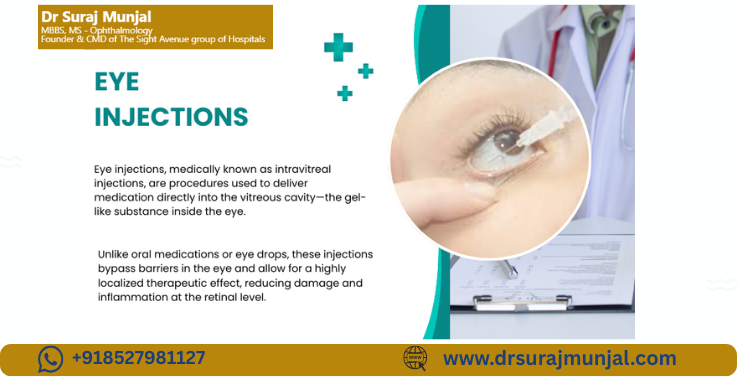
Eye injections are a highly effective treatment for several severe retinal and macular conditions. From age-related macular degeneration (AMD) to diabetic retinopathy and retinal vein occlusion, intravitreal injections help control disease progression, preserve vision, and sometimes even restore sight. These injections deliver medication directly into the eye, ensuring fast and targeted results with minimal systemic side effects.
The cost of eye injections in India ranges from $100 to $400 per injection (approximately ₹8,000 to ₹35,000), depending on the drug used and the condition being treated. The pricing is significantly more affordable than in countries like the USA or UK, where a single injection may cost over $1,500. In India, top eye hospitals and retina specialists offer access to the same global-standard medications—such as Avastin, Lucentis, Eylea, and Ozurdex—at a fraction of the cost.
Table of Contents
What Are Eye Injections?
Eye injections, medically known as intravitreal injections, are procedures used to deliver medication directly into the vitreous cavity—the gel-like substance inside the eye. This method ensures that the drug reaches the retina and macula with maximum effectiveness, which is crucial in treating vision-threatening conditions.
Unlike oral medications or eye drops, these injections bypass barriers in the eye and allow for a highly localized therapeutic effect, reducing damage and inflammation at the retinal level. They are typically administered in a sterile setting by a retinal specialist and take only a few minutes to complete.
The most common classes of medication injected into the eye include:
- Anti-VEGF agents: Used to reduce abnormal blood vessel growth and leakage (e.g., for wet AMD, diabetic macular edema).
- Steroids: Help manage swelling and inflammation, especially in conditions like uveitis.
- Antibiotics or antifungals: Administered in cases of intraocular infections like endophthalmitis.
- Immunosuppressive agents: Occasionally used for autoimmune eye diseases.
Patients may require a single injection or a series of treatments administered over several months, depending on the diagnosis and the severity of the disease. In many cases, eye injections have become the gold standard for saving sight, offering hope where once vision loss was inevitable.
What are the Conditions Treated with Eye Injections?
Eye injections play a critical role in managing a wide range of retinal and ocular diseases, particularly those that threaten central vision or cause progressive damage. These conditions often involve leakage, swelling, inflammation, or the growth of abnormal blood vessels in or around the retina.
Some of the most common conditions effectively treated with intravitreal injections are:
- Age-Related Macular Degeneration (AMD – Wet Type): In wet AMD, abnormal blood vessels grow beneath the retina and leak fluid or blood, leading to rapid vision loss. Anti-VEGF injections such as Lucentis, Eylea, or Avastin help block this process and maintain or even improve vision if started early.
- Diabetic Retinopathy and Diabetic Macular Edema (DME): Long-term diabetes can damage retinal blood vessels, causing swelling in the macula and bleeding into the retina. Injections reduce fluid buildup and prevent further retinal damage, often preserving sight in diabetic patients.
- Retinal Vein Occlusion (RVO): When veins in the retina become blocked, they can cause fluid leakage and swelling. Eye injections help relieve this pressure and reduce macular edema, restoring visual clarity in many cases.
- Uveitis (Inflammation of the Uveal Tract): Steroid injections are used in patients with uveitis to control inflammation within the eye, especially when other treatments are ineffective or poorly tolerated.
- Macular Edema from Other Causes: Macular swelling can result from post-surgical changes, inflammation, or trauma. Eye injections help stabilize the condition and reduce fluid accumulation in the central retina.
- Infectious endophthalmitis is a severe infection within the eye, often occurring after surgery or injury. In such cases, antibiotic or antifungal injections are delivered directly into the eye to control the infection urgently.
- Myopic Choroidal Neovascularization: Severe near-sightedness can cause the growth of abnormal blood vessels beneath the retina. Anti-VEGF injections help prevent bleeding and vision distortion in individuals affected by the condition.
What to Expect During an Eye Injection
Many patients feel anxious before their first eye injection, but the procedure is surprisingly quick, safe, and mostly painless. Knowing the step-by-step process can help ease concerns and prepare you for what’s ahead.
- Pre-Procedure Preparation: Before the injection, you’ll be asked to lie down comfortably in a reclined chair or on a procedure table. The eye being treated is cleaned thoroughly using antiseptic drops, such as povidone-iodine, to reduce the risk of infection. A topical anesthetic (numbing eye drops) is applied to make the process painless.
- Positioning and Sterile Setup: A small device called a speculum may be used to gently hold your eyelids open during the procedure. The doctor will use a magnifying lens and sterile instruments to ensure high precision. You may also wear a sterile drape over the face to maintain cleanliness.
- The Injection Itself: The actual injection takes less than 10 seconds. Using a fine needle, the medication is injected into the vitreous cavity—the jelly-like part at the back of your eye. Most patients experience only mild pressure or no pressure at all. The entire procedure from preparation to completion takes around 10–15 minutes.
- Immediate Aftercare: Once the procedure is complete, the doctor will apply antibiotic drops and, in some cases, briefly patch the eye. You'll rest for a few minutes and receive instructions for at-home care. Most patients are able to go home right after the procedure without assistance.
- Possible Sensations After the Injection: It’s normal to experience some mild discomfort, a gritty feeling, or slight redness for a few hours. In rare cases, small floaters may appear, but these usually settle within a day. Vision may be temporarily blurred due to the use of antiseptics or dilation drops.
Eye Injection Cost in India
The cost of an eye injection can vary significantly depending on the condition being treated, drug used, and the facility where the procedure is performed. In India, the average cost of an intravitreal eye injection ranges from $100 to $400 (₹8,000 to ₹35,000) per injection. It includes both the drug and the professional services required to administer it safely.
The total cost of eye injections varies primarily based on the medication used. Each drug is selected based on the severity of the condition, the patient's response to previous treatments, and the drug's cost-effectiveness. While some medications offer long-lasting effects, others may require more frequent dosing.
- Avastin (Bevacizumab): The cost of an Avastin eye injection in India typically ranges between $100 and $150 per dose. It is widely chosen for treating conditions such as diabetic retinopathy and wet age-related macular degeneration due to its affordability and broad clinical success, despite being used off-label in ophthalmology.
- Lucentis (Ranibizumab): The price of Lucentis eye injection in India generally falls within the $300 to $400 range. This FDA-approved anti-VEGF injection is explicitly designed for ocular use and offers precise results in managing wet AMD and retinal vein occlusion.
- Eylea (Aflibercept): The cost of Eylea eye injection in India ranges from $350 to $450 per injection. Eylea is favored for its extended effectiveness, which allows patients to space out their treatments over longer intervals compared to other drugs.
- Ozurdex (Dexamethasone Implant): The cost of an Ozurdex eye injection in India typically ranges from $400 to $500 per injection. This steroid-based implant is used for macular edema and uveitis, slowly releasing medication to control inflammation over several weeks or months.
- Triamcinolone Acetonide: The cost of Triamcinolone Acetonide eye injections in India is one of the lowest, typically ranging from $100 to $200 per dose. It is a corticosteroid option for treating retinal swelling and is often used when anti-VEGF agents are not suitable or effective.
|
Drug Name |
Type of Medication |
Common Uses |
Cost in India (USD) |
|
Avastin (Bevacizumab) |
Anti-VEGF (Off-label) |
Diabetic Retinopathy, Wet AMD |
$100 – $150 |
|
Lucentis (Ranibizumab) |
Anti-VEGF |
Wet AMD, Macular Edema, Retinal Vein Occlusion |
$300 – $400 |
|
Eylea (Aflibercept) |
Anti-VEGF |
Macular Edema, Wet AMD, Diabetic Macular Edema |
$350 – $450 |
|
Ozurdex (Dexamethasone) |
Steroid Implant |
Uveitis, Macular Edema, Postoperative Inflammation |
$400 – $500 |
|
Triamcinolone Acetonide |
Corticosteroid |
Diabetic Macular Edema, Retinal Swelling |
$100 – $200 |
Eye Injection Cost Comparison: India vs Other Countries
When comparing international healthcare costs, India continues to offer some of the most affordable options for eye injections, without compromising on quality, safety, or access to global-standard drugs. Patients from the US, UK, UAE, and Africa often travel to India to receive the same medications and expert care at a fraction of the cost.
|
Drug Name |
India |
USA |
UK |
UAE |
South Africa |
|
Avastin (Bevacizumab) |
$100 – $150 |
$800 – $1,200 |
$600 – $950 |
$700 – $1,000 |
$500 – $900 |
|
Lucentis (Ranibizumab) |
$300 – $400 |
$1,500 – $2,000 |
$1,200 – $1,600 |
$1,300 – $1,700 |
$1,000 – $1,400 |
|
Eylea (Aflibercept) |
$350 – $450 |
$1,800 – $2,400 |
$1,400 – $1,900 |
$1,600 – $2,000 |
$1,200 – $1,600 |
|
Ozurdex (Dexamethasone) |
$400 – $500 |
$2,000 – $2,500 |
$1,500 – $2,100 |
$1,800 – $2,300 |
$1,300 – $1,800 |
|
Triamcinolone Acetonide |
$100 – $200 |
$400 – $700 |
$300 – $600 |
$350 – $700 |
$250 – $500 |
- India offers up to 80% lower pricing for the same branded eye injections available in top Western countries.
- In many Western nations, costs are not bundled, meaning consultation, imaging, and post-care may be billed separately.
- Indian hospitals often offer fixed-price packages, which include the drug, consultation, sterile OT use, and follow-up.
This significant cost difference is one of the primary reasons India remains a preferred destination for retinal care among medical travelers.
Why Choose India for Eye Injections?
India has emerged as a top destination for advanced eye care, particularly for patients requiring intravitreal injections. Here’s why international patients increasingly prefer India for vision-saving treatments:
- Significantly Lower Cost Without Compromise: Patients receive the same FDA-approved medications, such as Lucentis, Eylea, and Ozurdex, at a fraction of the cost charged in the US or UK—making high-quality eye care accessible and affordable.
- Globally Trained Eye Specialists: Ophthalmologists in India often hold international fellowships and are experienced in handling complex retinal conditions, ensuring accurate diagnosis and precise treatment administration.
- Advanced Diagnostic and Surgical Technology: Indian eye hospitals are equipped with world-class tools, including OCT, fluorescein angiography, and sterile operating suites, for safe and accurate injections.
- Faster Appointment Scheduling and Treatment: Unlike long waiting periods in public systems abroad, Indian hospitals offer fast-track consultations, same-day diagnostics, and same-week procedures.
- Seamless Services for International Patients: From visa support and airport pickup to interpreter assistance and local accommodations, India’s medical tourism ecosystem is designed to provide hassle-free care for international patients.
Recovery and Follow-Up After Eye Injections
Eye injections are typically performed as outpatient procedures, allowing patients to go home shortly after treatment. However, proper aftercare and follow-up are crucial to ensure healing, monitor progress, and prevent complications.
- Immediate Post-Injection Recovery: Most patients can resume regular activities within a few hours after the procedure. Mild symptoms, such as eye redness, a gritty feeling, or temporary blurred vision, are common and usually resolve within 24–48 hours. Patients are advised to avoid rubbing their eyes or getting water into them for the first day.
- Eye Drops and Medication: Post-procedure care often includes a short course of antibiotic or anti-inflammatory eye drops to reduce the risk of infection and inflammation. These drops are usually prescribed for 3–5 days.
- When to Seek Medical Attention: Although rare, some symptoms may indicate complications, such as increased pain, worsening vision, floaters, or light sensitivity. In such cases, patients are advised to contact their doctor immediately to rule out infection or retinal issues.
- Follow-Up Schedule: A follow-up visit is typically scheduled within 5 to 7 days after the injection. During this appointment, the ophthalmologist uses OCT or fundus imaging to assess the retina and evaluate the effectiveness of the treatment. For conditions like AMD or DME, multiple injections spaced weeks apart may be required.
- Long-Term Monitoring: Chronic conditions, such as diabetic retinopathy, often require regular eye checkups every 1–2 months. The injection schedule is adjusted based on the disease response, drug tolerance, and overall eye health.
What are the Risks and Side Effects of Eye Injections?
Eye injections are considered very safe when performed by trained specialists, but like any medical procedure, they carry some potential side effects and risks. Fortunately, most side effects are mild and short-lived. Serious complications are rare but should be promptly addressed if they occur.
Common and Mild Side Effects
Many patients experience temporary discomfort or visual disturbances after the injection. These are typically not a cause for concern and resolve on their own:
- Redness or mild bleeding on the white of the eye (subconjunctival hemorrhage)
- Gritty or scratchy feeling for a few hours post-injection
- Mild tearing or watering of the eye
- Temporary blurred vision due to dilation or antiseptic drops
- Sensation of floaters or tiny specks in vision, usually temporary
Less Common but Manageable Risks
These occur occasionally and usually require follow-up care:
- Inflammation inside the eye (called uveitis or sterile endophthalmitis)
- Elevated eye pressure (intraocular pressure spike) after the injection
- Allergic reaction to the injected drug (rare)
- Small air bubbles in vision that disappear within 24 hours
Rare but Serious Complications
Though extremely rare (less than 1 in 1000), the following risks require immediate medical attention:
- Infectious endophthalmitis: A severe infection inside the eye that can lead to vision loss if untreated
- Retinal detachment: A medical emergency requiring surgical correction
- Lens or retinal injury: Caused by improper injection technique (extremely rare in experienced hands)
- Severe or persistent vision loss: Generally associated with underlying disease, not the injection itself
When to Seek Help Immediately
You should contact your eye doctor right away if you notice:
- Increased pain or sensitivity to light
- Sudden vision loss or black spots in your vision
- Thick yellow discharge from the eye
- Worsening redness or swelling beyond 24 hours
Frequently Asked Questions
Eye injections are commonly used to treat retinal diseases, including diabetic retinopathy, macular edema, wet age-related macular degeneration (AMD), retinal vein occlusion, and uveitis.
While eye injections may not reverse permanent vision loss, they can stabilize or improve vision by reducing fluid buildup, bleeding, or inflammation in the retina.
Anti-VEGF injections reduce abnormal blood vessel growth and leakage in the retina, helping control swelling and prevent further vision deterioration in diabetic patients.
Eye injections are not typically the first-line treatment for glaucoma but may be used in specific cases of inflammatory glaucoma or post-surgical complications.
Not all eye bleeding needs an injection. Minor surface bleeds (subconjunctival hemorrhage) often heal on their own, while internal bleeding like vitreous hemorrhage may require intravitreal treatment.
No, eye injections are generally not painful. The eye is numbed with anesthetic drops before the procedure, so most patients feel only mild pressure or no sensation at all.
The entire procedure takes about 10–15 minutes, with the injection itself lasting less than 10 seconds.
The frequency depends on your condition and the drug used. Some patients need monthly injections, while others may require them every 6–8 weeks or less frequently.
After an injection, avoid rubbing your eyes, swimming, and exposing your eyes to dust and dirty water for at least 24–48 hours. Follow your doctor’s aftercare instructions closely.
Yes, in some cases where both eyes require treatment, injections may be administered to both eyes during the same visit under strict sterile conditions.
The average cost of an eye injection in India ranges from $100 to $500 per injection, depending on the drug used—such as Avastin, Lucentis, Eylea, or Ozurdex.
India offers significantly lower costs due to subsidized healthcare services, local availability of medications, and competitive pricing without compromising treatment quality.
Yes, most reputable hospitals in India offer comprehensive support for international patients, including visa assistance, airport pickup, accommodation assistance, and dedicated patient coordinators.
