Corneal Inlays Surgery Cost in India
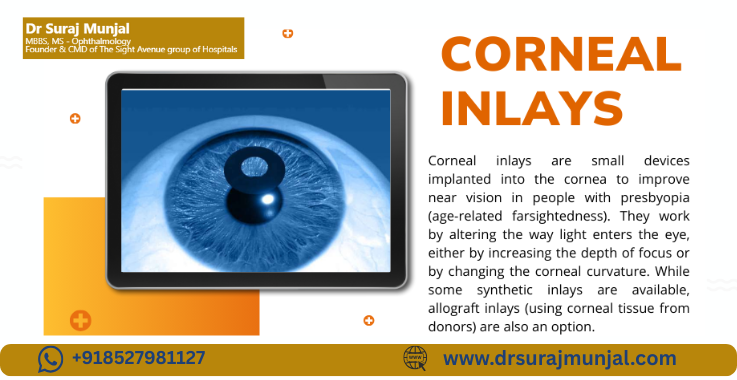
Corneal inlays are tiny lenses implanted into the cornea to correct vision, primarily for patients suffering from presbyopia or near vision issues. They help reduce the dependency on reading glasses by improving near and intermediate vision while maintaining distance vision. Dr. Suraj Munjal, an experienced ophthalmologist, specializes in advanced vision correction techniques, including corneal inlays, ensuring safe and effective outcomes.
Table of Contents
Causes of Vision Problems Addressed by Corneal Inlays
As we age, our eyes lose the ability to focus on near objects, a condition known as presbyopia. This natural aging process affects almost everyone over the age of 40. Other potential vision problems that might lead a person to consider corneal inlays include:
- Refractive errors like farsightedness (hyperopia)
- The natural stiffening of the lens in the eye
- Loss of elasticity in the eye muscles
- Decreased eye moisture or tear production
Types of Corneal Inlays
Corneal inlays come in several varieties, with each designed to address specific vision issues:
-
Refractive Corneal Inlays: These are designed to alter the way light enters the eye, thereby improving vision.
-
Small Aperture Corneal Inlays (e.g., Kamra Inlay): These devices work by increasing the depth of focus, thereby providing clear near and intermediate vision.
-
Lens-Focused Inlays: These inlays function like a small lens, enhancing near vision by focusing light on the retina.
Symptoms That May Indicate You Need a Corneal Inlay
If you’re experiencing the following symptoms, you may benefit from corneal inlays:
- Blurry near vision: Difficulty reading small print or focusing on objects close to you.
- Dependence on reading glasses: If you frequently need glasses for near tasks.
- Eye strain: Feeling discomfort when trying to read or focus on close objects.
- Frequent changes in prescription: Needing frequent adjustments to your glasses or contact lenses.
Diagnosis of Presbyopia and Refractive Errors
To determine if you’re a suitable candidate for corneal inlays, Dr. Suraj Munjal will conduct a thorough eye examination. This includes:
- Visual Acuity Test: To check the sharpness of your vision.
- Refractive Error Test: To measure how light focuses in your eye and whether corrective lenses are needed.
- Corneal Thickness Measurement: Ensuring your cornea is thick enough to support the inlay.
- Wavefront Analysis: To create a detailed map of how light travels through your eye, allowing precise correction.
Treatment with Corneal Inlays
Corneal inlay surgery is a minimally invasive procedure that typically takes 10-15 minutes per eye. Here’s what you can expect during the procedure:
- Preparation: A local anesthetic is applied to numb your eye.
- Corneal Pocket Creation: A femtosecond laser creates a small pocket in the cornea.
- Insertion of the Inlay: The inlay is placed into the pocket, centered over your pupil.
- Post-Surgery Recovery: Most patients experience improved near vision within a few days, with full recovery taking about a month.
Cost of Treatment and Stay in India
India is a popular destination for affordable, high-quality medical care, and Dr. Suraj Munjal’s clinic offers world-class treatments at competitive prices. The cost of corneal inlay surgery varies depending on the type of inlay and individual patient needs. On average, the price can range from $1,500 to $3,000 per eye.
For international patients, a typical stay in India lasts around 5 to 7 days to allow for pre-operative consultation, surgery, and follow-up care. Delhi, where Dr. Munjal practices, offers a range of accommodation options for medical tourists, from budget hotels to luxury stays.
Frequently Asked Questions
People over 40 who have presbyopia and are dependent on reading glasses are ideal candidates. A comprehensive eye exam can determine suitability.
The procedure is minimally invasive and performed under local anesthesia, so you will not feel any pain during the surgery.
