Corneal Cross-Linking Cost for Keratoconus Treatment in India
The cost of corneal cross-linking in India ranges from $400 to $1,200 (₹35,000 to ₹80,000) per eye, depending on the type of procedure, the hospital facility, and the surgeon's expertise. This treatment is most commonly used to manage keratoconus, a progressive eye condition marked by the thinning and bulging of the cornea. Left untreated, keratoconus can lead to vision loss and may eventually require a corneal transplant.
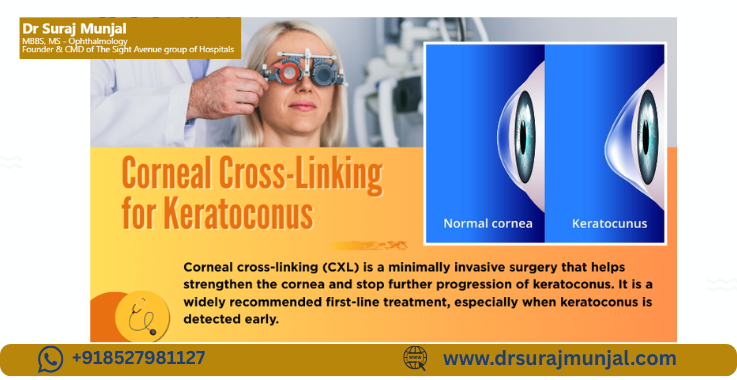
Corneal cross-linking (CXL) is a minimally invasive surgery that helps strengthen the cornea and stop further progression of the disease. It is a widely recommended first-line treatment, especially when keratoconus is detected early. Over the past decade, cross-linking has become a standard part of keratoconus management globally, including in top-tier eye hospitals and vision care centers.
Table of Contents
What is Keratoconus?
Keratoconus is a progressive eye disorder in which the usually round cornea becomes thin and gradually bulges outward into a cone-like shape. This irregular shape distorts how light enters the eye, leading to blurred or distorted vision.
What Causes Keratoconus?
The exact cause of keratoconus is not fully known, but experts believe it results from a combination of genetic, environmental, and biochemical factors. Common contributors include:
- Genetic predisposition: Keratoconus often runs in families.
- Chronic eye rubbing: Frequently linked with allergic eye disease and irritation.
- Oxidative stress: An imbalance in corneal enzymes may weaken the corneal structure.
- Connective tissue disorders: Conditions such as Ehlers-Danlos syndrome increase the risk of developing keratoconus.
While it typically begins in the teenage years or early twenties, keratoconus can also develop later in life and may progress over 10–20 years before stabilizing.
How Does Keratoconus Progress Over Time?
Keratoconus usually progresses through the following stages:
- Early Stage: Slight vision distortion, increasing astigmatism, and sensitivity to light.
- Moderate Stage: Noticeable visual impairment that glasses may no longer correct effectively.
- Advanced Stage: Significant corneal thinning, steepening, and scarring, often requiring specialized contact lenses or surgical intervention.
In progressive cases, patients may experience frequent changes in prescription, glare, halos around lights, and difficulty seeing at night. Left untreated, the cornea can become dangerously thin and may develop scarring, leading to permanent vision loss.
Why Early Detection Matters
Detecting keratoconus in its early stages is crucial. Early treatment with corneal cross-linking can stabilize the condition, preserve vision, and prevent the need for more invasive surgeries such as corneal transplantation. Many patients who receive treatment early continue to lead everyday lives with minimal visual limitation.
How Corneal Cross-Linking Works to Treat Keratoconus?
Corneal cross-linking (CXL) is a scientifically proven treatment that halts the progression of keratoconus by strengthening the cornea's structure. It works by increasing the number of collagen bonds (cross-links) within the corneal tissue, making it more stable and resistant to further bulging or thinning.
The cornea is made up of layers of collagen fibers that help maintain its shape and clarity. In keratoconus, these fibers weaken, resulting in the cornea becoming distorted. Corneal cross-linking utilizes a specialized combination of riboflavin (vitamin B2) eye drops and ultraviolet A (UVA) light to strengthen the collagen fibers in the cornea.
The process works as follows:
- Riboflavin Saturation: Vitamin B2 drops are applied to the cornea, allowing the tissue to absorb the solution thoroughly.
- UVA Light Activation: A controlled dose of UVA light is directed at the cornea, triggering a chemical reaction that forms new cross-links between collagen fibers.
- Structural Strengthening: These new cross-links increase the biomechanical strength of the cornea, helping to stabilize its shape and halt further progression.
Benefits of Corneal Cross-Linking
- Stops the progression of keratoconus in over 90% of cases.
- Non-invasive and tissue-preserving — no incisions are made.
- Can be combined with other treatments, such as intracorneal ring segments or topography-guided PRK, for enhanced visual improvement.
- Short recovery time, with minimal long-term complications.
Is Cross-Linking a Cure?
Corneal cross-linking is not a cure in the sense that it does not reverse keratoconus. Instead, it acts as a stabilizer, preventing the condition from worsening. In some cases, patients may notice slight improvements in vision over time, especially if the treatment is done early in the disease.
For patients with moderate to advanced keratoconus, cross-linking is often part of a comprehensive treatment approach aimed at preserving vision and avoiding corneal transplant surgery.
What are the Different Types of Corneal Cross-Linking Procedures?
Corneal cross-linking (CXL) has evolved over the years into multiple techniques, each suited to different stages and severities of keratoconus. The primary goal of all types is the same: to strengthen the cornea and stop disease progression. However, the methods vary in how riboflavin is applied, how the epithelium (the outer corneal layer) is treated, and how quickly the procedure is completed.
Epithelium-Off Cross-Linking (Conventional CXL)
Also known as the "Dresden protocol", this is the original and most widely used form of cross-linking.
- Procedure: The outer layer (epithelium) of the cornea is removed to allow riboflavin to penetrate deeply into the stroma.
- UVA Exposure: 30 minutes of riboflavin soaking followed by 30 minutes of UVA light exposure.
- Advantages: Deeper riboflavin penetration and strong cross-linking effect.
- Drawbacks: Longer recovery time, increased post-operative discomfort, and a risk of infection.
Conventional CXL is recommended for patients with moderate to progressive keratoconus and relatively thick corneas.
Epithelium-On Cross-Linking (Transepithelial CXL)
In this less invasive variation, the corneal epithelium is left intact.
- Procedure: The riboflavin solution is formulated to penetrate through the epithelium without the need to remove it.
- UVA Exposure: Similar to conventional CXL, but often shorter.
- Advantages: Reduced pain, faster healing, and a lower risk of infection.
- Limitations: May be less effective in halting keratoconus progression, especially in advanced cases.
This option may be suitable for early-stage keratoconus or patients who cannot tolerate epithelial removal.
Accelerated Cross-Linking
Accelerated CXL is designed to shorten the treatment duration by using a higher intensity UVA light for a shorter period.
- Procedure: The epithelium may be removed or left intact, depending on the case.
- UVA Exposure: Reduced to 5–10 minutes using higher energy levels.
- Advantages: Quicker procedure, comparable outcomes in selected cases.
- Ideal For: Busy patients or those undergoing bilateral treatment.
Clinical studies suggest that in many patients, accelerated CXL provides similar stabilization to standard methods, although long-term data are still evolving.
Customized or Combined Cross-Linking Techniques
Some centers offer advanced variations, including:
- Topography-guided cross-linking: Targets specific weak areas based on corneal maps.
- CXL combined with PRK (photorefractive keratectomy): Improves both corneal strength and vision.
- CXL combined with intracorneal ring segments (ICRS): For reshaping the cornea in more advanced cases.
These customized techniques are often used in moderate-to-severe keratoconus and require careful patient selection.
Each of these cross-linking methods has its benefits and limitations. The best technique depends on various factors, including corneal thickness, progression speed, age, comfort tolerance, and overall eye health. Your treating ophthalmologist will determine the most appropriate approach after a detailed evaluation.
What are the Latest Treatment Options for Severe or Progressive Keratoconus?
While corneal cross-linking is highly effective at halting the progression of keratoconus, some patients present with more advanced disease. In such cases, cross-linking alone may not be sufficient to improve vision or stabilize the cornea. However, several advanced treatment options are available to manage more severe cases and delay or avoid the need for a corneal transplant.
Corneal Cross-Linking with Topography-Guided PRK
It is a combined approach that is ideal for patients who not only require stabilization but also wish to enhance their vision.
- Topography-guided PRK (photorefractive keratectomy) is a laser procedure that smooths the irregular surface of the cornea.
- It is followed immediately by cross-linking to strengthen the cornea.
- This dual treatment can improve visual clarity, reduce astigmatism, and provide better quality of vision in selected patients with adequate corneal thickness.
This technique requires careful evaluation and is generally offered in advanced refractive surgery centers with topography-linked excimer laser systems.
Intracorneal Ring Segments (ICRS)
ICRS are tiny curved implants made of biocompatible material that are inserted into the cornea to flatten its shape and reduce cone steepness.
- This method improves corneal symmetry and helps patients regain functional vision.
- ICRS can be used alone or in combination with cross-linking.
- Best suited for individuals with moderate to severe keratoconus who are intolerant to contact lenses.
Implantation is performed through a small incision and is reversible, making it a flexible treatment option.
Customized or Accelerated Cross-Linking Protocols
For patients with thin corneas or rapid disease progression, surgeons may adopt:
- Hypoosmolar riboflavin formulations to allow treatment of thinner corneas.
- Pulsed light or high-intensity UVA protocols to deliver effective cross-linking in shorter timeframes.
- Customized CXL patterns that target areas of maximum weakness based on topography.
These advanced approaches are beneficial in pediatric patients or those who have shown resistance to standard cross-linking.
Scleral and Hybrid Contact Lenses
While not a surgical solution, these specialized lenses can significantly improve vision for patients with advanced keratoconus.
- Scleral lenses vault over the irregular cornea and rest on the sclera, offering a smooth refractive surface.
- Hybrid lenses feature a rigid center and a soft peripheral skirt, providing comfort and clarity.
These lenses are often prescribed after stabilization with cross-linking and can delay or prevent the need for surgery.
Deep Anterior Lamellar Keratoplasty (DALK)
In the most advanced cases, where the cornea becomes too thin or scarred for conservative treatments, partial-thickness corneal transplant (DALK) may be required.
- It replaces the diseased corneal stroma while preserving the healthy endothelium.
- Compared to full-thickness transplant (PK), DALK has fewer complications and better long-term outcomes.
However, this is typically considered a last resort when other therapies have become ineffective.
How is Corneal Cross-Linking Performed?
Corneal cross-linking is a safe, outpatient procedure performed under local anesthesia or numbing eye drops. The entire process takes between 30 minutes to 1 hour, depending on the technique. Here is a detailed, step-by-step overview of how the treatment is usually performed:
- Preoperative Preparation: Before the procedure, the ophthalmologist conducts a comprehensive eye exam, including corneal topography, pachymetry (a measurement of corneal thickness), and visual acuity tests. You'll receive instructions to stop wearing contact lenses several days in advance. On the day of surgery, anesthetic eye drops are applied to numb the eye. In some cases, a mild sedative may be offered to help you relax.
- Removal or Retention of the Corneal Epithelium: In epithelium-off (standard) cross-linking, the surgeon gently removes the thin outer layer of the cornea using a soft brush or surgical tool. In epithelium-on (transepithelial) cross-linking, this step is skipped to preserve the surface layer and minimize discomfort.
- Riboflavin Eye Drop Application: Once the cornea is prepared, riboflavin (vitamin B2) eye drops are applied at regular intervals. In the traditional method, riboflavin is administered for ~30 minutes to fully saturate the corneal tissue. The surgeon confirms penetration using a slit-lamp exam or imaging device to ensure the cornea is ready for UVA exposure.
- UVA Light Exposure: A UVA light source (365 nm wavelength) is carefully focused on the cornea for another 10 to 30 minutes, depending on whether conventional or accelerated CXL is used. Riboflavin and UVA work together to form new molecular cross-links between collagen fibers in the corneal stroma, thereby increasing its rigidity and preventing further deformation.
- Post-Treatment Care: After light exposure, the surgeon may apply a bandage contact lens to protect the eye during the healing process. Antibiotic and anti-inflammatory eye drops are prescribed for several days to reduce the risk of infection and inflammation. The contact lens is removed after 3 to 5 days, once the cornea's surface has healed (in epithelium-off procedures).
- Follow-Up and Recovery: Vision may be blurred, and the eye may feel gritty or irritated for a few days. Most patients resume everyday activities within 3 to 7 days, but full recovery and stabilization of vision can take several weeks. Follow-up appointments are scheduled at 1 week, 1 month, 3 months, and sometimes 6 months to monitor healing and check corneal shape stability.
Cross-linking is typically a single-session treatment and does not require repeated sessions. The earlier keratoconus is treated with this procedure, the better the outcomes for long-term visual preservation and quality of life.
What is the Cost of Corneal Cross-Linking in India?
The cost of corneal cross-linking in India typically ranges from $400 to $1,200 (₹35,000 to ₹80,000) per eye. This makes India one of the most affordable countries for treating keratoconus with internationally accepted protocols and technology.
Despite the low cost, patients can expect to receive care from highly trained corneal specialists using advanced equipment in accredited eye hospitals. Whether you choose the conventional (epithelium-off) method, the transepithelial technique, or the accelerated protocol, the quality of care remains high across India's top ophthalmic centers.
Cost Range Based on Procedure Type
|
Type of Procedure |
Estimated Cost (USD) |
Estimated Cost (INR) |
|
Epithelium-Off Cross-Linking |
$400 – $600 |
₹35,000 – ₹50,000 |
|
Epithelium-On (Transepithelial) |
$500 – $800 |
₹40,000 – ₹65,000 |
|
Accelerated Cross-Linking |
$600 – $1,000 |
₹50,000 – ₹85,000 |
|
Customized or Combined CXL |
$900 – $1,200 |
₹75,000 – ₹1,00,000 |
Note: Cost may vary slightly depending on the city, hospital infrastructure, surgeon's experience, and whether the treatment includes advanced diagnostics or combined procedures.
What's Included in the Cost?
Most hospitals in India offer all-inclusive treatment packages for international patients. These typically include:
- Preoperative tests (topography, pachymetry, slit-lamp exam)
- Riboflavin medication and UV light application
- Surgical procedure
- Anesthetic and operating room charges
- Post-operative medications
- One or more follow-up visits
If you're undergoing combined procedures (such as CXL with PRK or ICRS), additional charges will apply; however, they're still significantly lower than in Western countries.
What are the Factors That Influence the Cost of Corneal Cross-Linking in India?
While corneal cross-linking in India is generally affordable, several key factors can influence the final treatment cost. Understanding these elements will help international patients plan their budget more accurately and avoid unexpected expenses.
- Type of Cross-Linking Technique Used: The procedure cost varies depending on the type of cross-linking selected. Standard (epithelium-off) methods tend to be the most affordable. Transepithelial (epithelium-on) techniques may incur a slight cost increase due to the use of specialized riboflavin formulations. Accelerated CXL and customized protocols often use advanced devices and higher energy settings, resulting in higher fees.
- Extent of the Condition: The stage of keratoconus significantly affects the cost. Early-stage patients may need only standard cross-linking. Advanced cases may require combined procedures, such as CXL with topography-guided PRK or intracorneal ring segments (ICRS), which can increase the total expense. Thinner corneas may need special protocols (e.g., hypoosmolar riboflavin or corneal swelling techniques), which require additional preparation and care.
- Experience of the Surgeon: Highly experienced corneal surgeons, especially those trained internationally or with specialized fellowships in keratoconus management, may charge premium fees. However, their expertise can result in better surgical outcomes and lower complication rates, especially in complex cases.
- Hospital Infrastructure and City: Costs vary depending on the location and reputation of the hospital. Tier-1 cities, such as Delhi, Mumbai, Bangalore, and Chennai, may charge more due to higher operational expenses. Super-specialty eye hospitals with international accreditation (e.g., NABH, JCI) often offer more advanced equipment and a higher level of comfort and safety. In smaller cities, equally effective treatment may be available at slightly lower prices.
- Pre- and Post-Operative Needs: Additional care components may slightly increase the total cost, depending on individual needs. Some patients may need:
- Advanced corneal imaging (e.g., Pentacam, Orbscan)
- Repeat topographies
- Special bandage lenses or extended follow-up
- Customized eye drops or lubricants for sensitive eyes
- Number of Eyes Treated: Costs are typically quoted per eye; however, some hospitals offer discounted rates for bilateral treatments (when both eyes require cross-linking within a short time frame). The savings can be significant when combining two procedures in a single trip.
Cost Comparison with Other Countries
Corneal cross-linking in India is significantly more affordable than in many other countries, while maintaining international standards of safety and surgical precision. For international patients, this translates into substantial savings, often up to 70–80% lower than the cost of the same procedure in the US, UK, or Australia.
Average Cost of Corneal Cross-Linking (Per Eye)
|
Country |
Average Cost (USD) |
Inclusions |
|
India |
$400 – $1,200 |
Consultation, imaging, procedure, post-op meds |
|
United States |
$2,500 – $4,000 |
Excludes pre-op tests and follow-up |
|
United Kingdom |
$2,000 – $3,500 |
May be partially covered by NHS in limited cases |
|
Australia |
$2,200 – $3,000 |
Long waitlists in public system |
|
Canada |
$2,000 – $3,500 |
Often not covered by provincial health plans |
|
Singapore |
$1,800 – $2,500 |
Limited insurance coverage |
|
Turkey |
$1,200 – $1,800 |
Cost-effective but fewer options for customization |
|
Thailand |
$1,400 – $2,000 |
Comparable quality, slightly higher pricing |
|
UAE |
$2,000 – $3,000 |
Premium hospitals, but much higher overall costs |
Why the Cost is Lower in India
The lower price in India is not due to reduced quality, but rather to:
- Lower infrastructure and labor costs
- High surgical volumes, which increase efficiency
- Currency exchange advantages for foreign visitors
- Minimal administrative overhead
Importantly, Indian hospitals offer transparent package pricing, which includes consultation, surgery, pre- and post-op medication, and follow-up—all of which are often billed separately in Western countries.
For patients from Africa, the Middle East, Southeast Asia, and even the West, traveling to India for corneal cross-linking can be both cost-effective and medically rewarding, especially when time-sensitive treatment is needed.
Why Choose India for Keratoconus Treatment?
India has become a trusted destination for keratoconus treatment, especially for international patients seeking high-quality care at a reasonable cost. The country offers a combination of medical excellence, advanced technology, and patient-centric service that rivals top global centers.
- Expertise of Corneal Specialists: India is home to some of the most experienced ophthalmologists, such as Dr. Suraj Munjal, who specialize in cornea and refractive surgery. These experts often have international training and are highly skilled in diagnosing and treating keratoconus using the latest cross-linking protocols. Whether it's a straightforward early-stage case or a complex re-treatment, Indian surgeons have the experience to deliver safe and effective results.
- State-of-the-Art Technology: Leading eye hospitals in India have modern diagnostic and surgical tools, including:
- Corneal topography and tomography (Pentacam, Orbscan)
- High-frequency UVA light systems
- Advanced riboflavin formulations
- Customizable and accelerated CXL machines
- Comprehensive and Customizable Treatment Plans: Indian eye care centers are well-versed in both standard cross-linking and more advanced options such as Topography-guided PRK + CXL, CXL with intracorneal ring segments (ICRS), and customized transepithelial cross-linking protocols. It enables ophthalmologists to develop highly personalized treatment strategies tailored to corneal thickness, progression speed, age, and visual needs.
- Affordability Without Compromise: India offers world-class eye care at 60–80% lower prices than many Western nations. Importantly, these cost savings come without compromising quality. Most hospitals are accredited by national and international bodies and adhere to strict standards for infection control, surgical safety, and patient privacy.
- Quick Access and Minimal Waiting Time: Unlike healthcare systems in many developed countries, Indian hospitals offer immediate access to diagnostics and treatment. Patients can typically schedule surgery within 24 to 72 hours of consultation, an essential benefit when dealing with progressive diseases like keratoconus.
- High Success Rates and International Recognition: Cross-linking performed in India shows stabilization success rates of over 90%, especially in early to moderate keratoconus cases. Many Indian surgeons have published research and participated in global clinical trials, further reinforcing the country's reputation in the field of corneal care.
Services Available for International Patients
India's top eye hospitals offer various support services tailored to the needs of international patients undergoing keratoconus treatment, including corneal cross-linking. These services ensure a smooth experience from initial consultation to post-treatment recovery.
- International patients can schedule virtual consultations with corneal specialists before traveling, allowing doctors to review previous medical reports and confirm eligibility for cross-linking or advanced treatments.
- Most hospitals provide a comprehensive cost estimate and customized treatment plan in advance, helping patients understand the financial and medical requirements before arrival.
- Hospitals assist with medical visa applications by issuing official invitation letters and offering guidance on required documents and embassy procedures.
- Upon arrival, patients are typically greeted with airport pickup services, which include direct transfers to the hospital or pre-arranged accommodation.
- Patients can choose from affordable accommodation options near the hospital, such as guesthouses, service apartments, or hotels, many of which are partnered with the hospital for added convenience and comfort.
- To support patients from non-English-speaking countries, hospitals often offer multilingual interpretation services, including support in Arabic, French, Russian, Swahili, and several other languages.
- During the hospital stay, international coordinators help with scheduling appointments, managing documentation, and ensuring cultural comfort, especially for pediatric or elderly patients.
- After surgery, patients receive detailed discharge summaries, medication instructions, and fit-to-fly certificates, ensuring they are fully prepared to return home safely.
- Hospitals also offer post-treatment teleconsultation services, allowing patients to stay in touch with their surgeon through video calls or email for follow-up care and progress monitoring.
These services are designed to reduce travel-related stress and provide patients with safe, timely, and effective care throughout their medical journey.
Patient Testimonial
"I was diagnosed with keratoconus two years ago in my home country, but the cost of treatment was simply too high. I was told I might eventually need a corneal transplant if the condition progressed. After doing a lot of research, I found out that corneal cross-linking could help stop the disease, and India was offering the same procedure at a much lower cost. I reached out to one of the top eye hospitals and was surprised by how quickly they responded and guided me through every step."
"From visa support to airport pickup and accommodation, everything was well organized. Dr. Munjal explained my condition in detail and recommended accelerated cross-linking based on my test results. The procedure itself was painless and completed in less than an hour. Within a few days, I felt completely normal again, and my vision has been stable ever since. The doctor stayed in touch even after I returned home, checking on my progress through video calls. I'm thankful for the care, affordability, and professionalism I received in India."
— Sarah M., 28, Nairobi, Kenya
Frequently Asked Questions
Corneal cross-linking has a success rate of over 90% in stabilizing keratoconus and preventing further progression. While it does not cure or reverse the disease, it effectively strengthens the cornea and halts deterioration in most cases.
Recovery varies by procedure type. For epithelium-off cross-linking, most patients experience subtle discomfort and blurry vision for a few days, with complete healing over 1-3 weeks. In epithelium-on (transepithelial) procedures, recovery is faster, usually within 3 to 5 days.
The primary goal of cross-linking is to stabilize vision, not necessarily to improve it. However, in some cases, especially those of early-stage keratoconus, patients may notice an improvement in visual clarity over time. Vision correction methods, such as glasses or specialized contact lenses, may still be necessary after the procedure.
The procedure itself is not painful, as numbing eye drops are used to anesthetize the area. Some discomfort, light sensitivity, or a gritty feeling may occur for a few days after epithelium-off CXL, but this is manageable with medication and a protective contact lens.
Most international patients can fly home within 3 to 5 days after treatment, depending on the type of procedure and the doctor's recommendation. A fit-to-fly certificate is usually provided during discharge.
In many cases, only one eye is treated at a time, especially if both eyes are at different stages. Some patients may undergo sequential treatment with a gap of a few days or weeks between treatments for each eye. Your doctor will recommend the safest schedule based on corneal health and visual needs.
International patients typically pay out of pocket, as most Indian hospitals do not accept foreign insurance directly. However, detailed invoices are provided so you can claim reimbursement from your insurer, if eligible.
Yes, in most early to moderate keratoconus cases, cross-linking can delay or completely prevent the need for a transplant, primarily when performed early.
