Cataract Surgery Cost in India
Cataracts are a common age-related eye condition that causes the natural lens of the eye to become cloudy, leading to blurry or dim vision. Over time, cataracts can significantly impact a person’s quality of life, making daily tasks such as reading, driving, or recognizing faces more challenging. Thankfully, cataract surgery is a safe and effective solution that can restore clear vision within minutes.
India is one of the most trusted destinations for cataract surgery, attracting thousands of international patients every year. The country offers advanced surgical techniques, such as phacoemulsification and femtosecond laser-assisted cataract surgery, at a fraction of the cost compared to Western countries.
The average cost of cataract surgery in India ranges from $500 to $1,500 per eye, depending on the technique used, the type of intraocular lens (IOL) implanted, the surgeon's experience, and the hospital’s infrastructure. It makes India an affordable yet high-quality choice for patients from the USA, UK, UAE, Africa, and other regions.
Patients not only benefit from lower prices but also from quick appointment availability, globally trained ophthalmic surgeons, and world-class outcomes.
Table of Contents
What is a Cataract and Why Does It Need Surgery?
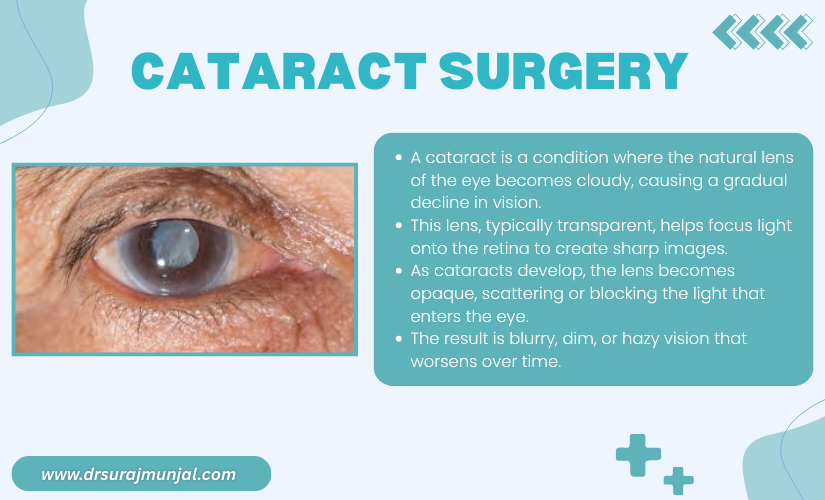
A cataract is a condition where the natural lens of the eye becomes cloudy, causing a gradual decline in vision. This lens, typically transparent, helps focus light onto the retina to create sharp images. As cataracts develop, the lens becomes opaque, scattering or blocking the light that enters the eye. The result is blurry, dim, or hazy vision that worsens over time.
What Causes Cataracts?
Cataracts typically develop as a result of aging, but they can also be caused by:
- Genetics or family history
- Diabetes and other systemic diseases
- Prolonged exposure to UV rays
- Eye injuries or trauma
- Long-term use of steroids
- Previous eye surgeries
- Smoking and poor nutrition
Most cataracts progress slowly, but without treatment, they can lead to significant vision impairment or even blindness.
What are the Common Symptoms of Cataracts?
Cataracts typically develop in both eyes, although one may be more severely affected than the other. Common signs include:
- Blurred or foggy vision
- Difficulty seeing at night or in low-light conditions
- Glare and halos around lights
- Sensitivity to bright lights or sunlight
- Faded or yellowed colors
- Frequent changes in eyeglass or contact lens prescriptions
- Double vision in a single eye
These symptoms may not be noticeable at first, but as the cataract matures, they become more pronounced and interfere with daily life.
Why is Surgery the Only Solution?
Currently, there is no medication, eye drop, or natural remedy that can reverse or cure a cataract. The only effective treatment is the surgical removal of the clouded lens and its replacement with a clear artificial lens, known as an intraocular lens (IOL).
Delaying surgery not only impacts your daily functioning but also increases the risk of complications such as:
- Complete vision loss
- Increased intraocular pressure
- Inflammation or swelling
- Difficulties in performing surgery in later stages due to lens hardening
Cataract surgery is a quick, safe, and highly successful outpatient procedure with a success rate of over 98%. In most cases, patients report a dramatic improvement in vision within 24 to 48 hours after the procedure.
When Should You Consider Surgery?
Surgery is typically recommended when cataracts begin to interfere with:
- Driving, especially at night
- Reading and computer use
- Daily tasks like cooking or managing finances
- Mobility and independence
Your eye doctor may also advise early surgery if you have other eye conditions, such as glaucoma or diabetic retinopathy, where clear visualization of the retina is essential.
Who Needs Cataract Surgery?
Cataracts can develop gradually over time and may not immediately affect vision. However, once they begin to interfere with daily life or cause significant vision loss, surgery becomes the only practical solution. The decision to undergo cataract surgery is typically based on how much the condition is impacting your vision and your ability to perform routine activities.
You may need cataract surgery if:
- Your vision is blurred or cloudy, making it hard to read, drive, or recognize faces.
- You struggle with night vision, and headlights or streetlights cause excessive glare or halos.
- Colors appear faded, yellowish, or dull, affecting your perception of contrast and vibrancy.
- Your glasses no longer correct your vision adequately, and frequent prescription changes aren’t helping.
- You experience double vision in one eye, even with glasses or contact lenses.
- You have difficulty with tasks requiring sharp focus, such as sewing, working on a computer, or using a mobile phone.
- You feel unsafe or hesitant while walking or navigating unfamiliar places, especially in low-light conditions.
- Your eye doctor recommends it due to other eye health issues, such as glaucoma or diabetic retinopathy, where cataracts limit diagnostic or therapeutic access.
Age is Not the Only Factor
Although most people who develop cataracts are over the age of 60, younger individuals may also need cataract surgery in the following situations:
- Congenital cataracts present at birth or in childhood
- Trauma-induced cataracts due to injury or surgery
- Secondary cataracts caused by steroid use or chronic diseases like diabetes
- Radiation exposure or UV damage in certain occupations
Cataract surgery isn’t just about improving vision—it’s about restoring independence, safety, and quality of life.
Cataracts in Both Eyes
If cataracts are present in both eyes, surgery is usually performed one eye at a time, with a gap of a few days to a few weeks between surgeries. It ensures proper healing and balance of vision during the recovery period.
What are the Types of Cataract Surgery and How They Work?
Cataract surgery involves removing the clouded natural lens of the eye and replacing it with a clear artificial lens, known as an intraocular lens (IOL). Thanks to advances in technology, cataract surgery is now quick, safe, and nearly painless, often completed in less than 20 minutes with minimal downtime.
There are several techniques used, each with specific benefits depending on the patient’s condition, lifestyle, and budget.
Phacoemulsification (Phaco Surgery)
This is the most commonly used technique worldwide. In this method:
- A small incision is made in the eye.
- An ultrasound probe is inserted to break up the cloudy lens into tiny fragments.
- The fragments are gently suctioned out.
- A foldable IOL is implanted through the same incision.
Benefits:
- Minimally invasive
- Quick recovery
- Stitchless procedure
- Suitable for most cataract types
Femtosecond Laser-Assisted Cataract Surgery (FLACS)
This is a blade-free, laser-guided technique that adds precision and automation to key steps of the procedure. A femtosecond laser performs the initial incisions and lens fragmentation, reducing the need for manual tools.
Benefits:
- Enhanced accuracy and safety
- Less ultrasound energy used (smoother recovery)
- Better results with premium IOLs (like multifocal or toric lenses)
This technique is ideal for patients who desire advanced lens implants or have specific visual needs, such as reading without glasses or correcting astigmatism.
Manual Small-Incision Cataract Surgery (MSICS)
In some cases, especially when phacoemulsification technology is not feasible (e.g., very dense or mature cataracts), this technique may be employed. A slightly larger incision is made to remove the lens in one piece, followed by the implantation of the IOL.
Benefits:
- Cost-effective
- Useful for hard cataracts
- Widely practiced in many parts of the world
Types of Intraocular Lenses (IOLs)
The outcome of cataract surgery also depends on the type of lens implanted:
- Monofocal IOL – Corrects vision at one distance (near or far); patients may still need glasses.
- Multifocal IOL – Offers both near and distance vision; reduces or eliminates the need for glasses.
- Toric IOL – Specifically designed to correct astigmatism along with cataracts.
- Trifocal or Extended Depth of Focus (EDOF) IOLs – Provide a wider range of clear vision and are ideal for active lifestyles.
The selection of IOL plays a major role in determining both the visual outcome and the overall cost of the procedure.
What are the Benefits of Cataract Surgery?
Cataract surgery offers more than just clearer vision—it significantly improves your overall quality of life. Once the cloudy lens is removed and replaced with a new artificial one, patients often report better daily functioning, increased independence, and greater confidence in both personal and professional activities.
One of the primary advantages of cataract surgery is the restoration of sharp, vibrant vision. Colors appear brighter, contrasts become more defined, and night-time visibility improves, especially when driving. Many patients who struggled with dull or hazy vision are able to resume reading, watching television, and enjoying outdoor activities with much greater comfort.
Additionally, the procedure can help reduce dependency on glasses or contact lenses, especially when premium IOLs are selected. Patients who receive multifocal or toric lenses often find they no longer need separate glasses for reading or distance vision.
For those suffering from age-related cataracts, the surgery also brings emotional relief. Constant strain, frequent headaches, and frustration with poor vision can lead to stress and fatigue. After surgery, many individuals feel a renewed sense of energy and engagement with their surroundings.
Furthermore, cataract surgery is associated with a reduced risk of falls and accidents, particularly in older adults. Improved vision enhances balance and depth perception, both of which are crucial for safe movement in daily life.
Overall, the success rate of cataract surgery is extremely high, with most patients achieving excellent outcomes and rapid recovery. It is one of the most effective and rewarding eye procedures in modern medicine.
What is the Cost of Cataract Surgery in India?
The cost of cataract surgery in India is significantly more affordable than in many other countries, without compromising on quality or safety. Patients from across the world travel to India to receive expert eye care at a fraction of the international cost.
The average cost of cataract surgery in India ranges from $500 to $1,500 per eye, depending on several factors. These include the type of procedure (standard or laser-assisted), the kind of intraocular lens (IOL) used, the surgeon’s expertise, and the hospital’s reputation and location.
|
Type of Cataract Surgery |
Average Cost (USD) |
|
Standard Phacoemulsification with Monofocal IOL |
$500 – $800 |
|
Standard Phacoemulsification with Multifocal IOL |
$800 – $1,200 |
|
Femtosecond Laser-Assisted Surgery (FLACS) |
$1,000 – $1,500 |
These rates typically include pre-surgery evaluation, the surgical procedure, standard medications, and post-operative follow-ups. However, premium lenses or extended care packages may involve additional charges.
Despite the lower costs, patients benefit from world-class ophthalmology departments, advanced surgical technology, and internationally trained surgeons in India. This makes it an ideal destination for affordable, high-quality eye care.
Cost Comparison of Cataract Surgery: India vs Other Countries
Cataract surgery in India offers substantial savings compared to the cost of the same procedure in countries such as the United States, the UK, or Australia. Many international patients choose India because they receive high-quality surgical care at a much lower price, often with no waiting time.
|
Country |
Average Cost per Eye (USD) |
|
India |
$500 – $1,500 |
|
United States |
$3,500 – $6,000 |
|
United Kingdom |
$3,000 – $5,000 |
|
Canada |
$2,500 – $4,500 |
|
Australia |
$2,500 – $4,000 |
|
UAE |
$2,000 – $3,500 |
|
Thailand |
$1,500 – $2,500 |
|
Turkey |
$1,200 – $2,000 |
In India, the cost savings can be as high as 60% to 80%, especially when factoring in travel and accommodation expenses, which are also relatively low. Although affordable, hospitals and eye care centers in India are equipped with state-of-the-art facilities and adhere to stringent international safety protocols.
The cost advantage, combined with clinical excellence, makes India one of the top destinations for cataract surgery among international patients.
What are the Factors Affecting Cataract Surgery Cost in India?
The total cost of cataract surgery can vary significantly depending on several key factors. Understanding these factors can help patients better plan their budget and choose the most suitable treatment options.
- Type of Intraocular Lens (IOL) Used: The type of lens implanted during cataract surgery plays a significant role in determining the cost. Standard monofocal lenses are more economical, while premium lenses, such as multifocal, toric, or extended depth of focus (EDOF) lenses, increase the overall expense due to their advanced visual correction capabilities.
- Surgical Technique: Traditional phacoemulsification is a cost-effective and widely used technique. However, newer technologies, such as Femtosecond Laser-Assisted Cataract Surgery (FLACS), are more precise and bladeless, but also more expensive. Patients opting for laser-assisted surgery should expect to pay more.
- Surgeon’s Experience: Highly experienced surgeons with international training or specialization in advanced cataract techniques may charge higher fees. However, this often translates into better outcomes and lower risks of complications.
- Hospital Infrastructure: The type of facility (whether a general hospital or a specialized eye institute) has a significant impact on costs. Hospitals with advanced diagnostic systems, modern operating rooms, and comprehensive aftercare services may charge more but provide a superior treatment environment.
- Post-Surgery Care and Inclusions: Some packages include follow-up consultations, eye drops, medications, and protective eyewear. Inclusive packages may appear more expensive upfront but offer better value by covering all necessary postoperative care.
By evaluating these factors, patients can make informed choices about their treatment while optimizing both outcome and cost-efficiency.
Why International Patients Prefer India for Cataract Surgery?
India has emerged as one of the most trusted global hubs for cataract surgery. Patients from around the world, including those from Africa, the Middle East, Southeast Asia, and Western countries, are choosing India for high-quality eye care—thanks to its unique combination of affordability, expertise, and efficiency.
- Advanced Techniques at a Fraction of Global Costs: Cataract surgery in India provides access to the latest advancements, including femtosecond laser-assisted cataract surgery (FLACS) and premium multifocal or toric intraocular lenses (IOLs). These are the same technologies used in top Western hospitals, but at significantly reduced prices—often 60% to 80% lower than in countries like the USA, UK, or Australia.
- Skilled Ophthalmologists with Global Credentials: Indian eye surgeons are trained at some of the finest institutions globally and routinely perform a high volume of cataract surgeries each year. Their experience across varied and complex cases builds confidence in international patients seeking reliable outcomes.
- Minimal Waiting Time and Quick Turnaround: Unlike many developed countries where surgical waiting lists can be long, most eye care facilities in India offer same-week consultations and next-day surgery slots. This fast-track system is ideal for international patients looking to complete treatment within a short travel window.
- Personalized Medical Tourism Support: From visa assistance to airport transfers and multilingual coordinators, India’s medical travel ecosystem is highly developed. Patients receive dedicated support throughout their journey—from initial inquiry to final follow-up—making the experience stress-free and efficient.
- Holistic Recovery Environment: India also provides a calming environment for post-surgery recovery. Many patients combine their treatment with rest in scenic or spiritual destinations, such as Kerala, Rishikesh, or Goa, thereby enhancing both their healing and overall well-being.
By combining world-class eye care with cost efficiency and compassionate service, India remains a top destination for cataract treatment.
Testimonials from International Patients Who Underwent Cataract Surgery
Ahmed M., Nigeria
"I had been struggling with poor vision due to cataracts for years. A friend recommended that I travel to India, and it was one of the best decisions I've ever made. The doctors were excellent, and the surgery was done the next day after my consultation. I can see clearly again, and the cost was much lower than I expected."
Fatima R., UAE
"Back home, the waiting time for cataract surgery was over three months. In India, I was able to get an appointment immediately. The medical coordinator arranged everything for me, including airport pickup and hotel. The laser-assisted procedure was smooth, and I was amazed at how professional yet affordable everything was."
Sam M., United Kingdom
"As a retiree, I was concerned about both the cost and quality of cataract treatment. India provided me with access to top-tier facilities at a fraction of the UK's prices. The entire process—from the consultation to post-op care—was streamlined and comfortable. I’m already recommending this to my friends."
Leila B., Kenya
"I was almost blind in one eye due to a mature cataract. The doctors in India restored my vision and confidence. They used advanced lenses and explained every step. The recovery was quick, and their support staff made me feel completely at home throughout my stay."
Frequently Asked Questions
The average cost of cataract surgery in India ranges from $500 to $1,500 per eye, depending on the type of procedure, hospital, and intraocular lens (IOL) used.
Yes, India offers safe and effective cataract surgery using FDA-approved technologies, performed by experienced ophthalmologists in globally accredited hospitals.
India offers conventional phacoemulsification, femtosecond laser-assisted cataract surgery (FLACS), and MICS (micro-incision cataract surgery) with advanced IOL options like multifocal, toric, and trifocal lenses.
Most patients are discharged the same day after the procedure, with a follow-up appointment scheduled for the next day.
Some international insurance plans may be accepted; however, many patients opt for self-pay due to the lower overall costs.
Yes, but surgeons usually wait a few days between each eye to ensure proper healing and monitoring of the first eye.
Yes, India offers a wide range of premium IOLs, including multifocal, EDOF, toric, and aspheric lenses at much more affordable prices than other countries.
Most patients experience significant vision improvement within 24 to 48 hours, with full recovery typically occurring within 2 to 3 weeks.
No, cataract surgery is painless. It is performed under local anesthesia, often with eye drops only.
You can usually travel within 2–3 days after surgery, depending on your recovery and your doctor’s advice.
Yes, most hospitals offer end-to-end support, including visa assistance, airport pickup, hotel booking, and translation services.
Your Indian doctor will provide a detailed medical report and follow-up instructions. Many hospitals also offer teleconsultations for post-operative care.
Absolutely. Cataract surgery in India is commonly performed on elderly individuals with high success and minimal risk, thanks to advanced techniques and skilled specialists.
