Bifocal lenses
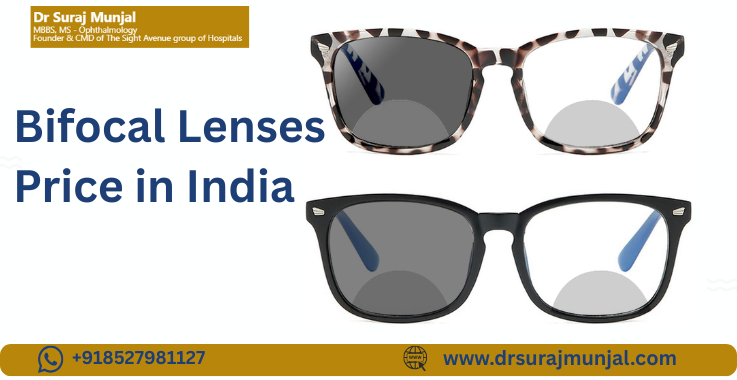
Bifocal lenses are specially designed lenses with two distinct optical powers to help people with presbyopia and other refractive issues see clearly at both near and far distances. They can be used in eyeglasses or contact lenses and are especially beneficial for individuals over 40 who experience difficulty focusing on close objects.
Table of Contents
Causes: Why Do People Need Bifocal Lenses?
As we age, the eye’s natural lens loses its flexibility, making it difficult to shift focus from distant to near objects, a condition known as presbyopia. This condition, combined with other refractive errors like myopia or hyperopia, makes bifocal lenses an ideal choice.
Common causes include:
- Aging (usually begins after 40)
- Existing refractive errors (e.g., nearsightedness, farsightedness)
- Eye strain from prolonged screen use
Types of Bifocal Lenses
Understanding the types of bifocal lenses available can help you choose the best option:
- Traditional Bifocals: Have a visible line separating the two sections for near and far vision.
- No-Line Bifocals: Also called progressive lenses, they offer a gradual transition without visible lines.
- Segmented Bifocals: Known for having a small half-moon or D-shaped area for reading.
Dr. Suraj Munjal can help you select the most suitable type based on your lifestyle and vision needs.
Symptoms Indicating You Might Need Bifocal Lenses
Some common symptoms suggesting a need for bifocals include:
- Difficulty focusing on close objects
- Frequent eye strain or headaches when reading
- Experiencing blurry vision at certain distances
- Holding reading material farther away
If you’re experiencing these symptoms, consult Dr. Suraj Munjal for an accurate diagnosis.
Diagnosis: How Do We Determine if Bifocals Are Right for You?
Dr. Suraj Munjal performs a thorough eye examination to determine if bifocals are necessary. This may include:
- Visual Acuity Test: To assess how well you see at different distances.
- Refraction Test: Measures the exact refractive error to determine your prescription.
- Presbyopia Test: Evaluates how well you focus on close objects.
An accurate diagnosis ensures that you receive the most effective treatment.
Treatment Options for Vision Correction
Bifocals are just one of the many treatments for vision correction. Depending on your condition, other options include:
- Progressive Lenses: For a seamless transition between near, intermediate, and far distances.
- Multifocal Contact Lenses: Ideal for those who prefer contact lenses over glasses.
- Laser Eye Surgery: Offers a more permanent solution for refractive errors (e.g., LASIK).
Each treatment option has its advantages, and Dr. Suraj Munjal can guide you to the best choice.
Cost of Treatment and Stay in India
For those considering bifocal lenses or any vision correction treatment in India, Dr. Suraj Munjal’s clinic offers affordable and high-quality care. The cost varies depending on the type of lenses, frames, and additional treatments, if required.
India is a popular destination for medical tourism, offering affordable, quality healthcare with skilled professionals. If you’re coming from abroad, you can expect:
- Affordable treatment costs compared to other countries
- Comfortable accommodations near the clinic
- Easy travel and medical visa assistance
Frequently Asked Questions
Bifocal lenses have two different optical powers, allowing users to see clearly at near and far distances without switching glasses.
While rare, bifocals can sometimes be prescribed to children with specific vision needs, typically under the guidance of an ophthalmologist.
Adjustment varies from person to person; some adapt in a few days, while others may take a few weeks.
